
A few tears may someday reveal important clues about a person's neurological health. Researchers reporting in ACS Omega developed a low-cost electrochemical sensor designed to detect dopamine, a neurotransmitter involved in movement, learning, motivation, and emotional regulation. They tested the device using artificial human tears, where it accurately detected a range of dopamine concentrations. The technology could support the development of new tools for monitoring Parkinson's disease and other conditions linked to atypical dopamine levels.
Neftalí Lênin Villarreal Carreño
By creating this sensor, "we aim to facilitate the ultra-early detection of neurological disorders, creating opportunities for clinical interventions before major symptoms manifest," says corresponding author Neftalí Lênin Villarreal Carreño.
Changes in dopamine levels - whether higher or lower than normal - are associated with neurological and psychiatric conditions. For example, with Parkinson's disease, concentrations of dopamine tend to decrease. Current monitoring methods, such as blood samples, urine analysis, or implanted devices, take time or require invasive procedures. As an alternative, tears could be a source of health information because they can be collected quickly and painlessly. So, Carreño and colleagues built and tested a sensor to explore whether tears could provide a noninvasive way to monitor dopamine levels.
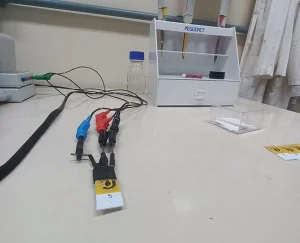
To create the sensor, the researchers used a laser to convert portions of a thin plastic film into electrically conductive graphene. The device, about the size of a postage stamp, produces an electrical signal when dopamine reacts with graphene. In laboratory tests, the researchers added dopamine to artificial human tears and measured the sensor's performance. The sensor accurately detected dopamine levels, including concentrations that were similar to levels previously reported in tears from people with Parkinson's disease, and maintained its performance even in the presence of other compounds commonly found in tears.
"Our sensor can detect dopamine from levels well below the healthy baseline and up to three times higher," says coauthor Lucas Minghini Gonçalves. "This capability ensures that a person's initial dopamine drop can be identified early on, which is crucial to enabling timely, proactive therapeutic interventions."
The researchers say their findings establish a foundation for future studies using human tear samples and will help them develop point-of-care devices that monitor neurological biomarkers through a simple tear sample.
The authors acknowledge funding from the Brazilian Federal Agency for Support and Evaluation of Graduate Education (Coordenação de Aperfeiçoamento de Pessoal de Nível Superior), Rio Grande do Sul Research Foundation (Fundação de Amparo à Pesquisa do Estado do Rio Grande do Sul), National Council for Scientific and Technological Development (Conselho Nacional de Desenvolvimento Científico e Tecnológico), and the AgroHealth project, which is supported by the Center for Embedded Devices and Research in Digital Agriculture (CEDRA) with financial resources from the Brazilian Company for Industrial Research and Innovation (EMBRAPII).


