
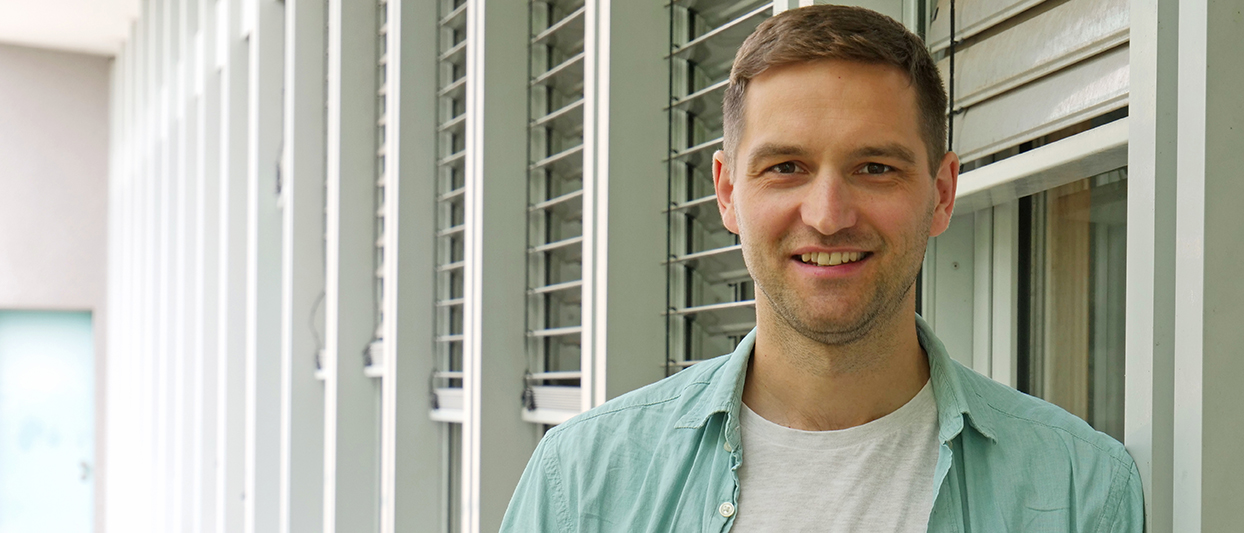
The DFG is providing 2.2 million euros for Tom Beneke's Emmy Noether Junior Research Group at the University of Würzburg. He is investigating how Leishmania parasites, transmitted by sand flies, spread throughout the body.
Leishmania are single-celled pathogens found in tropical and subtropical regions, as well as in countries around the Mediterranean. They can be transmitted to humans, as well as to dogs and other animals, through the bite of sand flies. Some Leishmania parasites cause skin ulcers at the site of the bite, whilst others mainly affect the liver and spleen; if left untreated, this is fatal in more than 95 per cent of cases.
Why some of these parasites remain localised whilst others spread throughout the body is one of the unresolved questions in infectious biology.
"Our research findings suggest that Leishmania do not move through their hosts' bodies of their own accord," says Tom Beneke, an infection researcher at the University of Würzburg's Biozentrum. This is because the parasites embed themselves in phagocytes of the immune system, which are constantly patrolling the body.
And it appears that Leishmania manipulate the migration of immune cells to their advantage - and in different ways depending on the species. "This is all the more remarkable given that the genomes of Leishmania species that remain localised in the skin differ only slightly from those of species that spread throughout the body," says Tom Beneke.
New tools for Leishmania research
The scientist therefore suspects that the differences in the pathogens' behaviour are caused by variations in individual genes. He aims to identify these variations using new genetic technologies that he has developed specifically for Leishmania parasite.
Tom Beneke now intends to clarify, as part of the new Emmy Noether Research Group 'LeishMove', exactly how the parasites control their host cells and which variations in the Leishmania parasites are necessary for this. The German Research Foundation (DFG) has awarded him around 2.2 million euros to establish the group. The project will start on 1 September 2026 and run for six years.
Disease also relevant in Europe - a threat to dogs
Tom Beneke: "Leishmaniasis is a neglected tropical diseases. Although up to one million people are infected worldwide every year and many thousands die from it, there is unfortunately little commercial interest in developing new drugs. At the same time, resistance problems are on the rise, there is no authorised vaccine for humans, and the available treatments are often associated with significant side effects. I am therefore all the more delighted about the DFG's generous funding."
The disease is also relevant in Europe. "In the Mediterranean region, there are numerous infections every year, with dogs being particularly affected. It is therefore not uncommon for dogs to return to Germany with leishmaniasis after a holiday trip, for example to Spain or Italy."
The Würzburg-based scientist also hopes that the research will provide insights into new therapeutic strategies that can prevent the spread of Leishmania parasites within the body. In the long term, his research could help to develop new therapeutic approaches to leishmaniasis and significantly improve the treatment of the disease.
Tom Beneke's career
Tom Beneke, born in 1990, is from Berlin and studied biotechnology at the Brandenburg University of Technology Cottbus-Senftenberg. After completing his bachelor's degree, he moved directly to the University of Oxford as part of a fast-track PhD programme without first completing a master's degree. There, he completed his PhD between 2015 and 2019, focusing on the swimming behaviour of Leishmania parasites.
Beneke then continued his research in Oxford for a short period of time before subsequently moving to the biotech company Oxford Genetics as a specialist in CRISPR screening. However, after just under two years in industry, he decided to return to academic research: in 2022, he joined the Biocentre at the University of Würzburg on fellowships from the European Molecular Biology Organisation (EMBO) and the European Union (Marie Curie). Here, he continued his research on Leishmania.
In 2024, he established an independent junior research group. In addition to the Emmy Noether Programme, this group is funded by further third-party projects. These include another DFG grant, a European Horizon Europe project and a grant from the Humboldt Foundation.


