
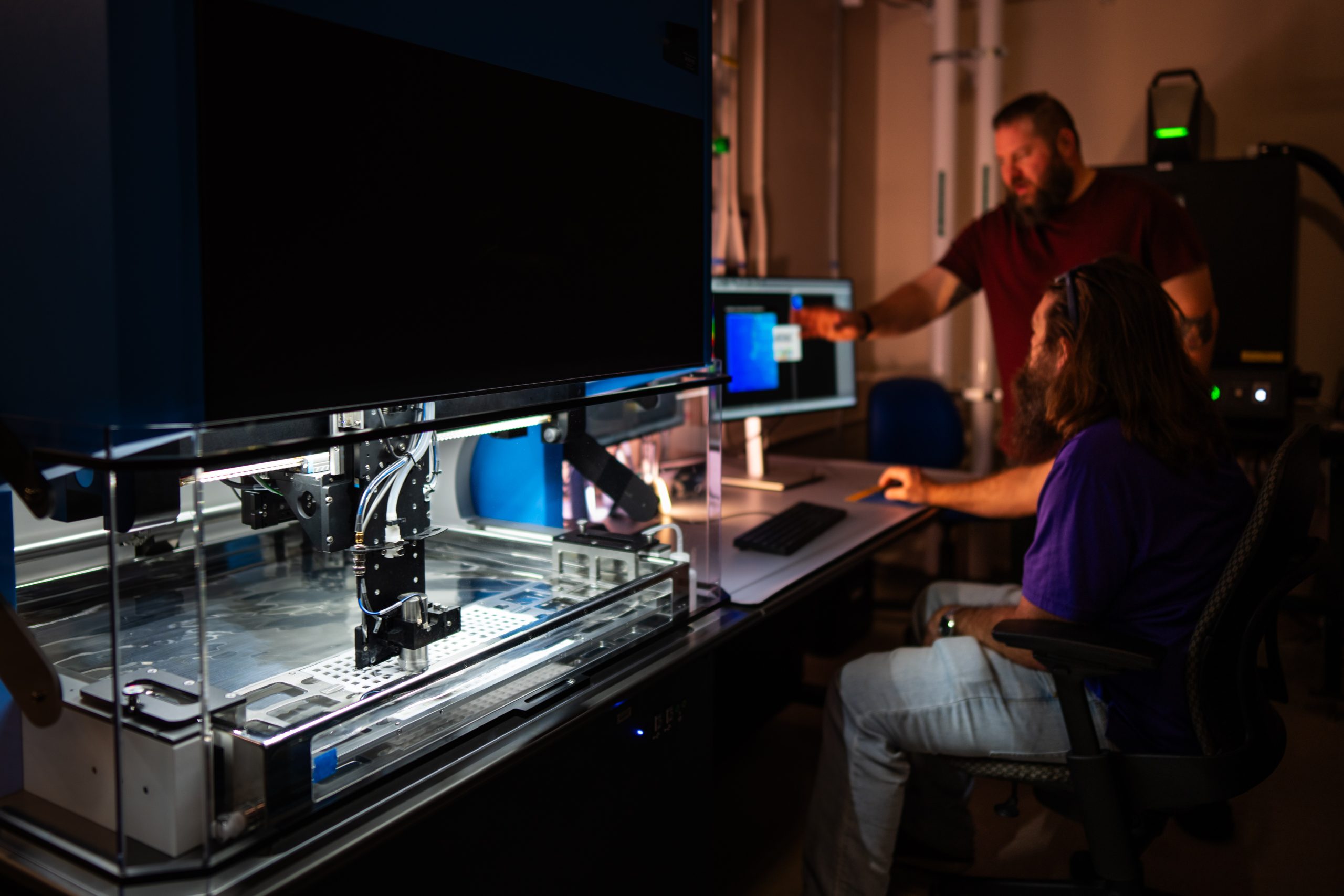
At Sandia National Laboratories, a new inspection workflow is taking shape that could help catch tiny defects earlier in the manufacturing process for ceramic components.
"We manufacture ceramic components for nuclear deterrence applications," said process engineer Jesse Adamczyk, who is leading the project. "We realize there's a big opportunity here."
Teams from across the Labs are installing new optical and acoustic imaging systems and building an AI-assisted review tool designed to speed inspections while keeping people firmly in the loop.
"We do manual inspections of all our parts. It is extremely time-consuming," Adamczyk said. "These parts go into various weapon systems."
AI inspections
The project begins by scanning ceramic billets, the starter pieces that are later manufactured into finished components, using high-throughput imaging systems that create detailed digital records of each billet.
"It's pricey to get billets to their final component," Adamczyk said. "If we can identify defects at the billet level, we don't put all that work into manufacturing the final component."
The earlier inspections will save time and money.
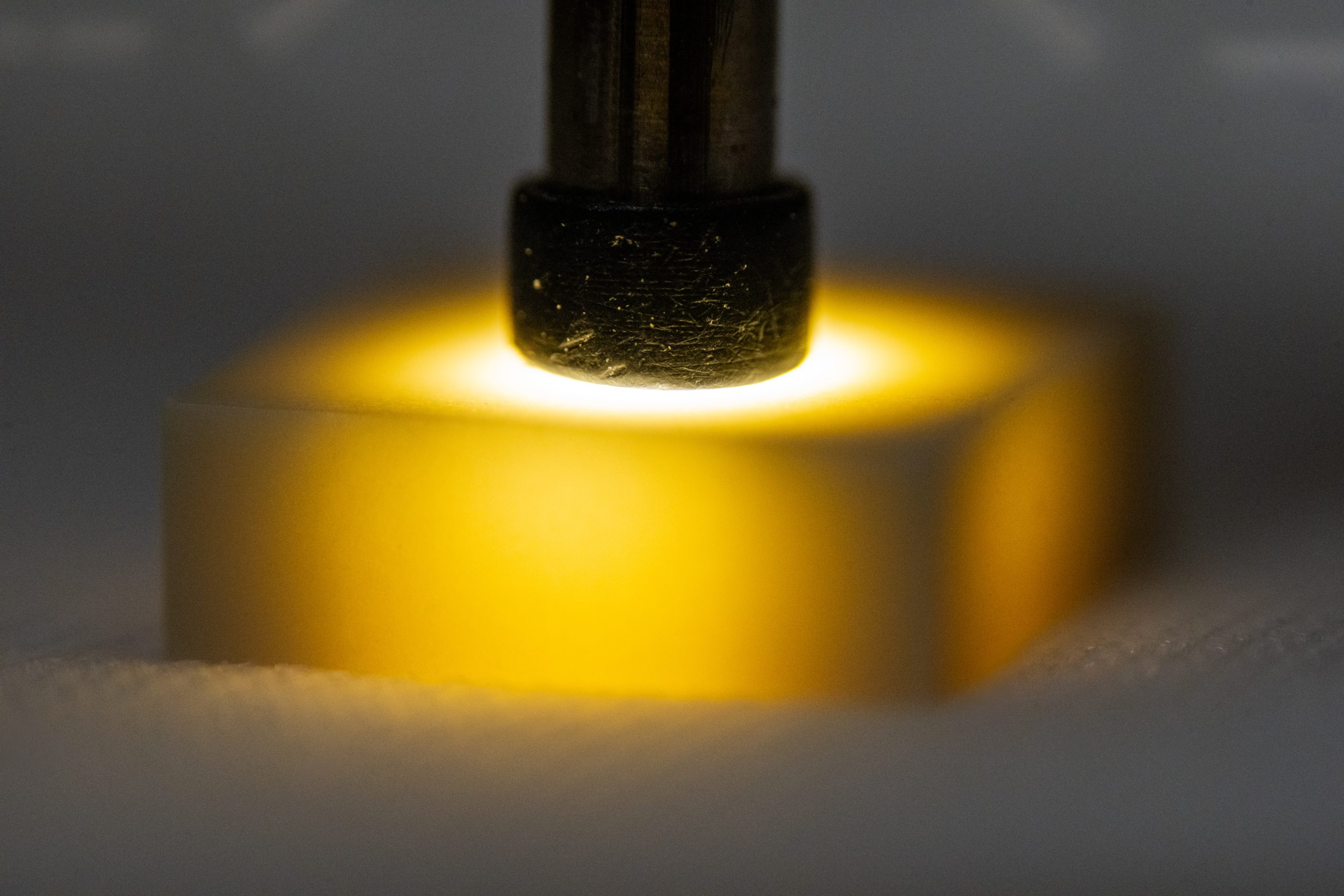
Right now, inspectors rely heavily on manual microscopes for inspecting final components. It takes one to two years to fully train an operator on the manual inspection process, which is time-consuming and challenging on the eyes.
The new approach for final components is designed to shift that work to a digital workflow in which images can be reviewed at a workstation.
"Right now, an operator looks through a manual microscope for defects. They're subtle, so they can be hard to find," Adamczyk said. "We're setting up software - an AI augmentation interface - where operators can do anomaly detection from their desktops and have AI highlight defects for them."
Adamczyk emphasized that inspections will not rely solely on AI.
"Operators will double-check to make sure the AI is highlighting real defects, and if there's a defect AI misses, the operator will catch it," he said. "AI augmentation is going to be more effective than manual visual inspection and more effective than just letting the AI run loose."
Adamczyk said this is a big shift, but operators are embracing it to help meet demand.
"They are thrilled to have these technologies coming online, and they're not going to be replaced. They're going to be reassigned because we have more work coming into our production floor," Adamczyk said.


