From different angles, EMBL researchers are looking at archaea with the hope these understudied organisms will answer questions about evolution, adaptability, and more.

It feels almost like a riddle. What teeny tiny organism can you find on your own hands and face, but also thrives in the planet's most inhospitable environments? Oftentimes a lone survivor, it's also probably happiest when in a mutualistic community.
We're talking about archaea - some of the least understood microorganisms on the planet. And if you guessed bacteria, you wouldn't be far off. Up until the 1970s, archaea were considered just another type of bacteria. Then microbiologist Carl Woese discovered distinct differences in archaea's ribosomal RNA (rRNA), creating a third domain in biology's taxonomy of organisms, now considered neither eukaryotes nor bacteria.

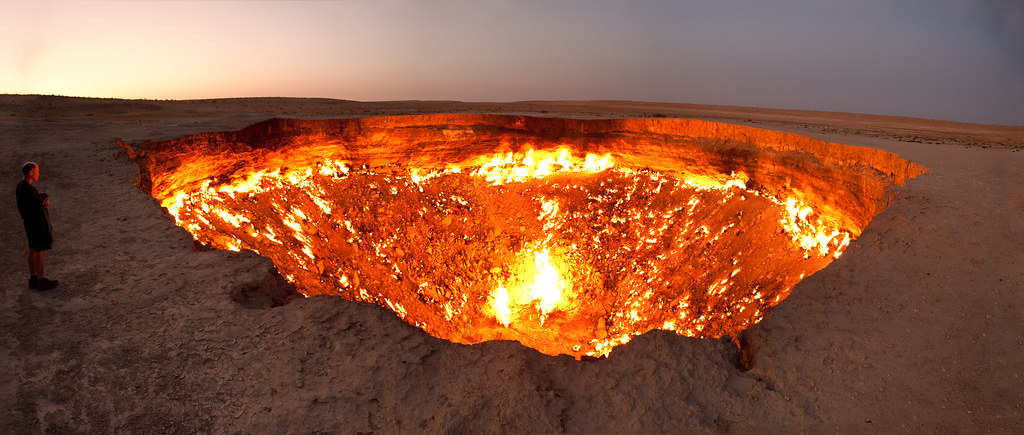
Archaea are almost famously underhyped and largely benign. They have been found in extraordinarily harsh conditions: at the edges of deep-sea hydrothermal vents, within goopy sediments that offer little to no exposure to oxygen, and buried within the inhospitable deep freeze of Arctic or Antarctic tundra.
Not much else lives in these places, so this alone is fascinating. In truth, archaea are everywhere - on the ground, in your home, on your face, even in labs and 'clean rooms'.
At least four EMBL research groups are now embracing this biological domain and its accompanying challenges. Most recently, Florian Wollweber joined EMBL Grenoble as its newest group leader, expanding on this work. Using cryo-electron tomography and other imaging methods, Wollweber has been studying the cell biology of the archaeal group most closely related to eukaryotes, called Asgard archaea. His work revealed that these particularly slow-growing cells have a complex cell shape and eukaryote-like internal 'skeletons', suggesting that these features predate eukaryotic cells. His group will continue to study Asgard archaea to reconstruct events that led to the origin of eukaryotes.
EMBL's scientists, including Wollweber, are among many now looking deeper into archaea, thanks to recent advances in microscopy and other omics technologies. And within these tiny organisms, they hope to find big answers.
Archaea offering a new way to think about bioremediation
As early as the 1960s, scientists experimented with using bacteria to feast on and remove pollutants. Bacteria have effectively helped degrade oil in oil spills. They can absorb and remove heavy metals like lead and cadmium. And they have been used to break down pesticides and microplastics. Fungi, also, have been deployed to devour and dispose of organic contaminants.
However, introducing bacteria or fungi into ecosystems comes with risks: infections and unintended consequences to the ecosystems we seek to protect, genetic and evolutionary risks to organisms in these ecosystems, and risks to human health (as we are part of these greater ecosystems as well). Scientists hope that archaea can circumvent some of these risks.
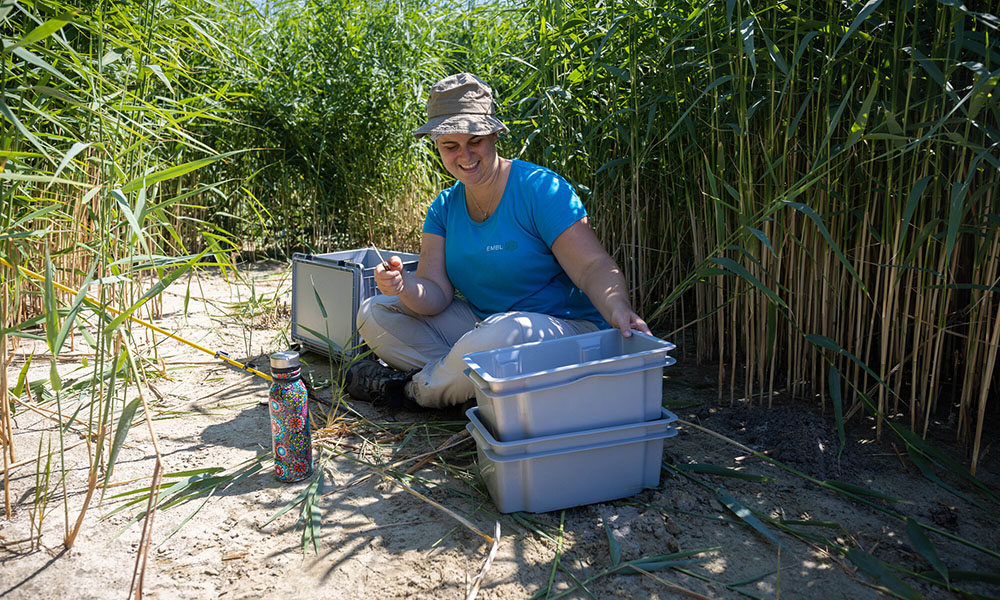
Kiley Seitz, a soil microbiologist in Peer Bork's research group at EMBL Heidelberg, first learned of archaea in seventh grade, struck by the dearth of archaea knowledge and proclaiming to her teacher that she intended to fill this gap. Today, she sees archaea as an excellent candidate to aid in environmental recovery.
"One of the things I think is really cool about archaea is that they are not pathogens; they don't cause disease. They are a significantly less problematic organism than bacteria and more predictable," Seitz said. "I really want to compare and contrast unhealthy and healthy ecosystems, where soil looks almost the same - often located near one another - and see what is happening on a microbial level. My hope is that's where we'll find something interesting - maybe the archaea are partially why some places recover better than others."
Seitz uses tools like metagenomics to sequence entire microbial communities to identify archaeal genes and pathways. She also uses them to get a better idea of which archaea inhabit these ecosystems.
"Finding new archaea species sounds exciting, but it happens all the time," Seitz said with a laugh. "We just don't have good descriptions for them yet. Finding a new phylum - that's a big deal. Scientists have simply focused on studying them in the extreme environments that they are known for, so looking at the archaea around us is more of a frontier in many ways."
To this end, Seitz spent much of 2023 and 2024 sampling soil, sediment, and water along Europe's coasts with EMBL's TREC expedition , specifically to study how microbes like archaea adapt to changing environments.
Archaea are ancient survivors - microbes that thrive where others falter. In fact, Seitz has been particularly interested in archaea's metabolic flexibility, which seems to make them particularly suited to restoring damaged environments.
But another aspect of archaea that fascinates Seitz is their penchant for communal living. They seem to have mastered the concept of mutualism to such an extent that it's challenging to study them alone. In these instances, they can't survive without the others - an irony since they adapt to so many other changes in their environment.
"Archaea are everywhere," she said, recounting a challenging research project from her master's programme in Oregon that involved Thermoproteota - a type of archaea that lives in soil and wastewater treatment plants. She struggled to explain why samples from her sterile labs kept showing traces of this particular soil archaea, until NASA published findings that showed the same organisms live naturally on human skin and showed up in their 'clean rooms'. The researchers themselves were unknowingly introducing the contamination.
"As it turns out, people with healthier skin have more archaea," Seitz said. "They help remove ammonia and add nitrates. Archaea literally help us, and no one knew it."
Archaea offering clues to our own DNA evolution
For Svetlana Dodonova, her interest in archaea had everything to do with a passion for structural biology, chromatin, and cryo-electron microscopy.
And that passion has paid off, as her research group presented the first structures of Asgard archaea and their DNA packaging, known as chromatin, in 2025.
"In the process of capturing this structure, we discovered a particular histone that makes two distinct types of assemblies: one super compact and the other super open," Dodonova said. Histones are proteins that bind to DNA and help package it into chromatin. "It's a lot like a compressed spring versus one all stretched out."
Using cutting-edge cryo-electron microscopy, the scientists from her research group at EMBL Heidelberg studied Asgard chromatin in the greatest detail thus far, and this observation of the two types of assemblies represents an important step forward in understanding how chromatin has evolved.
The scientists focused on a protein called HHoB from an Asgard microbe in a group named Hodarchaeota. They observed how it wrapped DNA in both tightly packed and stretched-out forms. The closed form is similar to what's found in other simple organisms, but the open form looks more like one of the structures seen in more complex eukaryotic chromatin, seeming to indicate a long-suspected evolution of archaea to more complex eukaryotes.
"We tested the Asgard chromatin in various conditions with different salts, observing the small particles stack together to make what is called 'hypernucleosomes' - basically super helical arrangements of histones that wrap the DNA around them," she said. "The open assembly was completely novel for archaea - and for chromatin, for that matter. Since an open structure may give potential chromatin effector proteins greater access to histones and DNA, we speculate that this could point to a function in chromatin regulation."
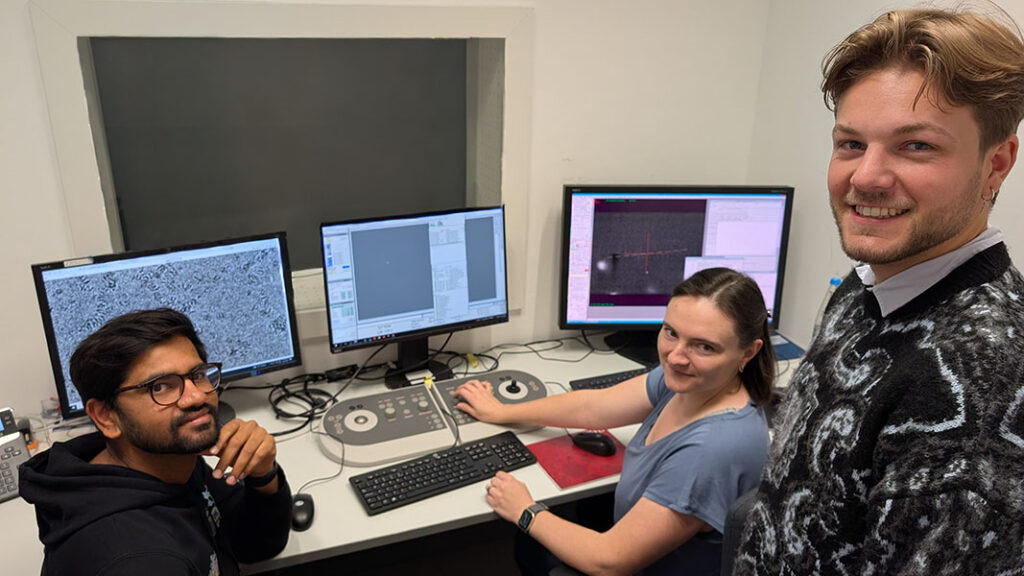
This work is just a portion of the Dodonova group's focus on archaea chromatin architecture. Among several archaeal species that are routinely cultured in Dodonova's lab are archaea called Thermococcus kodakarensis and Haloferax volcanii, which are classic extremophiles that survive in extreme heat or extreme salt, respectively. They also share this histone-based chromatin, and this feeds into work that seeks to understand what chromatin does across the tree of life, and what kinds of regulation mechanisms are at work to help these extremophiles survive or even thrive in such harsh conditions.
"We have several projects. Some employ our in vitro strategy where we purify proteins, make the DNA, and put things together in a test tube," Dodonova said. "Our projects that require culturing the archaea also allow us to work with cells directly and use state-of-the-art cryo-electron tomography approaches to visualise macromolecular complexes in a near-native state, which is more difficult, but adds another dimension to what we can learn about archaea and their evolutionary connections."
Surviving the turbulent, high-radiation conditions of the Andes
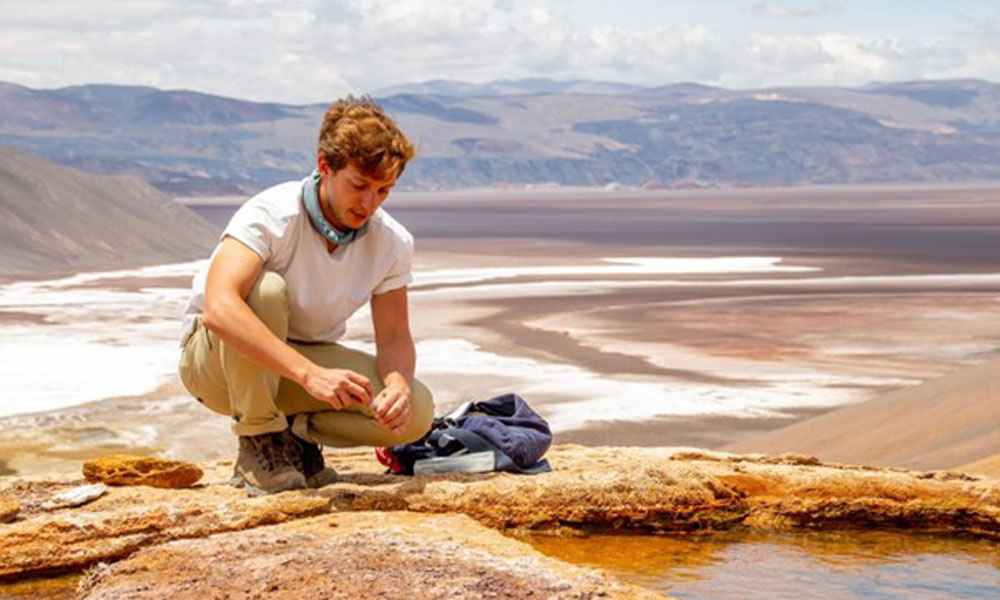
At 5,000 meters above sea level in the Central Andes mountains of Argentina, one finds an arid landscape with mineral-rich salt flats. The stark, almost apocalyptic scene, however, is broken up by lakes of eye-catching oranges and reds, and a surprising abundance of life - at least on the microbial level.
"Low oxygen, intense solar radiation, volcanic minerals - the conditions are similar to when life first arose on Earth," said Federico Vignale, a postdoctoral fellow and microbiologist at EMBL Hamburg who completed his PhD in Argentina. "After millions of years, these lakes have accumulated high concentrations of minerals and salts, and therefore they host diverse and abundant archaea."
Vignale and others from Maria Garcia Alai's research team at EMBL Hamburg have focused their field work specifically on Salar de Antofalla in Catamarca Province, Argentina, with the lake Laguna Diamante at the epicentre of their research. In two-week stints, the research team collects samples, but only in the mornings. Strong afternoon winds can literally flip vehicles. According to Vignale, the sampling conditions are not for the meek; temperatures fluctuate dramatically, oxygen is scarce, and "you get dizzy just standing up."
Extremophilic archaea are in abundance, though. Volcanic activity contributed excessive amounts of arsenic, lithium, and other minerals. To cope, microorganisms have evolved protective pigments that also play a central role in the lakes' distinctive and varied colours. Additionally, some of the lakes bear visible rings that, according to Vignale, "record environmental changes much like tree rings."
"Our research should help us understand the early evolution of life on Earth," Vignale said. "It's the kind of knowledge that also offers potential clues into our search for life on other planets, revealing how organisms might survive under the extreme conditions found there."
Their sampling area actually has many lakes still unknown even to the locals, and yet to be named. Harsh environmental conditions keep most people away, leaving the environment mostly pristine. "It's essentially uncharted territory," Vignale said. "We've now collected more than 30 previously undescribed microbial ecosystems from lakes that had never been studied before."
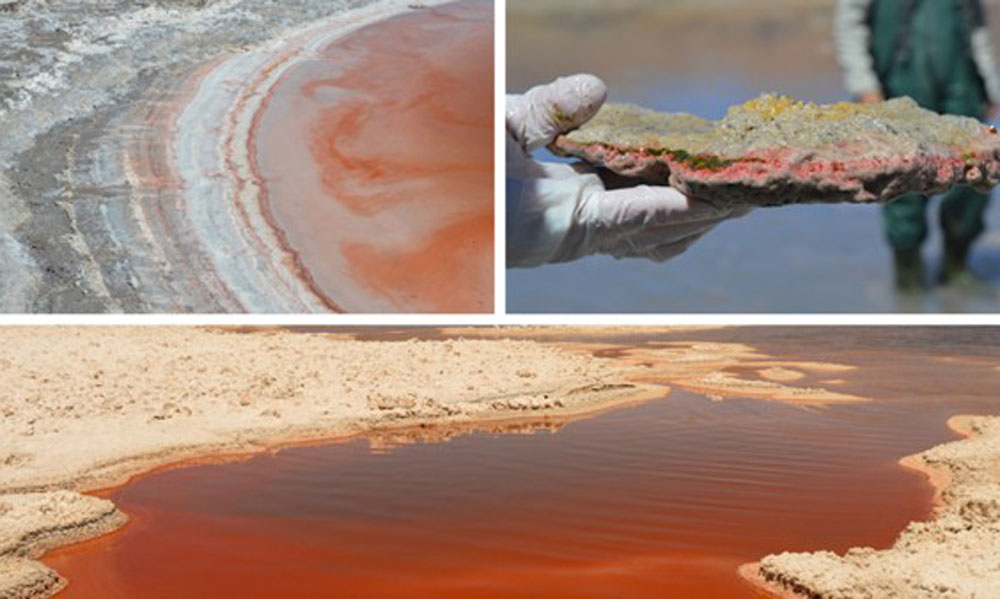
In the brilliant Laguna Diamante, the team discovered biofilms attached to volcanic rocks dominated by Halorubrum archaea. Pigmentation from bright red bacterioruberin helps these archaea withstand intense UV radiation and extremely saline, arsenic-rich water. Colourful microbial mats - layered biofilms - have also been discovered along the southern shore of the lake, covering the sediment. These mats are dominated by archaea, with each layer shaped by tiny shifts in light, oxygen, and chemistry. A green, phototroph-rich layer supplies organic material that sustains the underlying archaeal community.
"The lake is huge, but not deep - probably 20-30 centimetres or so of water," Vignale said. "When you turn rocks from this lake upside down, you find red and green biofilms along with yellow minerals. We isolated archaea from these biofilms."
Back in Germany, the team consults with scientists from several other disciplines and recreates 'microcosms' in the lab. They also use several analytical tools to study species individually. They compare genomes to other Halorubrum archaea in databases. Proteomic analyses look at which archaeal proteins are turned on or off to survive extreme environments, and culturomics explores different living conditions (e.g. with and without oxygen or with and without arsenic). By adjusting temperature, light, and chemical conditions, they can see how the microbial communities respond to environmental changes.
But Vignale's research seems to face a race against time, as the Andean lakes have seen increasing numbers of visitors in recent years. Lithium mining for battery production is disrupting ecosystems. Despite risks, social media influencers have been attracted to this 'new frontier', sparking a limited level of tourism despite the extreme and inhospitable conditions.
The team works closely with indigenous communities, not just getting necessary permissions to do sampling, but also communicating their work to locals. The researchers are there for only short periods; the local community is the real protector of these lakes.
"Some irresponsible tourists get into the lakes for photos, damaging the delicate microbial structures," Vignale said. "It's a reminder of how fragile and unique these ecosystems are. We need to study and protect them while we still can."