
Southern Cross University testing shows the latest woodchip bioreactor designs being trialled on the Coffs Coast are proving effective in significantly reducing fertiliser pollution – by up to 99% – from entering local waterways.
High nitrogen levels entering downstream waterways can cause impacts to fragile ecosystems. It is common across the world for excess nutrients to trigger algae blooms and fish kills in enclosed waterways near intensive horticulture.
The bioreactors use woodchips to support naturally occurring bacteria that convert excess nitrate in farm drainage into harmless nitrogen gas before water leaves the property. The bacteria do this by using carbon from the woodchips and nitrogen in the water as food sources.
The technology has proven particularly effective in high-intensity horticultural systems residing near important environmental assets such as the Solitary Islands Marine Park where nutrient-rich runoff poses a significant risk to biodiversity and water quality.
The ongoing partnership between North Coast Local Land Services, City of Coffs Harbour and Southern Cross University has seen the development of more effective bioreactors over the past six years .
MAIN PHOTO: Graduate Researcher, Rebecca Woodrow, taking water samples from the new bioreactor at Sandy Beach.
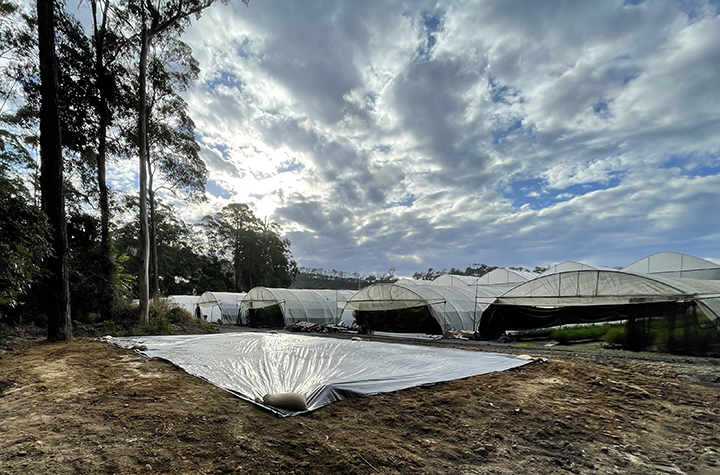
Underneath the tarpaulin, the new bioreactor (foreground) uses woodchips to support naturally occurring bacteria that convert excess nitrate in farm drainage into harmless nitrogen gas before water leaves this horticulture property at Sandy Beach (credit Shaun Morris Local Land Services North Coast).
Research by Southern Cross University has shown that drainage water from some intensive systems can contain nitrate levels many thousands of times higher than water quality guidelines, particularly where fertiliser and irrigation are not well matched to crop demand.
Project leader Professor Christian Sanders, based at Southern Cross University's National Marine Science Centre in Coffs Harbour, congratulated his Graduate Researcher Rebecca Woodrow.
"These results were made possible as a result of a lot of dedicated work by Rebecca. She was able to show the effectiveness of the new bioreactor designs, using specialised equipment as part of her PhD studies," said Professor Sanders.
Rebecca's PhD research showed the newly designed systems, which now can be modified to account for farm wastewater volumes, are able to use naturally occurring bacteria that live on the woodchips to convert nitrate pollution into harmless nitrogen gas before it reaches nearby creeks and the ocean.
"By intercepting farm runoff, bioreactors help reduce the amount of nutrient pollution entering our waterways and entering important marine regions such as the Solitary Island Marine Park," said Professor Sanders.
"Importantly, we found that the bioreactors removed substantial amounts of nitrate while producing very little nitrous oxide, a potent greenhouse gas. That means they are reducing water pollution without simply shifting the problem into the atmosphere."
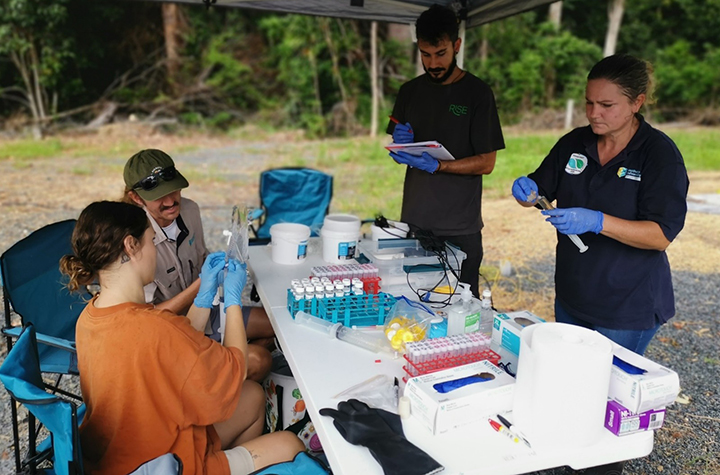
Rebecca Woodrow (right) with the Southern Cross University team taking water samples from the new bioreactor at Sandy Beach developed by LLS North Coast.
Horticulturalists encouraged to strengthen on-farm nutrient management
Ongoing efforts by North Coast Local Land Services include pairing improved irrigation practices with refined bioreactor designs, and testing these efficiencies under extreme weather conditions, promoting their future uptake across the region.
Local Land Services Senior Officer Shaun Morris said the results confirm bioreactors are an important tool and work best when supported by effective input management across the farm.
"North Coast LLS, Southern Cross University and City of Coffs Harbour have clearly shown bioreactors can help treat a range of farm effluents including nitrate, phosphate and pesticides before they leave the property," Shaun said.
Excess nitrate runoff not only degrades water quality and aquatic ecosystems but can release nitrous oxide to the atmosphere – a greenhouse gas with a global warming potential around 300 times greater than carbon dioxide.
North Coast Local Land Services General Manager Alison Bowman said climate change and water quality pressures mean horticultural producers need practical, cost-effective solutions that protect both productivity and the environment.
"Climate variability, intense rainfall events and rising environmental risks are already affecting farming on the North Coast," Alison said.
"Bioreactors are a valuable mitigation tool, but long-term protection of waterways relies on improving how nutrients, water and chemicals are managed across the farm."
Optimising fertiliser use is one of the most effective steps growers can take. Regular soil and tissue testing helps match fertiliser rates to crop needs, reducing excess application and saving input costs. Split fertiliser applications timed to crop growth can further improve nutrient uptake and reduce losses.
"Real progress comes from collaboration and when growers, researchers and industry work together, we see solutions that are practical, effective and scalable," Shaun said.
Professor Sanders praised Local Land Services for its pursuit of more effective bioreactors combined with better farm practices.
"With appropriate design, regular monitoring and adjustments to match farm wastewater volumes, bioreactors can achieve high levels of nitrogen removal and provide a strong safeguard against nutrient pollution entering local waterways," said Professor Sanders.
"However, they are most effective when used alongside best-practice fertiliser and irrigation management, rather than as a replacement for reducing nitrogen inputs at the source."


