
The body's heart muscle, for pumping blood, skeletal muscle, for movement and posture, and brown fat, for heat production, each require a lot of energy and make a lot of waste. And that waste needs to be managed.
Now, scientists from UC San Francisco, Yale University, University Pompeu Fabra, and the Spanish National Center for Cardiovascular Research have uncovered how tissues increase and decrease trash takeout to meet their waste-management needs.
In a study published Sept. 4 in Science Immunology the researchers found that energy-demanding tissues harbor large clean-up crews of immune cells called macrophages, which means "big eater." The size of the clearance crew increases or decreases with the metabolic activity of each tissue based on the amount of trash they produce.
"This balance between high energy demands and number of macrophages seems to be critical for our health," said José A. Nicolás-Ávila , PhD, an assistant professor of Microbiology and Immunology in the UCSF Cardiovascular Research Institute (CVRI) and senior author of the study.
Much of the trash is made of damaged mitochondria - the 'power plant' structures inside of cells that transform nutrients into energy that cells can use. As mitochondria wear out from powering cells, they are discarded as waste. The more energy a tissue requires, the more mitochondria get sent to the trash.
The scientists tracked mitochondria in heart muscle, skeletal muscle, and brown fat in mice and saw that spent mitochondria ended up inside of macrophages. When the team prevented macrophages from cleaning up the waste, the system broke down: heart muscle reduced pumping, skeletal muscle weakened, and brown fat grew cold. In other words, tissues need to stay clean to work at their best.
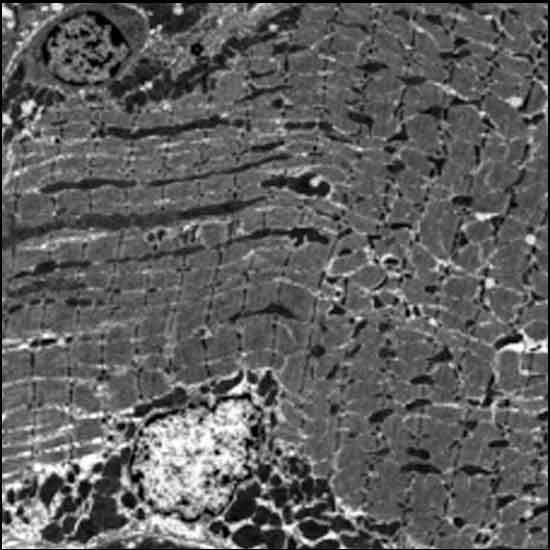
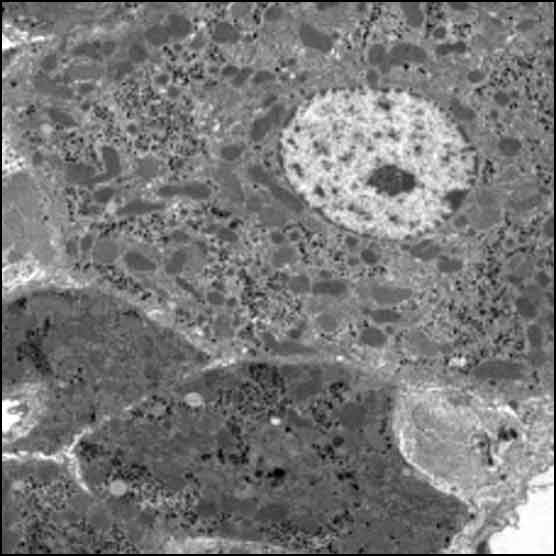
Microscopy of different tissues, showing an abundance of macrophages (dark spots) that manage the cleanup of spent mitochondria from the energy-burning tissue. Images by Pena-Couso et al, Science Immunology
Heart
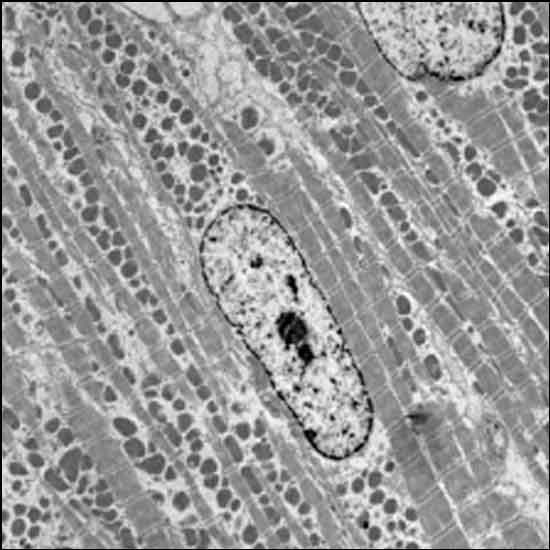
Diaphragm
Liver
They traced the onset of the cleanup process to structural cells called fibroblasts, whose numbers increased in parallel with the tissue's mitochondrial activity. The fibroblasts then made a signal that prompted the macrophages to multiply as well, providing a way for tissues to match the size of their cleanup crews to the amount of waste they produce.
Looking in publicly available datasets of human muscle cells, the researchers found that the number of macrophages tracked muscle mitochondrial activity, a proxy for exertion. The finding suggests that the same waste-management system discovered in mice may also scale with the metabolic demands of human muscles.
"Tissue metabolism, waste accumulation, and macrophage numbers all change with aging," said Laura Pena-Couso, PhD, co-first author of the study and a member of the CVRI. "Our findings reveal the signals that couple these processes, opening the possibility that targeting this system could help preserve tissue function as we age."
Authors: The other UCSF author is Laura Pena-Couso, PhD. For all authors, see the paper.
Funding: This work was supported in part by the National Institutes of Health (P30DK098722). For all funding, see the paper.


