
Successful work: The Collaborative Research Centre "Cardio-immune Interfaces" at Würzburg University Medicine receives a further twelve million euros from the German Research Foundation.
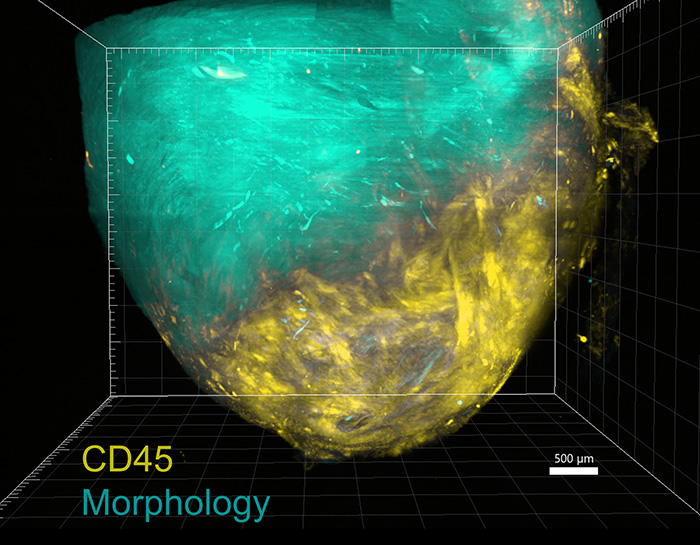
The inflammatory reactions and immunological processes that are triggered in various heart muscle diseases are being investigated in the Würzburg Collaborative Research Centre (CRC) " Cardio-immune Interfaces ". Researchers from cardiology, immunology, RNA biology, bioinformatics, imaging, nuclear medicine and pharmacy are involved.
"We are bringing together experts who have never worked together before. This has enabled us to establish a globally unique centre in Würzburg," says Professor Stefan Frantz, Director of the Medical Clinic I at the University Hospital of Würzburg (UKW) and spokesperson for the CRC.
The dynamics and close integration of the individual projects, from basic research to clinical application, have also convinced the reviewers: the German Research Foundation (DFG) has approved the second funding period of the CRC, which has been running since 2022: There will be a further twelve million euros in funding over the next four years.
Inflammatory reactions as a key mechanism
Inflammatory reactions and immunological processes play a key role in many heart diseases - with both protective and harmful effects.
After a heart attack, for example, immune activation initially supports healing. However, if the reaction persists, it can impair heart function.
The immune system also plays a central role in chronic circulatory disorders and cardiac insufficiency. "Only when we understand the underlying mechanisms can we utilise them therapeutically in a targeted manner," says Stefan Frantz.
Fascinating interplay
"I am personally fascinated by the interactions between antigens and antibodies and between antigens and T cells. In other words, how our immune system reacts to the body's own damage with its active defence cells, the T cells, and its tools, the antibodies," says Stefan Frantz.
"I also find it exciting how these processes are influenced by infections and what insights modern imaging techniques can provide. This allows us to investigate processes in the body that were previously almost impossible to understand."
Professor Alma Zernecke-Madsen, deputy spokesperson of the CRC and Head of the Institute for Experimental Biomedicine II at the UKW: "In our network, we are looking at the heart through the lens of immunology. Our aim is to identify new immunological mechanisms and thus also to find approaches for the diagnosis and immunotherapy of heart failure."
Young talent for a new field of research
In order to network the research field nationwide, CRC member Professor Gustavo Ramos initiated the "Cardio-Immunology" working group in the German Society of Cardiology in 2025: the national network aims to strengthen research at the interface of cardiac medicine and immunology.
Ramos is also heavily involved in promoting young talent. For example, he initiated the "Cardio-Immune Interfaces Summer School", which is organised by students. It attracts doctoral students from all over the world.
"To make progress in cardioimmunology, we need young scientists who think both cardiologically and immunologically - this is the only way to achieve true translation and interdisciplinary collaboration," explains the biologist.
Publications, patents, personnel: impressive track record
Another success story according to Stefan Frantz: Overall, one in three of the almost 30 researchers leading a project in the CRC was awarded a professorship or was retained at the Würzburg site during the first funding period. In addition, around 40 doctoral positions were created.
The number of publications from the first funding period is also impressive: The SFB delivered more than 200 publications, one in five of which was published in a scientific journal with an impact factor of over 20, i.e. in a globally outstanding journal. In addition, two patents were registered.
New projects: CAR-T cells, nanotechnology, spatial transcriptomics
Würzburg has established itself internationally as an important research centre for CAR-T cell therapies. These cells were originally developed for cancer treatment. In the EU, they have so far only been authorised for the treatment of certain blood cancers.
In contrast to conventional chemotherapies, CAR-T cells do not fight the tumour directly, but instead specifically boost the patient's own immune system. This is why this technology is now also being researched for other diseases - now also in the CRC "Cardio-immune Interfaces". In the second funding period, CAR-T cells are to be constructed that have a positive effect on the heart.
Another new project comes from the field of pharmacy: nanoscale carrier systems are being developed to transport drugs or imaging components to defined target structures in the body.
Also new is a project in the field of Spatial Transcriptomics, in which gene expression profiles of individual cells are analysed directly in the tissue context. These processes can be functionally analysed using organoid models developed in-house.
New paths for diagnostics and therapy
All of the CRC's established research projects are also being continuously advanced. "After all, the CRC is designed for a maximum funding period of twelve years," says Stefan Frantz and looks back on the consortium with pride and pleasure: "The whole thing has developed wonderfully in terms of structure. The entire site is committed. This brings us much closer to our goal of developing new immune-based diagnostic and therapeutic approaches in the field of cardiovascular medicine."


