
Key Points
Deuterium labelled lipids were used to measure lipid biomarkers in a blood test to help diagnose breast cancer
The blood test complements mammograms in women with dense breast tissue
The National Deuteration Facility developing bespoke synthesis methods for the supply of deuterated lipids to an Australian biotechnology company
The National Deuteration Facility has supplied deuterium labelled lipids to quantify lipid biomarkers in a blood test to help diagnose breast cancer.
Deuteration replaces an isotope of hydrogen in molecules with deuterium.
BCAL Diagnostics, an Australian biotechnology company, developed the first-in-class blood test, BREASTEST plusTM, which was first offered in Australia at Sydney Breast Clinic last year.
The technology measures a panel of certain lipid markers in blood plasma.
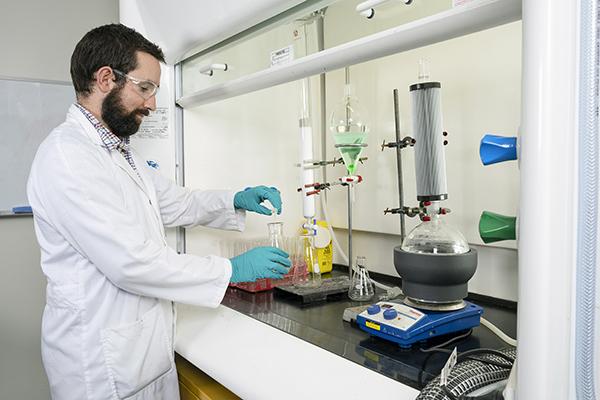
Chemists at the National Deuteration Facility recognised that developing bespoke synthesis methods for deuterated lipids would provide the stable isotope-labelled internal standards needed for quantitative mass spectrometric analysis for this type of diagnostic testing.
"Accuracy is paramount for a viable diagnostic test. Mass spectrometry, due to its high sensitivity and specificity, is the preferred method for characterising the complex lipidome. However, for quantitative mass spectrometric analysis, one needs to account for numerous sources of variability. The gold-standard to achieve this is the use stable isotope labelled internal standards," explained Dr Michael Moir, Research Chemist, leading the effort of lipid synthesis at the National Deuteration Facility.
Leveraging its experience in the synthesis of deuterium labelled phospholipids, the facility began to produce specifically deuterated lipids, suitable for quantitative lipidomic analyses to supply a series of deuterium labelled compounds to BCAL Diagnostics.
The tests, which detect breast cancer markers, are being integrated into national cancer screening programs, making them accessible to a broader cohort in Australia. Currently testing is available across metropolitan Sydney and at select blood collection sites in Melbourne and Brisbane.
The test complements mammograms, particularly in women with high breast density, which affects approximately 40-50 per cent of Australian women. High breast density can mask abnormal lesions, making diagnosis challenging.
Approximately 1 in 7 women in Australia will be diagnosed with breast cancer in their lifetime. Early diagnosis will lead to improved survivability rates.
"Being involved in translational science is a privilege. Through our role as an NCRIS-funded national facility and as a contributing member of Australia's expanding lipid research network, we will continue to collaborate with BCAL to help facilitate their ongoing efforts for improved diagnostic tools for breast and other types of cancer.
"We also look forward to working with colleagues across the broader lipidomics community, where precise measurement and accurate quantification are essential for regulatory compliance in chemical analysis" said Dr Tamim Darwish, Director of the National Deuteration Facility.


