
In everyday life, our genetic material is constantly under attack from many factors. Environmental influences such as light, along with internal processes like inflammation, can generate oxidative stress that damages DNA and its downstream partner, RNA, which can lead to faster aging and diseases such as cancer.
For decades, scientists have studied how oxidative stress affects DNA and have found that guanine, one of its four building blocks, is particularly vulnerable to oxidation. Yet despite extensive research, a critical blind spot in standard testing methods has remained.
Addressing this gap, researchers at the Institute of Multidisciplinary Research for Advanced Materials (IMRAM), Tohoku University, went beyond conventional methods and uncovered a previously hidden form of DNA damage.
"Our findings reveal that some forms of DNA damage have remained hidden due to limitations in standard detection methods," said Assistant Professor Yuuhei Yamano. "This discovery changes how we understand oxidative DNA damage, opening new possibilities for more accurate studies and improved technologies for working with genetic material."
Standard methods for detecting DNA damage rely on breaking DNA into fragments and analyzing them using ultraviolet (UV) light. However, the research team from Tohoku University used an advanced mass spectrometry-based approach that allows DNA to be analyzed directly, without breaking it down first.
Using this approach, they discovered that in the presence of a photocatalyst and light, abasic sites - gaps where a DNA letter is missing - were formed. It was also found that this type of damage is quite common and represents one of the main forms of DNA damage, alongside previously known types affecting guanine. This process is caused by highly reactive oxygen molecules (singlet oxygen) produced by the photocatalyst, which attack DNA and remove its building blocks.
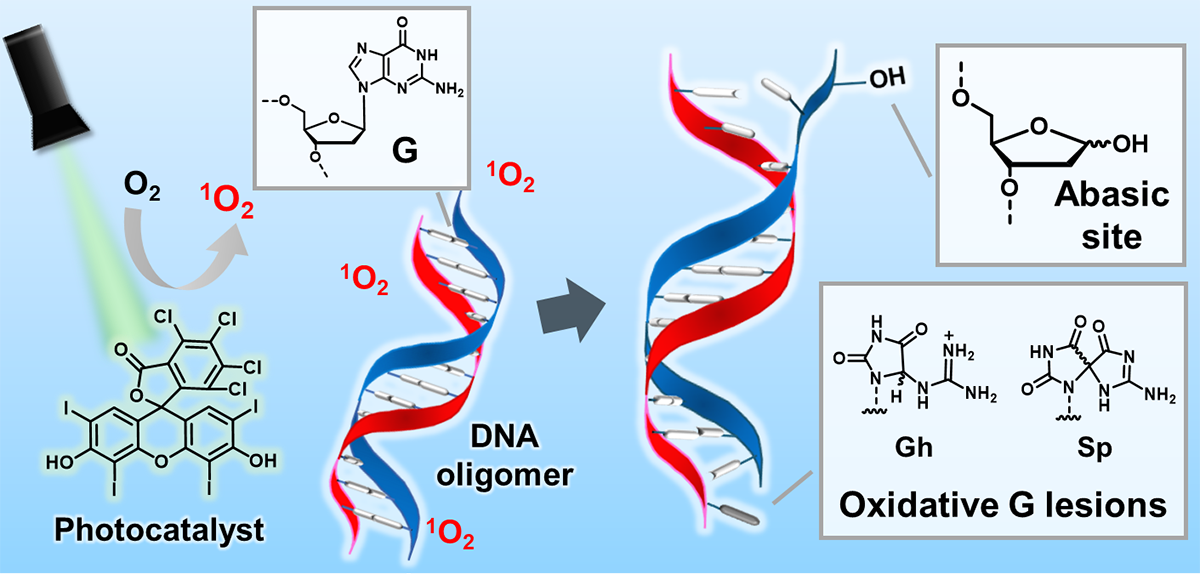
Furthermore, by studying different DNA sequences without breaking them, the researchers identified specific "hotspots" where damage caused by oxidative stress occurs more frequently. These are regions where DNA is more exposed, especially at the ends, making guanine more likely to be lost.
"DNA is not equally protected along its entire length," said Associate Professor Kazumitsu Onizuka. "These variations in exposure may play an important role in determining how damage forms."
Taken together, these findings offer a new perspective on DNA damage, highlighting previously overlooked mechanisms. This improved understanding may help drive future advances in research and support the development of more reliable technologies for working with genetic material.
- Publication Details:
Title: Singlet oxygen-mediated photocatalytic generation of abasic sites in DNA
Authors: Yuuhei Yamano, Kazumitsu Onizuka, Okan Altan, Madoka Sasaki, Ahmed Mostafa Abdelhady, Shigeki Sasaki, and Fumi Nagatsugi
Journal: Communications Chemistry


