
Leaf-cutter ants are considered a problem by cacao farmers in Peru. However, the damage they cause can be limited. This is shown by a new study from the University of Würzburg.
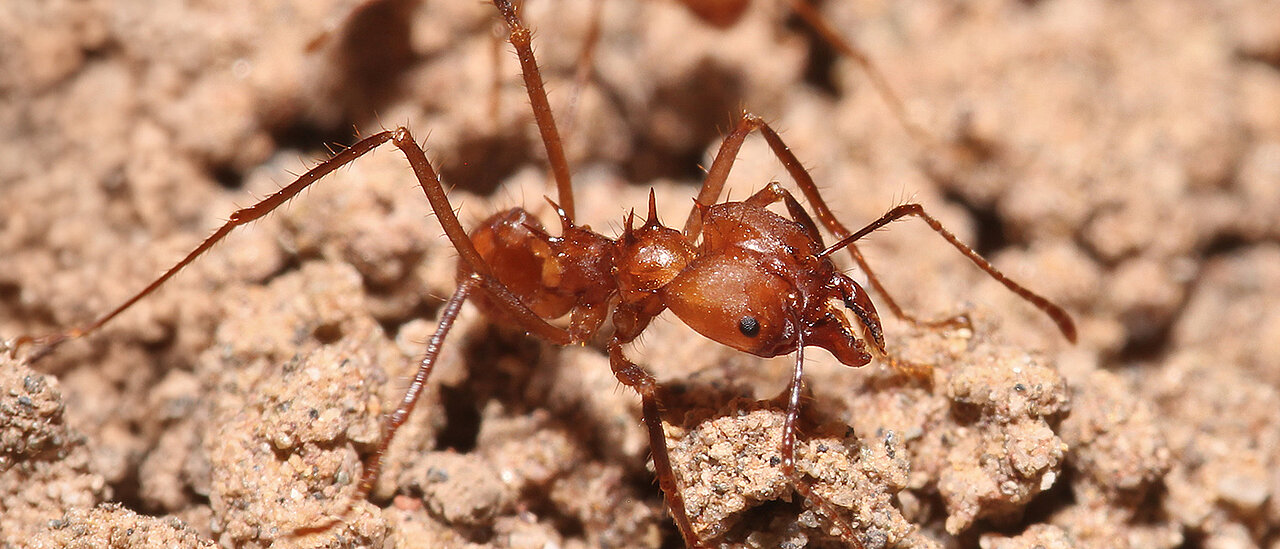
Cocoa cultivation in so-called agroforestry systems is widespread in the Peruvian Amazon rainforest. There, cocoa plants grow alongside other trees in the same area. The problem is that leaf-cutter ants also like to build their nests there. Cocoa farmers often consider these insects pests because they cut off leaves, flowers and fruits, thereby reducing crop yields. Farmers, therefore, frequently use pesticides to control leaf-cutter ants.
A research team at Julius Maximilian University of Würzburg (JMU) has now investigated the impact of leaf-cutter ants on cocoa cultivation in agroforests and how best to respond to it. The key finding: ants are not necessarily harmful; they can also provide additional benefits to the cacao agroforest. What's more, the damage they cause can be reduced using simple methods that also have a positive effect on biodiversity.
The tension between damage and benefit
Blanca Iváñez Ballesteros, postdoctoral researcher at the D epartment of Animal Ecology and Tropical Biology - Zoology III at JMU, was responsible for this study. The results are part of her dissertation in the DFG-funded project EcoCacao led by Prof. Ingolf Steffan-Dewenter with colleagues from Göttingen, Vienna and Lima, and have been published in the latest issue of the Journal of Applied Ecology.
'Leaf-cutter ants are not just pests. As "ecosystem engineers", they significantly alter the soil structure and nutrient dynamics of their environment. For sustainable agriculture, it is therefore crucial to understand the trade-offs between the damage caused by leaf-cutter ants and the ecological services they provide,' says the scientist, describing the background to her work.
The key findings of the study can be summarised in five points:
- Where do leaf-cutter ants build their nests? Blanca Iváñez Ballesteros found that there are more ant nests when the canopy above the cocoa trees is denser. This probably provides the ants a suitable habitat with additional resources.
- How much damage do they really do to the cocoa? Trees right next to a nest can lose up to 90% of their leaves. But the impact drops quickly with distance: just 15 metres away, herbivory falls below 10%. So overall, the total damage across the whole plantation is often less than you'd think.
- Ants have a 'favourite food': In experiments, the researcher found that the ants have a clear ranking. They much prefer papaya, oranges and the native timber tree Capirona to cocoa. Differences in leaf chemistry, including compounds such as caffeine in cacao leaves, may help explain this pattern.
- The role of the forest: When the plantation is located in a landscape where there is still a lot of forest (approx. 80 per cent tree cover), the damage to cocoa is significantly lower. The reason for this could be that there are more natural enemies for the leaf-cutter ants in the forest, which control their activity.
- Ants as 'engineers': Leafcutter ants alter the soil with their huge tunnels and waste piles. Surprisingly, the study found lower nutrient levels in the surface soil close to nest entrances. This suggests that nutrients may accumulate deeper in the soil, creating small-scale differences in soil conditions around the nests.
Overall, the study advocates biodiversity-friendly farming that utilises both local tree diversity and the preservation of adjacent forests to create productive and resilient cropping systems. And for agriculture, the conclusion is clear: instead of combating ant nests with poison, farmers should focus on a clever mix of trees. By planting trees such as papaya as a 'distraction' and protecting the surrounding forest, they can produce good cocoa while preserving biodiversity.
Original publication
Local canopy cover, shade tree identity and landscape tree cover shape density and herbivory in cacao agroforestry systems. Ivañez-Ballesteros, B., Opolka, M., Aycart-Lazo, P., Ocampo-Ariza, C., Maas, B., Thomas, E., Tscharntke, T., Peters, M. K., Steffan-Dewenter, I. (2026).Journal of Applied Ecology. DOI: 10.1111/1365-2664.70359, https://besjournals.onlinelibrary.wiley.com/doi/10.1111/1365-2664.70359


