
On Pacific tuna vessels, sensors attached to fishing gear collect temperature readings in waters that scientists rarely sample. These measurements support weather forecasting, fisheries management and research on tropical cyclones.
Every day, commercial fishing vessels travel through some of the most remote and poorly observed areas of the Pacific Ocean. Now, some of these vessels are doing more than catching fish: sensors attached to their fishing gear are collecting data from hundreds of metres below the ocean surface.
Through a growing regional network led by the Pacific Community (SPC), these observations are helping fill important gaps in our knowledge of the ocean, while contributing to better weather and climate forecasts and more sustainable fisheries management.
The Pacific Ocean: A global climate engine
The tropical Pacific Ocean is fundamental to Earth's climate. It is the birthplace of the El Niño-Southern Oscillation (ENSO), influences tropical cyclone development across the Pacific and Indian Oceans, drives atmospheric circulation patterns affecting rainfall on several continents and absorbs a significant proportion of the excess heat generated by climate change.
Understanding these processes depends on sustained observations of the ocean's physical state. Measurements of sea-surface and subsurface temperature, salinity, currents, sea level and atmospheric conditions underpin weather forecasting, seasonal climate outlooks and long-term climate projections.
Although satellites have transformed our ability to observe the ocean surface, they reveal conditions only within the upper few centimetres. Many of the processes that influence weather, climate and marine ecosystems extend hundreds of metres below the surface. Upper-ocean heat content, for example, is a critical factor in tropical cyclone intensification and the development of ENSO events, which can contribute to severe droughts and water-security challenges across many Pacific Island countries.
Changes in the depth of the ocean layer where temperature drops rapidly (the thermocline) also influence ocean productivity and the distribution of economically important species such as tuna. Improving subsurface observations is therefore essential for advancing operational meteorology, oceanography, fisheries science and climate research worldwide.
Filling critical observation gaps
The Western and Central Pacific Ocean encompasses more than one fifth of the Earth's surface and supports the world's largest tuna fishery. Despite its global importance, large areas remain poorly sampled beneath the ocean surface.
Global observing programmes, including Argo profiling floats, research cruises conducted through the Global Ocean Ship-based Hydrographic Investigations Program (GO-SHIP), drifting buoys, tropical moorings and satellites, have transformed our understanding of large-scale ocean processes. However, significant observational gaps remain, particularly within the Exclusive Economic Zones (EEZs) of Pacific Island countries, the areas of ocean where they have rights over marine resources.
Research vessels are expensive and infrequent, merchant ships follow established shipping routes, and autonomous observing systems alone cannot provide the spatial coverage required for many regional applications. Complementary observing approaches are therefore needed to routinely collect high-quality measurements over extensive areas.
Fishing vessels as Ships of Opportunity
In an effort to provide broadscale ocean data coverage in remote areas efficiently and cost effectively, the University of New South Wales (UNSW Sydney) worked with technology company ZebraTech and fishing communities to develop a new data collection system through the Moana Project, a New Zealand Government-funded research initiative aimed at improving understanding and forecasting of the ocean.
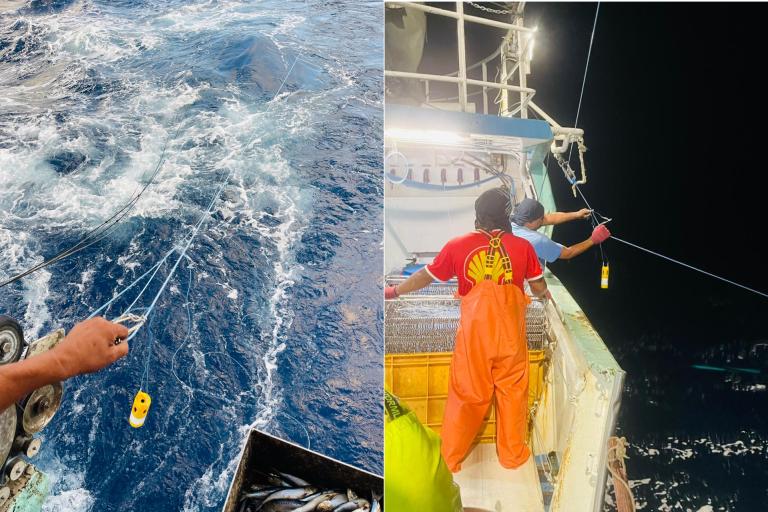
Compact temperature-pressure sensors were developed and attached to multiple types of fishing gear to collect high-resolution temperature profiles during fishing. Solar-powered deck units automatically receive, store and transmit observations whenever vessels enter satellite or cellular communication range. The system operates with minimal crew intervention, enabling continuous ocean observations during routine commercial fishing operations.
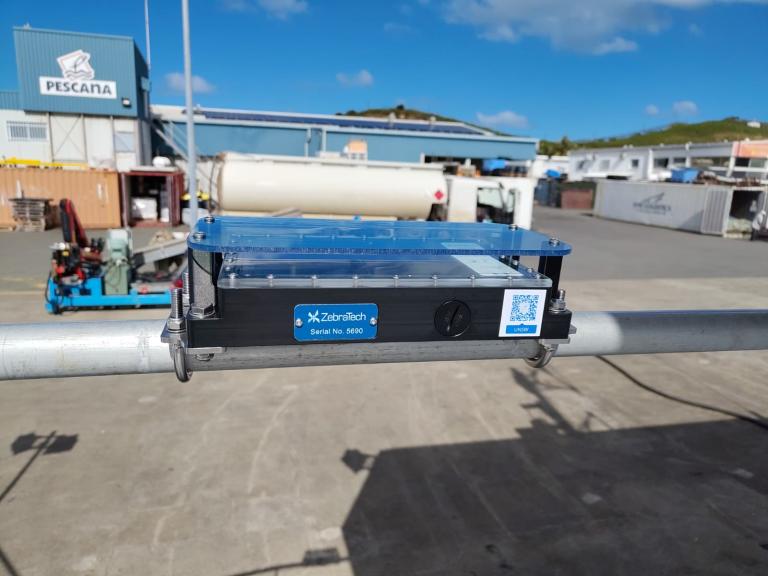
The data are returned to the fishers first so they can benefit directly from the observations they collect. This system was subsequently adopted by Australia's Integrated Marine Observing System (IMOS) in 2023 where the programme is known as Fishing Vessels as Ships of Opportunity (FishSOOP), and has since expanded internationally.
Building a Pacific observing network
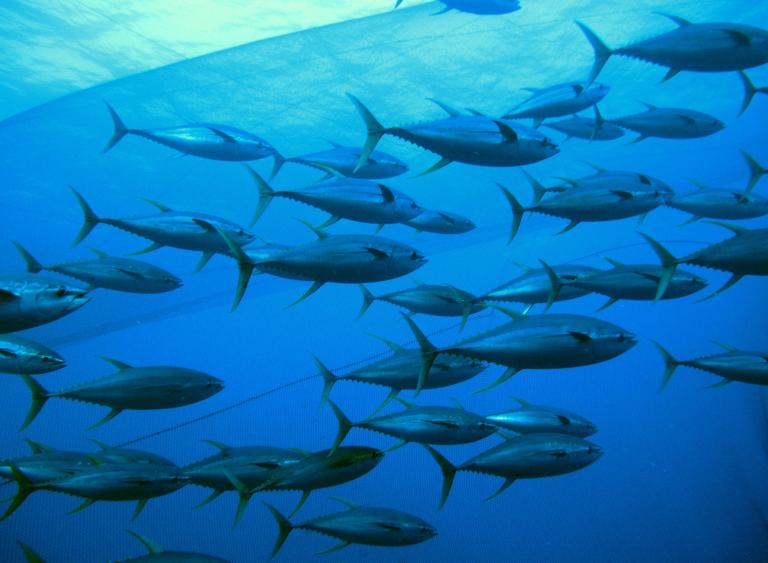
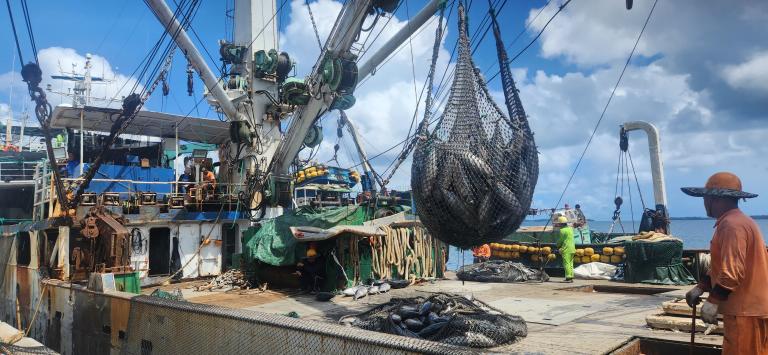
Commercial tuna fishing vessels routinely operate across remote areas of the western and central Pacific where scientific observations are sparse. During normal fishing operations, purse seine nets, used to catch schools of fish, and longlines naturally move through the upper ocean, providing an ideal platform for collecting subsurface environmental observations at depths of up to 400 m. These observations can also provide valuable information about the environmental conditions that influence fisheries.
Building on the successful initiatives in Australia and New Zealand, in 2025 SPC established the Fishing Vessel Observation Network (FVON), a regional implementation of the FishSOOP concept. The initiative forms part of the Pacific Islands Global Ocean Observing System (PI-GOOS), the Pacific regional component of the Global Ocean Observing System (GOOS).
SPC has collaborated with UNSW Sydney, IMOS, ZebraTech (New Zealand), national fisheries administrations, fishing industry associations and commercial tuna fishing companies to establish a regional observing network based on voluntary participation. Fishing companies have embraced the initiative because it improves understanding of the environmental conditions influencing tuna distribution, while also providing a practical demonstration of the industry's contribution to global ocean science.
Designed to operate automatically with little disruption to commercial activities, the programme does not collect catch or fishing effort information from participating vessels. Oceanographic observations are anonymized before entering scientific databases and made available to users in near real time.
Expanding the network
Since the first installations on six Papua New Guinea-based purse seine vessels in early 2025, FVON has expanded rapidly across the Pacific.
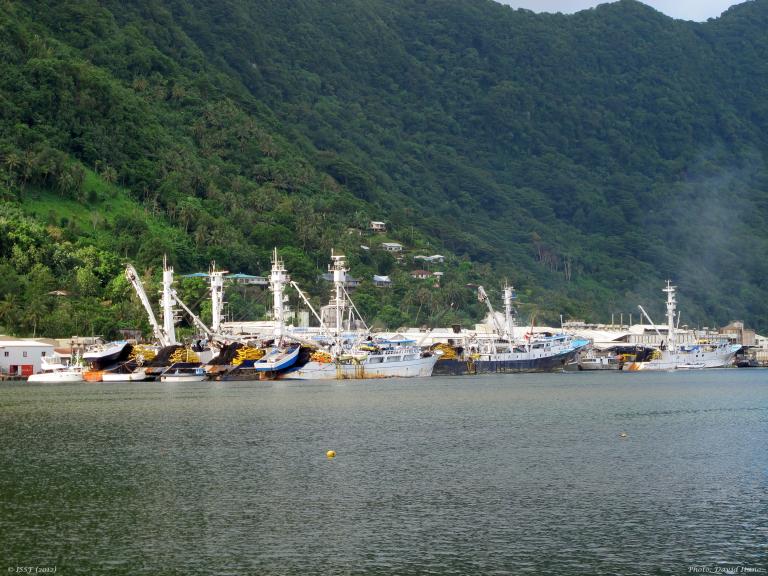
By August 2026, 40 commercial tuna vessels had been instrumented, including eight purse seiners and 32 longline vessels, operating from six SPC members: Fiji, Papua New Guinea, Solomon Islands, Samoa, French Polynesia and New Caledonia. Equipment had also been positioned in Tonga and the Federated States of Micronesia to support further expansion in northern regions across Micronesia.
Participating vessels had completed 4 346 subsurface temperature profiles, generating more than 3.83 million individual temperature observations across the Bismarck Sea, Solomon Sea, North Pacific Ocean and South Pacific Ocean. Fiji currently contributes the largest proportion of observations, followed by Papua New Guinea, French Polynesia, Samoa, Solomon Islands and New Caledonia, providing unprecedented coverage in regions where subsurface measurements have historically been limited.
Ocean observations for better forecasts
The value of FVON extends well beyond fisheries. Following quality assurance, observations are assimilated into operational oceanographic databases and numerical modelling systems. Data are delivered in real time to the World Meteorological Organization (WMO) through the Global Telecommunication System, allowing them to be used in operational ocean and atmospheric forecasts. They are also available for regional ocean prediction and research.
FVON data complement observations from Argo floats, research vessels, drifting buoys and satellites, supporting estimates of upper-ocean heat content, model validation and ocean analyses used in weather forecasting, seasonal outlooks and climate projections. Better representation of upper-ocean conditions can also enhance forecasts of tropical cyclone intensity, marine heatwaves and seasonal climate variability, including drought.
Testing the value for cyclone forecasts
FVON is also contributing to the GOOS Ocean Observing Co-Design Tropical Cyclone Exemplar Project, an international initiative designed to improve tropical cyclone forecasting through better integration of ocean observations, forecasting systems and user requirements. In a South Pacific pilot study, SPC and PI-GOOS are collaborating with partners including the United States National Oceanic and Atmospheric Administration (NOAA), Rutgers University and UNSW to assess how FVON observations can strengthen ocean analyses and coupled forecasting systems used for tropical cyclone prediction. The work is being carried out in consultation with the WMO Regional Association V Tropical Cyclone Committee for the South Pacific and South East Indian Ocean.
A key focus is understanding how better measurements of upper-ocean temperature and heat content can influence forecasts of cyclone intensity and rapid intensification. FVON temperature profiles are being compared with outputs from operational ocean models, alongside observations from Argo profiling floats and other observing platforms to assess their contribution to forecast skill and identify opportunities for improved data assimilation.
Supporting sustainable fisheries
Ocean observations are equally important for sustainable fisheries management. The Western and Central Pacific supplies more than half of the world's tuna catch, making it one of the most valuable fisheries globally. Tuna distribution is closely linked to oceanographic conditions, and SPC has invested extensively in ecosystem models such as the Spatial Ecosystem and Population Dynamics Model (SEAPODYM) to understand how climate variability and fishing pressure influence tuna populations.
FVON observations improve validation of these models, increasing confidence in projections of future tuna distribution in a changing climate and supporting adaptive fisheries management by Pacific Island countries and regional fisheries management organizations. Better forecasts ultimately strengthen food security, national economies and the resilience of communities that depend on tuna resources.
A Pacific contribution to global ocean observing
Since its launch as a pilot project, FVON has grown into a regional observing network that is already delivering millions of high-quality ocean observations each year.
Its significance extends well beyond the Pacific. Through PI-GOOS, SPC is helping integrate Pacific observing priorities within GOOS, while strengthening collaboration with WMO, the Intergovernmental Oceanographic Commission of United Nations Educational, Scientific and Cultural Organization (IOC-UNESCO) and other international observing programmes.
By the end of 2026, SPC aims to have installed instrumentation on 70 commercial tuna fishing vessels operating throughout the EEZs of up to 12 SPC Members. This expansion will substantially increase the density and geographic coverage of upper-ocean observations across one of the world's most climatically significant yet under-observed maritime regions.
Future development will extend beyond subsurface temperature to include additional physical, biological and bioacoustic observations (which use sound to detect and study marine life), further strengthening ocean data collection, operational oceanography, ecosystem assessment and climate research.
FVON demonstrates how regional organizations, individual fishers and companies can contribute to global ocean observing. As the climate changes, sustained ocean observations will become increasingly important for improving weather forecasts, strengthening climate services, supporting sustainable fisheries and helping communities adapt.


