
Several African countries are keen to brand themselves through ambitious climate projects. But these green initiatives can, in some cases, fuel conflict - and because they are part of the global green transition, they often escape critical scrutiny. This is explained by Mads Yding, a researcher at the University of Copenhagen.
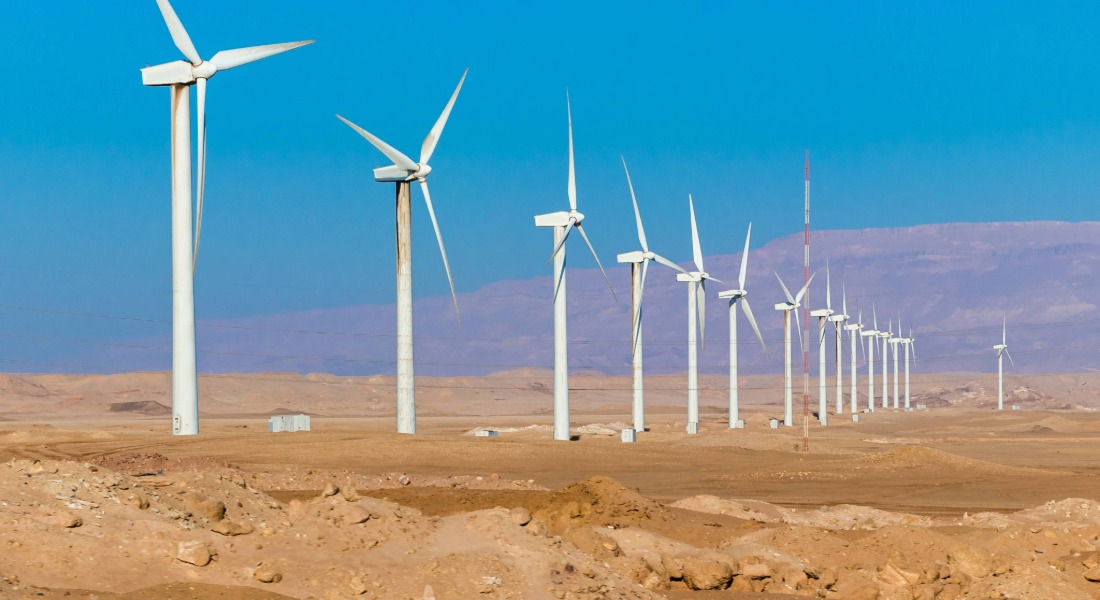
There is broad political support for the green transition, and in Africa several state governments see it as an opportunity to present themselves as modern and forward-thinking nations. However, even when driven by well‑intentioned climate agendas, green initiatives rolled out across the continent can lead to conflict and growing inequality in the areas where wind farms, solar parks or conservation projects are established.
These dynamics are at the heart of the work of postdoctoral researcher Mads Yding from the Centre of African Studies at the University of Copenhagen. Together with Marie Gravesen and Peter Albrecht from the Danish Institute for International Studies (DIIS), he is guest editor of a special issue of the academic journal World Development. All the articles in the special issue focus on Africa's green initiatives and the conflicts they can generate.
"At its core, this special issue is an attempt to look at natural resource conflicts in Africa in a new way, because the circumstances have changed," says Yding.
"There has always been a focus on oil, diamonds and other classic resources. But the green transition is changing how natural resource conflicts are playing out in Africa right now - and that is what the articles in our special issue explore in different ways."
Far from Nairobi
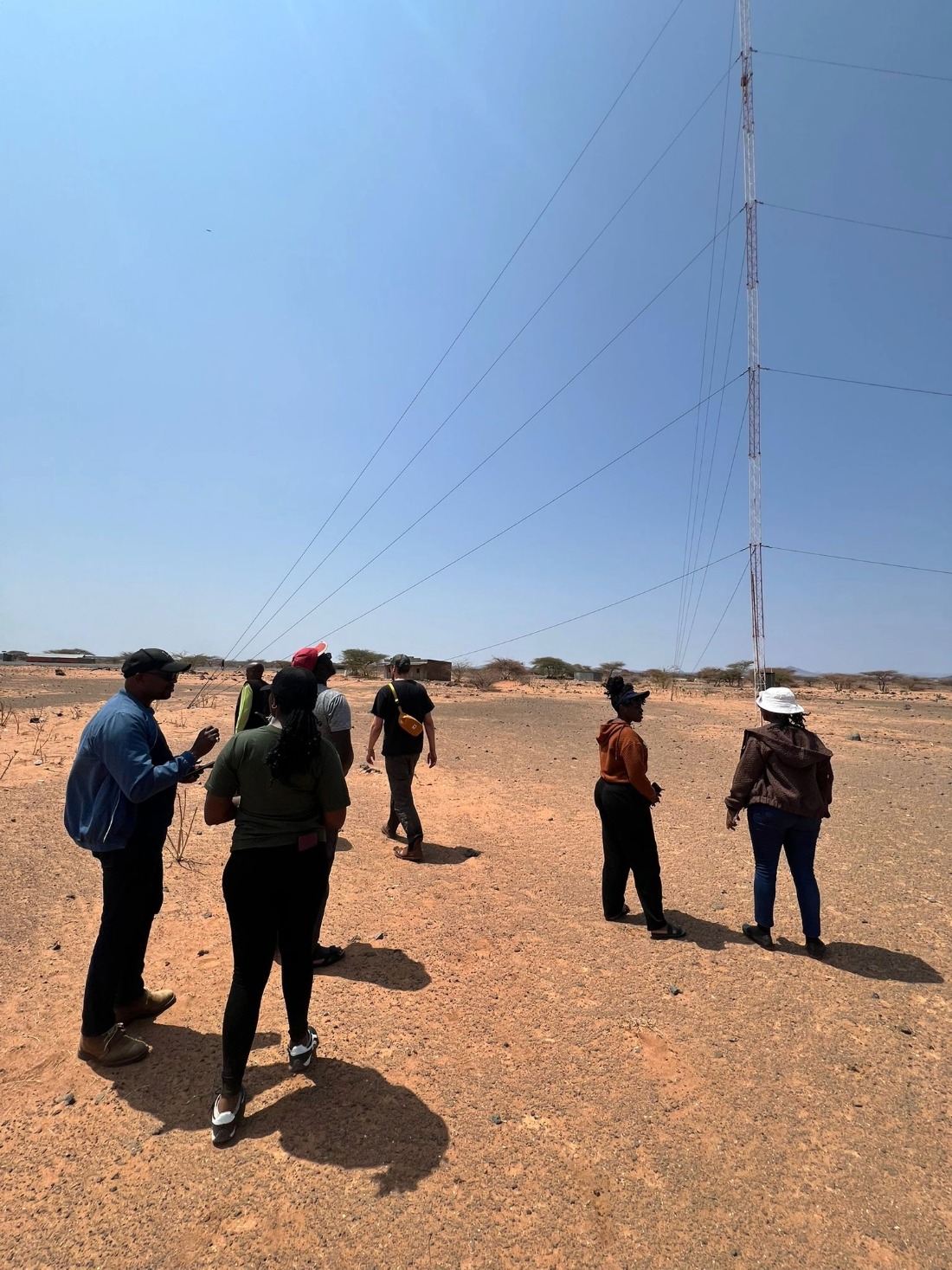
Yding and his colleagues have studied northern Kenya in particular. Using this vast, arid region as a point of departure, he explains how green initiatives can give rise to and exacerbate local conflicts across Africa.
Traditional agriculture is not viable in these areas. Instead, they are home primarily to semi‑nomadic pastoralist communities.
"These regions have been marginalised since colonial times," Yding explains.
"There have been few development projects, infrastructure is poor, and most people are not connected to the electricity grid. At the same time, the area borders South Sudan, Ethiopia and Somalia, and has long been affected by conflict and lawlessness."
Kenya is one of the countries that actively seeks to position itself as a leader in the green transition. But the distance from the modern metropolis of Nairobi to northern Kenya is vast - not just geographically, but in terms of development. In some of these regions, it barely makes sense to speak of a 'green transition', because there has never been a heavy reliance on fossil‑fuel infrastructure to begin with. That stage of development is effectively being skipped.
Crucially, the electricity generated by wind farms and solar installations in northern Kenya rarely benefits local communities. Instead, it is transmitted southwards to Nairobi and the central highlands.
Conflict and inequality
According to Yding, Kenya is eager to present itself as a pioneer, welcoming investment in renewable energy, conservation and national parks.
But conservation efforts can quickly become a problem for local populations, many of whom depend on seasonal mobility for their livelihoods. Large areas are fenced off in the name of protecting wildlife and ecosystems.
"One of the worst things that can happen if you are a herder is to lose mobility - to lose access to grazing land and water sources. That is what people's lives and livelihoods depend on," Yding says.
Northern Kenya's dry climate, strong winds and many hours of sunshine make it an attractive site for wind and solar power generation.
"Because the area is often described as barren and unproductive, many Kenyan politicians - as well as foreign investors - perceive northern Kenya as empty land," Yding explains.
"That is why we refer to it as a frontier - a supposedly vacant space full of opportunity."
But that perception is deeply misleading.
"People live there. Over generations they have developed complex social systems and intricate understandings of land rights and ownership," he says.
According to Yding, there have been cases where land has been transferred to investors without adequate recognition of, or consent from, local communities - and often without compensation beyond a small local elite. The result is growing inequality.
"It creates enormous conflict when land that is often communally owned, rather than privately held, suddenly becomes valuable to outsiders," he says.
"It begs the questions: Who is entitled to negotiate on behalf of whom? Who actually has rights to the land? And where do the money and benefits end up?"
Local communities are frequently overlooked or deliberately sidelined in these processes, Yding adds, driven aside by powerful political and investment interests.
In the name of the climate
While Yding and his fellow editors focus primarily on Kenya, other contributors to the special issue examine cases from across the African continent. And although local conditions differ, a clear pattern emerges.
"The overarching dynamics are the same," Yding explains.
"These are areas that until recently had little economic value in the eyes of the outside world, but suddenly acquire it. And there is a strong sense of urgency: a biodiversity crisis, a climate crisis - something has to be done now."
In some situations, that urgency can serve to justify or obscure the fact that green initiatives may in fact create inequality and conflict at the local level.
Yding argues that the global public is often more willing to overlook human rights violations and other problematic practices when they happen in the name of the green transition and climate action.
"We recognise this dynamic from our own country. We want wind turbines and green energy - but preferably not in our own backyards. If parts of Africa are imagined as almost empty land, it can easily seem reasonable to place wind farms there. If it were an oil refinery instead, it would be much harder for many people to defend," says Yding.
Mads Yding stresses that neither he nor his colleagues are opponents of the green transition in Africa.
"We do not want to sound indifferent to the biodiversity and climate crises. These are extremely serious challenges. And some of the areas we study in Africa are already being hit hard by climate change - droughts are becoming longer and more severe," he says.
"For us, this is not about stopping green initiatives. It is about drawing attention to how they can be implemented in a more just and equitable way."
Facts
Mads Yding is guest editor, together with Marie Gravesen and Peter Albrecht (DIIS), of a special issue of World Development titled "Scarcity, Natural Resources and Conflict in Africa".
The issue features new, peer‑reviewed research on conflict, green initiatives, mining and natural resources across several African countries.


