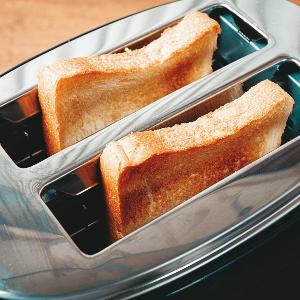
© IMAGO / Zoonar
Crusty bread, fried meat, and roasted coffee owe their characteristic taste and browning to chemical reactions that occur when foods are heated. In the so-called Maillard reaction, amino acids - the building blocks of proteins - react with sugars to produce modified forms of natural dietary compounds. Their influence on gut bacteria has been little understood. An interdisciplinary team led by PD Dr. Jürgen Lassak (LMU Munich) and Professor Michael Hellwig (TU Dresden) has now investigated how such dietary compounds are formed, obtaining new insights into the interplay of diet and gut microbiome.
Their focus was on a modified form of the natural amino acid lysine called Nε-carboxymethyllysine, or CML for short, which often occurs in heated foods. In contrast to natural amino acids, their modified forms are absorbed incompletely or not at all in the small intestine. As such, they pass to the large intestine, where they encounter the gut microbiota - the community of microorganisms that play an important role in digestion, the immune system, and health.