
One of the largest private prostate cancer research investments in Sweden is being made possible thanks to donations totalling SEK 80 million from entrepreneur and inventor Björn Gysell and family. The investment will enable Karolinska Institutet's leading research environment in prostate cancer to develop the next generation diagnostics and therapies using AI, genomics and precision medicine.
When Björn Gysell himself was diagnoses with localised prostate cancer, he responded in the same way as he had always done to technical challenges throughout his career: he sought out the facts.
Using Chat GPT he began to explore the international frontiers of research and probed the latest developments in immunotherapy, gene therapy, AI and advanced genetic diagnostics, areas that have rapidly improved how doctors understand and treat cancer.
"I wanted to understand how scientists could go about changing the prognosis for future patients," he says. "When I met Henrik Grönberg and his research group, I realised that Sweden possesses a world-class research environment with the potential to contribute to true breakthroughs in prostate cancer."
An internationally leading research environment
The research group at Karolinska Institutet comprises some 60 researchers, doctors, statisticians, bioinformaticians and AI specialists from 17 countries. Over the past two decades, the group has built some of the world's largest prostate cancer databases and biobanks and has led internationally high-profile studies on early diagnostics, genetic risk assessment and precision medicine.
When Björn Gysell met Professor Henrik Grönberg, he sought answers to two questions: Are curative treatments feasible and what is needed to realise them?
The answers convinced him that the next stage of the research required long-term resources:
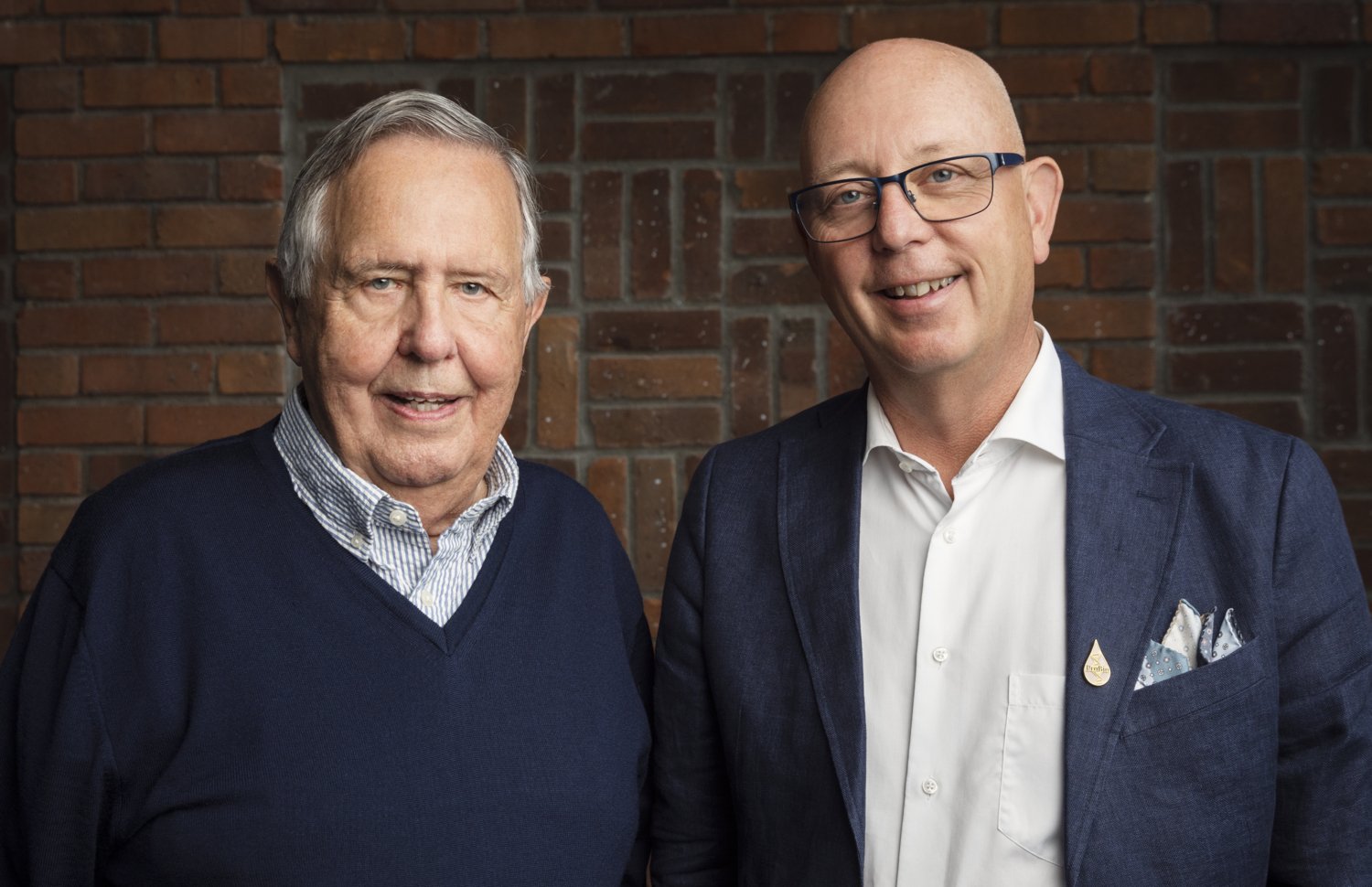
"As an engineer, I know that great breakthroughs require both time and money," says Gysell. "History shows us that the most significant innovations rarely arise out of short-term projects. They come when talented people get the opportunity to work steadfastly on the most difficult questions."
"The donation gives us a unique opportunity to expedite research that would otherwise have taken many years to complete," says Professor Grönberg at KI's Department of Medical Epidemiology and Biostatistics . "Above all, it gives us what we need to devise more long-term, bold research projects with the potential to change the care given to future generations of patients."
AI and genomics for tomorrow's treatments
The donation will finance the AI and advanced genetic analysis the group will use to understand why some patients respond exceptionally well to treatment while others do not.
One focus area is patients with metastatic cancer who have derived unusually lasting benefit from modern drugs. By identifying the biological mechanisms behind these therapeutic responses, the researchers hope to develop new strategies for the precision medicine of tomorrow.
The group will also be analysing large amounts of genetic data from earlier clinical studies to identify new biological markers that can help doctors to choose the right treatment for their individual patients.
Many research tracks leading to the same goal
Björn Gysell's interest in prostate cancer research has given rise to other initiatives. His own researches brought him into contact with Samir EL Andaloussi and Joel Nordin at KI's Department of Laboratory Medicine , whose research on the next generation of advanced prostate cancer therapies made a profound impression on him.
The purpose of their research is to develop novel forms of treatment based on target-seeking antibodies and genetically modified immune cells with the potential to enhance therapeutic accuracy and efficacy for patients with advanced forms of the disease.
Convinced of the project's long-term possibilities, Gysell decided to inject a further SEK 30 million into their research as a complement to his investment in AI, genomics and precision medicine.
An investment in the future of cancer care
Every year, around 10,000 men in Sweden are diagnosed with prostate cancer, making the disease one of the most common male cancers. Despite significant advances, the disease proves fatal in some 2,000 cases.
The researchers believe that AI will play a crucial part in the development of more personalised cancer care by integrating genetic data, imaging techniques, tissue analyses and clinical information.
For Gysell, the donation is fundamentally about improving the prognoses for future patients:
"I see this as an investment in the future," he says. "If the research is successful, it won't only help me but also the thousands of other men who are given the same news as I was. I'm convinced that the combination of AI, genetics and medical research will play a critical part in the development of better and ultimately curative treatments for prostate cancer."


