
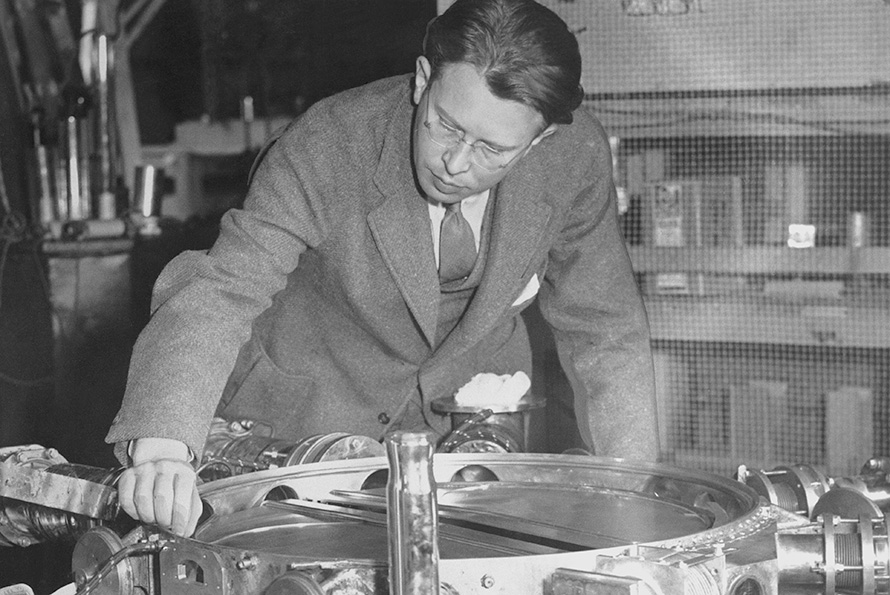
In 1929, Ernest Orlando Lawrence invented the cyclotron: a compact, efficient particle accelerator that used magnets. Two years later, he founded what would become the Department of Energy's Lawrence Berkeley National Laboratory (Berkeley Lab). Born with magnets in its DNA, the lab has been making innovative and record-setting magnet technology ever since.
In turn, those tools have advanced multiple fields, including medicine, materials, and fundamental physics. And the technologies now under development could make magnets more powerful, accelerators more efficient, and even open up new energy sources with fusion systems.
Over the decades, magnet research and development has brought together scientists, engineers, and technicians from across Berkeley Lab, particularly from the Accelerator Technology & Applied Physics (ATAP), Engineering, and Nuclear Science divisions. With combined expertise in magnet theory, materials, construction, and even the design of whole facilities, the lab has shaped every level of magnet science.
Here are some of the ways Berkeley Lab teams have made magnet history and are creating the magnets of the future:
What started it all: The cyclotron
When Lawrence invented the cyclotron, he unlocked a whole new way of doing physics. The approach uses a magnet to curve the paths of charged particles in a widening spiral, while an electric field pushes them faster with each pass. The first cyclotron would have fit in the palm of your hand, but larger and larger magnets allowed Berkeley Lab to quickly scale up, building machines that could accelerate particles to higher and higher energies. The breakthrough invention was recognized with a Nobel Prize in 1939.
The lab's cyclotrons became powerful tools - not just for smashing atoms and studying the nucleus, but also for creating entirely new elements (such as berkelium) and producing medical radioisotopes. In 1937, Lawrence's brother John used isotopes from the cyclotron to treat a bone marrow disorder, marking the first successful treatment of a human disease with radioisotopes. The International Atomic Energy Agency estimates there are now more than 1500 cyclotron facilities around the world, many in hospitals to make the radiopharmaceuticals used to detect or treat cancer. Today, the lab's 88-Inch Cyclotron remains a leading facility for nuclear physics research, as well as a crucial testbed for industry's cutting-edge electronics.
I've got my ion you: VENUS, MARS, and record-setting ion sources
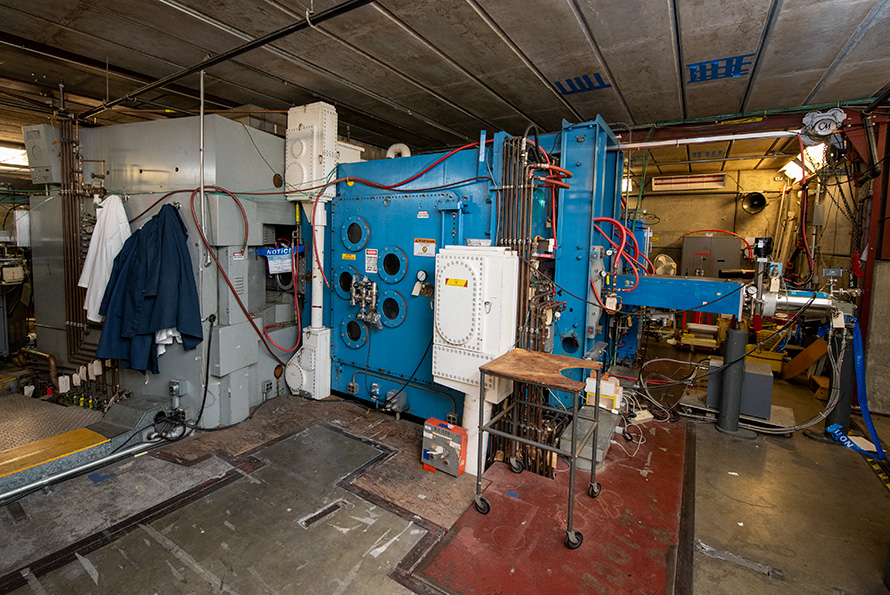
A cyclotron can accelerate charged particles, but first, you have to make them. Generating heavy ions requires a complex set of magnets within a special device: an electron cyclotron resonance (ECR) ion source. It excels at giving ions high charge states, important because the greater the charge of an ion, the more "kick" the cyclotron can give it.
At the heart of Berkeley Lab's 88-Inch Cyclotron is VENUS, a powerful superconducting ECR ion source. It set a world record for magnetic confinement field strength and produces some of the most intense beams of heavy ions anywhere, such as highly-charged uranium. Lab staff have also used their expertise to build ion sources for others, including the Facility for Rare Isotope Beams (FRIB), a DOE user facility at the University of Michigan.
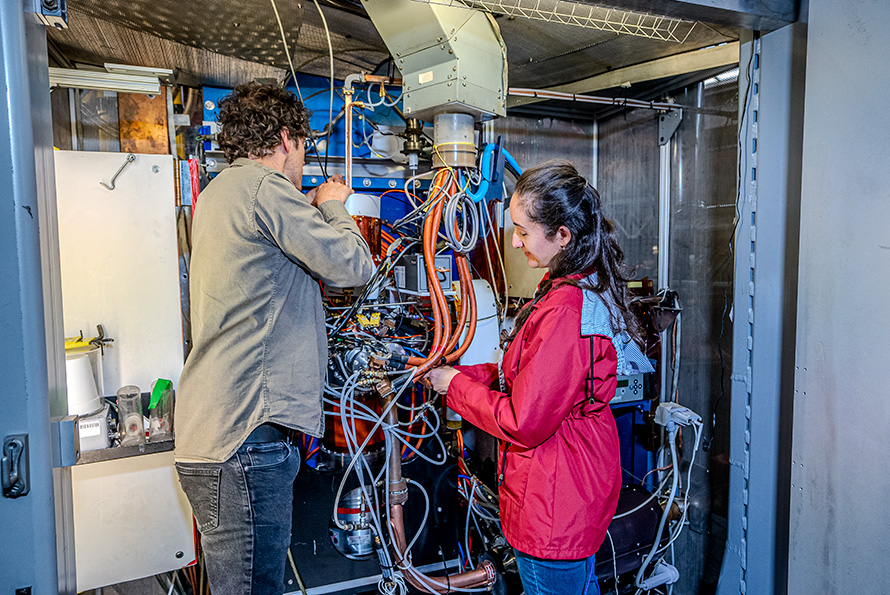
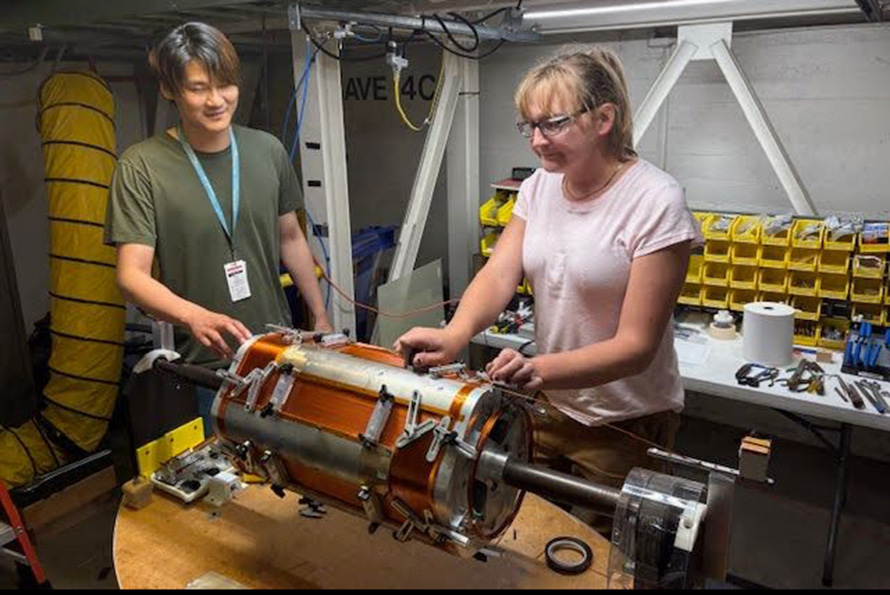
The team is now developing the next generation of ion sources. MARS, the successor to VENUS, will use a new design to create even stronger magnetic fields. The "closed-loop sextupole" is a hexagon-shaped magnet made with a continuous strand of superconducting wire, instead of building the magnet in sections like in current ion sources. Researchers are currently winding the wire for a prototype. Once built, MARS will be the most advanced ECR ion source in the world.
Light, camera, action: Epic undulators and wigglers
A regular microscope can only see so far. To capture tinier processes, such as chemical reactions or even individual atoms, researchers use light from particle accelerators like synchrotrons and free-electron lasers. For decades, these machines have relied on special magnet arrays called wigglers and undulators to produce that light. Much of that technology was theorized, designed, and later implemented by Berkeley Lab scientist Klaus Halbach. He invented the "Halbach array," a compact and powerful magnet system that could fit into beamlines and produce the X-rays needed for scientific discoveries. The design has been used in generations of cutting-edge light sources, including the Advanced Light Source (ALS) at Berkeley Lab and the Advanced Photon Source at Argonne National Laboratory.
Most recently, Berkeley Lab researchers turned this magnet expertise to LCLS-II, an upgrade to the world's most powerful X-ray free-electron laser at SLAC. Teams led the design and delivery of the low-energy (or "soft") X-ray undulators at the heart of the laser: a series of magnets, each one about 11 feet long and weighing more than 6 tons. They can be tweaked by a millionth of an inch to customize the laser light for experiments and produce one million soft X-rays per second. Along with Argonne, the lab also oversaw the final design and mass production of 32 high-energy (or "hard") X-ray undulator segments that make X-ray pulses up to 10,000 times brighter than before.
Up and running since 2023, LCLS-II gives researchers an incredible look at ultrafast phenomena central to quantum materials, medicine, and more. Another high-energy upgrade, LCLS-II-HE, is already underway. The Berkeley Lab team reprised its role, designing, manufacturing, and delivering the enhanced undulators in 2025.
Boosting brightness: World-leading soft X-rays with new magnets at the ALS
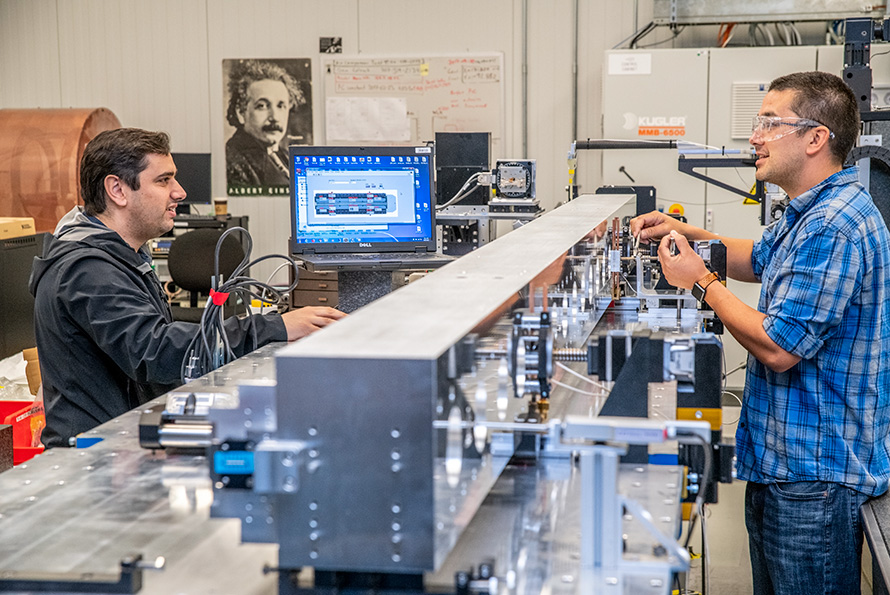
For three decades, the Advanced Light Source at Berkeley Lab has been an essential tool for researchers studying materials, chemical reactions, and biological processes. Built beneath the same iconic dome that once housed Lawrence's enormous 184-inch cyclotron, the ALS is now poised for a new chapter: an upgrade, the ALS-U, will make it even more powerful, and the world's best source of soft X-rays.
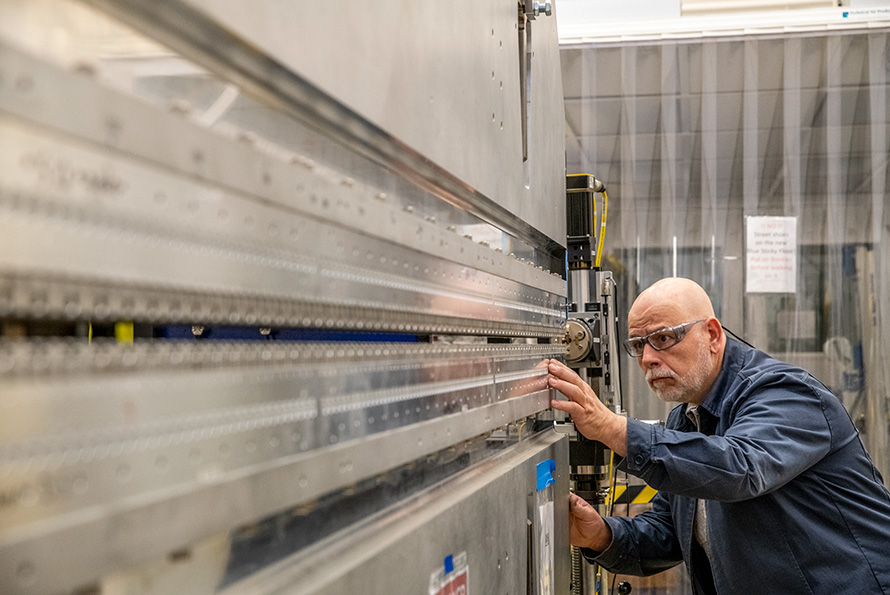
The project will require about 700 new magnets that have been carefully designed by the project team. Many of the magnets will go into a new accumulator ring, which prepares batches of electrons, and the storage ring, where electrons travel and emit their light for experiments. A set of "fast kicker" magnets will move particle bunches from one ring to another.
The sheer number of magnets that have to squeeze into the storage ring's existing space is pushing the limits of magnet technology. The new magnets need unique designs to create a precisely shaped magnetic field that keeps the electron beam size as small as possible. They are made with specially treated iron alloy materials and state-of-the-art machining to achieve the needed precision.
With more powerful bending magnets, researchers can better control the beam's shape and spread. ALS-U will make focused beams of soft x-ray light that are at least 100 times brighter than those of the existing ALS, vastly improving experiments.
Bend it like superconducting Beckham: Record-setting dipoles
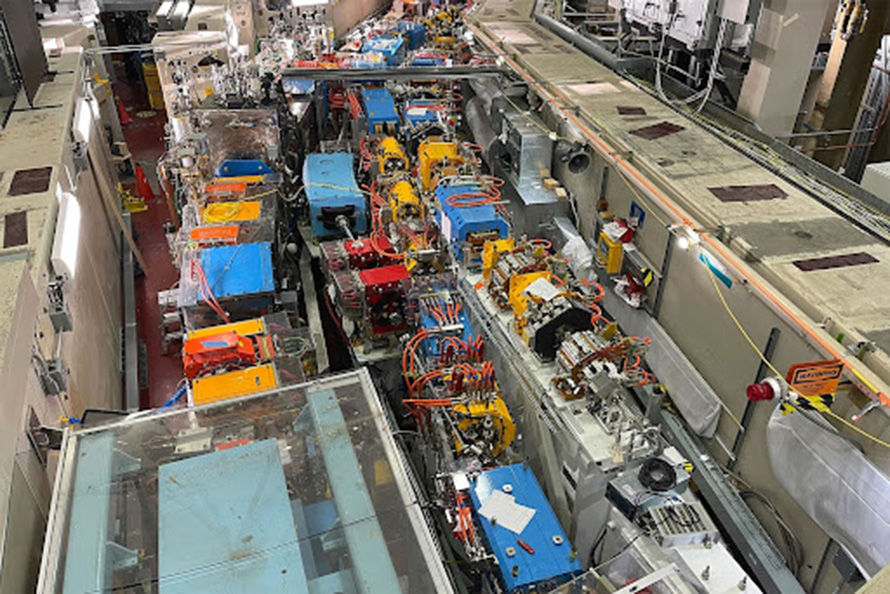
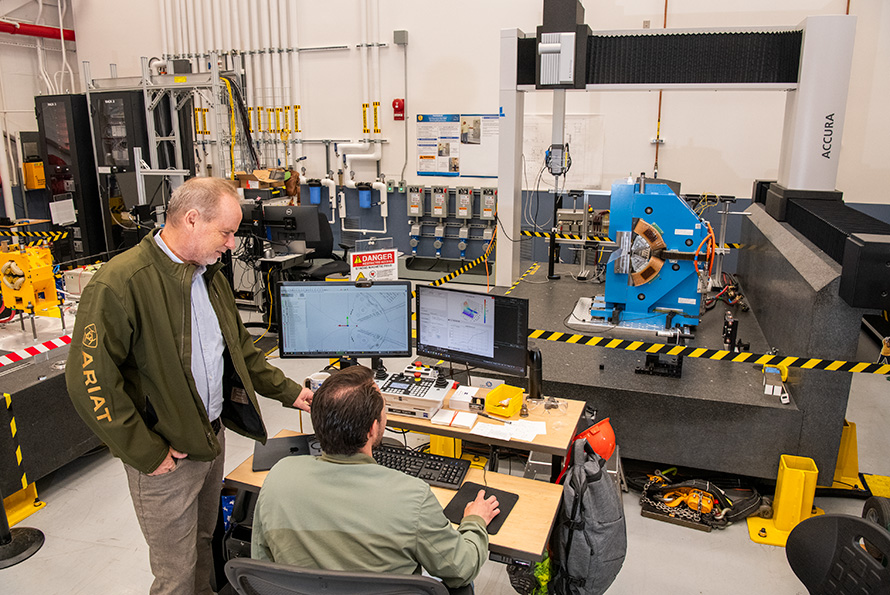
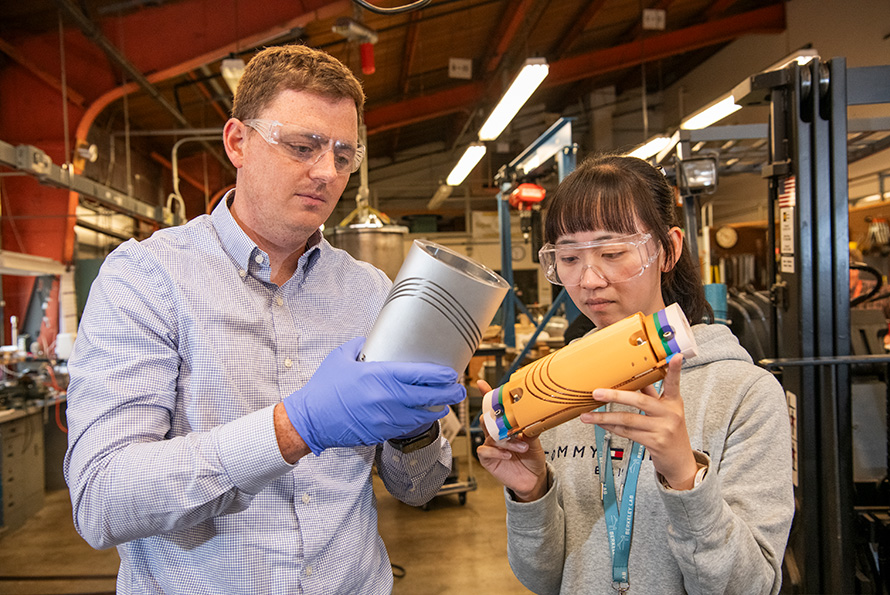
To send a particle beam where you want it to go, you need magnets that can "bend" or steer it: dipoles. These magnets are central to large particle accelerators, and experts at Berkeley Lab have repeatedly set world records for the magnetic strength, measured in teslas.
"We've been making record superconducting magnets for decades, going back to the '80s and '90s, with designs in different magnet styles," said Soren Prestemon, who heads the Berkeley Center for Magnet Technology at the lab, as well as the national U.S. Magnet Development Program that is led by the ATAP Division. "Dipoles for future colliders have been our main research arena."
Berkeley Lab scientists have led theory, modeling, and design of magnets made with niobium-tin, a high-performance superconducting material that can handle stronger magnetic fields than its predecessor (niobium-titanium). In 1997, a prototype niobium-tin dipole at Berkeley Lab shattered world records for particle-collider-style magnets, reaching 13.5 tesla. Only a few years later, Berkeley Lab broke its own record, building a 16-tesla dipole with a magnetic field more than 300,000 times as strong as the Earth's.
Now researchers are advancing dipoles made of high-temperature superconductors (HTS), which can work at warmer (though still very cold) temperatures than current superconducting magnets. If realized, HTS magnets would enable stronger, more compact, and more efficient particle accelerators, useful for everything from particle physics and medicine to fusion energy.
"This technology is still very young, and we're helping develop it," Prestemon said. "We had a high-temperature superconducting dipole reach 6 tesla, and that's a record in the field."
First-class upgrade: Focusing magnets for an improved LHC
While dipole magnets steer a beam, quadrupole magnets focus and squeeze it to increase the chance of particles colliding. New, more powerful quadrupoles are a key part of CERN's Large Hadron Collider upgrade, which aims to increase the particle collision rate tenfold to better explore rare physics. The new quadrupoles will mark the first use of niobium-tin superconductor in magnets for a particle accelerator.
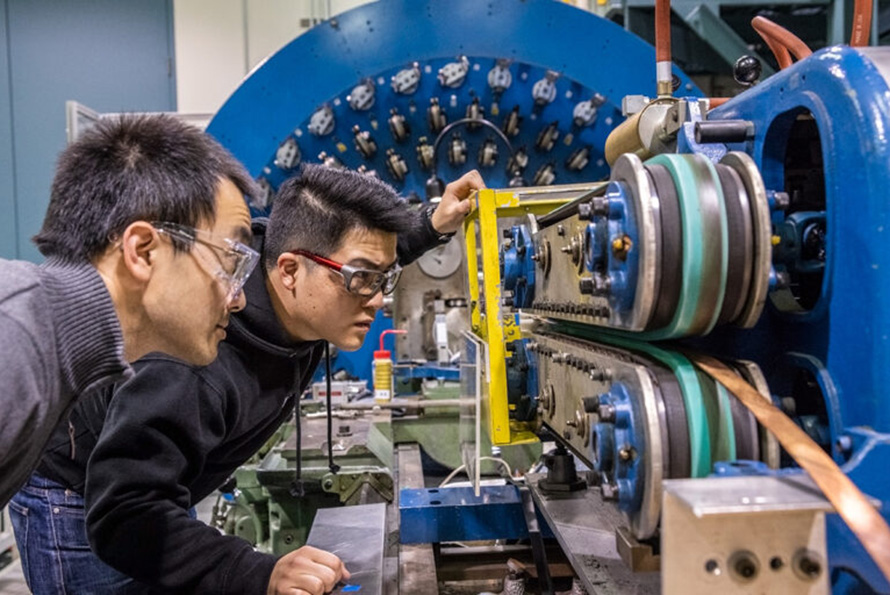
To replace the quadrupoles around the LHC's four main detectors, scientists have divided and conquered. CERN is building half the magnets, while a U.S. team led by DOE's Fermilab is making the other half. Berkeley Lab plays several crucial roles: The lab led the modeling and analysis underlying the new magnets, and used a one-of-a-kind cabling machine to wind all of the superconducting wire into cables used to make the U.S. quadrupoles. It's meticulous work; if even one wire crossed over another, the entire magnet would be ruined.
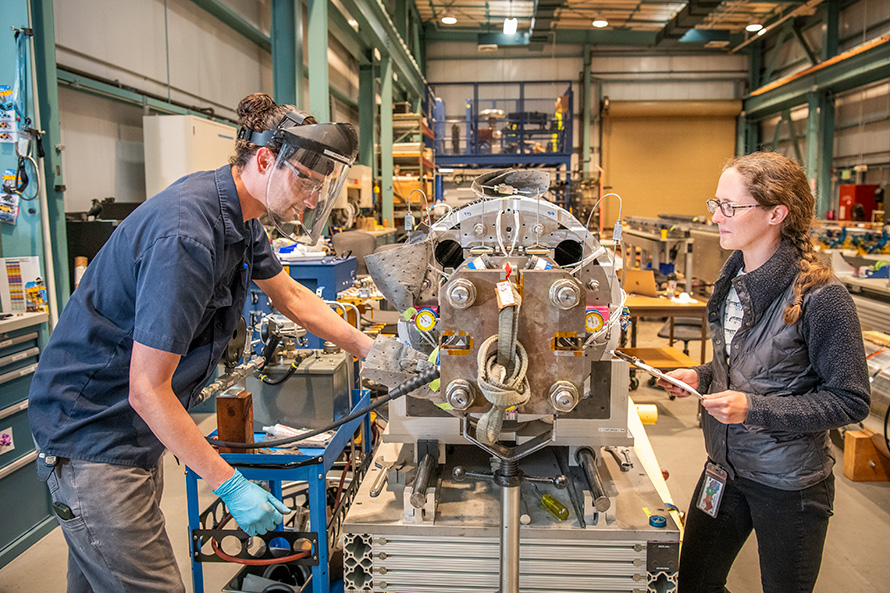
The cables were shipped to Brookhaven National Laboratory and Fermilab for winding into magnet coils. Berkeley Lab technicians then assembled the coils into special structures that can withstand the incredible forces exerted during operation. The lab finished building the last of the 24 structures in 2025, and the project has already delivered several magnet structures to CERN. The upgraded LHC will come online around 2030.
Keep cool: Catching quenches before magnets overheat
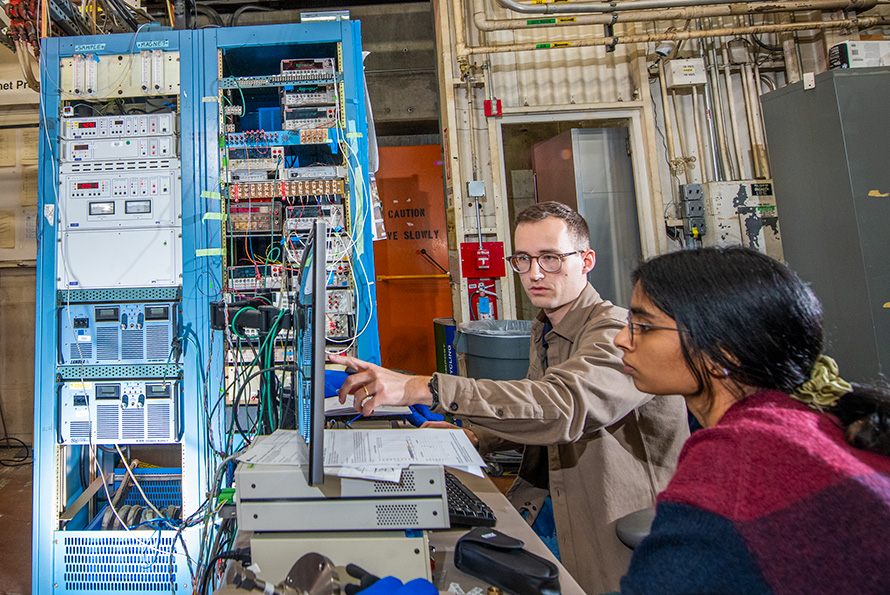
Many experiments rely on superconducting magnets, which generate large magnetic fields and conduct electricity with no resistance when cooled to very low temperatures. But with that design comes a challenge. If even a small part of the magnet loses superconductivity, known as quenching, the energy in the magnet rapidly converts into heat, shutting down and potentially damaging the magnet. Berkeley Lab scientists are designing better ways to detect and stop a quench before it happens.
Experts in diagnostics are working on several approaches to the problem, particularly for high-temperature superconductors that are poised to be the next material in magnets and essential for making fusion energy systems a reality. One method uses piezoelectric sensors on the outside of the magnet to essentially "listen" for quench precursors. Another technique co-winds special radiofrequency materials within the magnet that can flag minuscule temperature changes inside. A third approach uses fiberoptic sensing. Figuring out the right approach (or combination) will be essential to preventing magnet meltdowns before they start in the magnets of the future.
The world's thinnest magnet
Most of Berkeley Lab's magnet work skews toward larger magnets for accelerators, but researchers have also developed the world's thinnest magnet. The one-atom-thin, 2D magnet operates at room temperature and could have applications in computing, quantum physics, and electronics. For example, many of today's memory devices use thin magnetic films, but the materials are still hundreds or thousands of atoms thick. Ultrathin magnets would mean more memory storage in the same amount of space.


