
As upstate New York reaffirms its place as a high-tech hub on the national and global market, two questions are always top of mind: Where will the workers come from, and how will they get the necessary skills?
Regional industry and academic leaders met at Binghamton University on Monday for a panel on STEM workforce development and how to better align educational opportunities with manufacturing needs.
The event kicked off the Research Experiences for Teachers (RET) program, sponsored by the National Science Foundation, to cultivate highly skilled technical talent for the region's growing role in the microelectronics industry.
Over the next three summers, a $600,000 grant will fund 24 local middle and high school teachers as they learn about microelectronics research at Binghamton and take that knowledge back to their students.
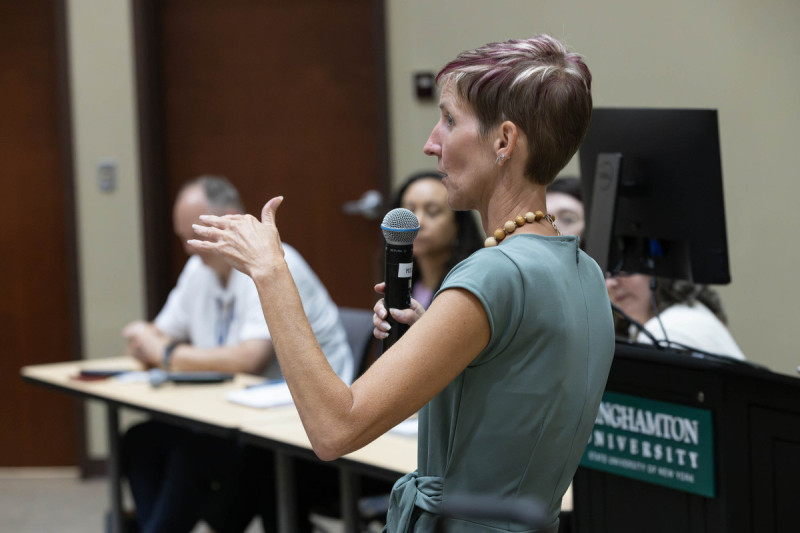
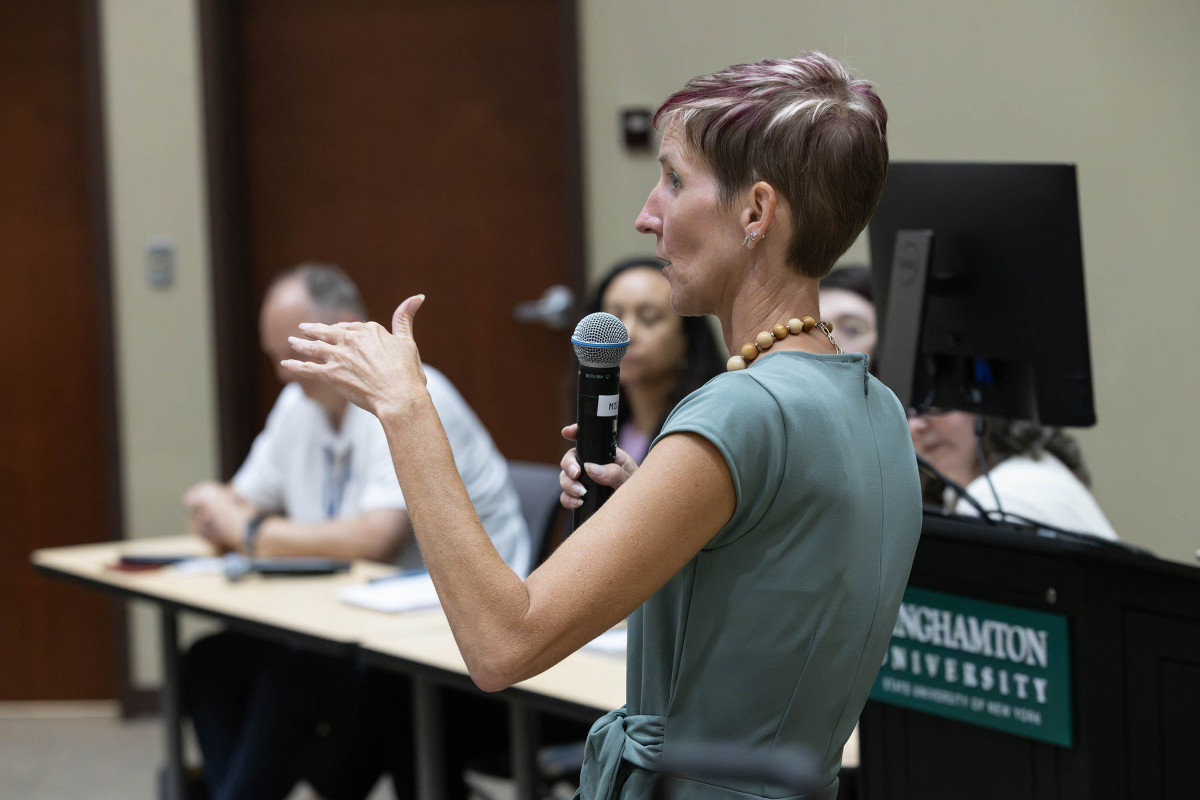
Binghamton University President Anne D'Alleva welcomed the teachers and panel attendees, stressing the importance of cultivating opportunities in science, technology, engineering, and math for youths who show an aptitude and passion for them.
"The fire is lit early for students in STEM when they go into high school knowing that they want to take a strong STEM curriculum, knowing that they're excited about engineering or they're excited about biology," she said. "This helps to set them on a path to achievement, and we want to make sure that every single student in your school districts in our surrounding communities can have that fire be lit. You are essential to that."
D'Alleva highlighted the University's critical role in the state's economic future as well as the importance of industry partnerships and collaboration. She also stressed the importance of teachers for shaping the next generation of innovators.
"Thank you for educating our young people. Thank you for creating our future, and I hope we're supporting you in that work, to enable you to open even more doors when you go back to the classroom," she said.
Shanise Kent, Binghamton University's assistant provost and director of workforce development, stressed that manufacturers are looking for workers at all skill levels.
"We have a number of microelectronics companies in the Southern Tier," she said. "According to conversations I'm having, they have immediate employee needs, and that starts from high school graduates all the way up to advanced degrees."
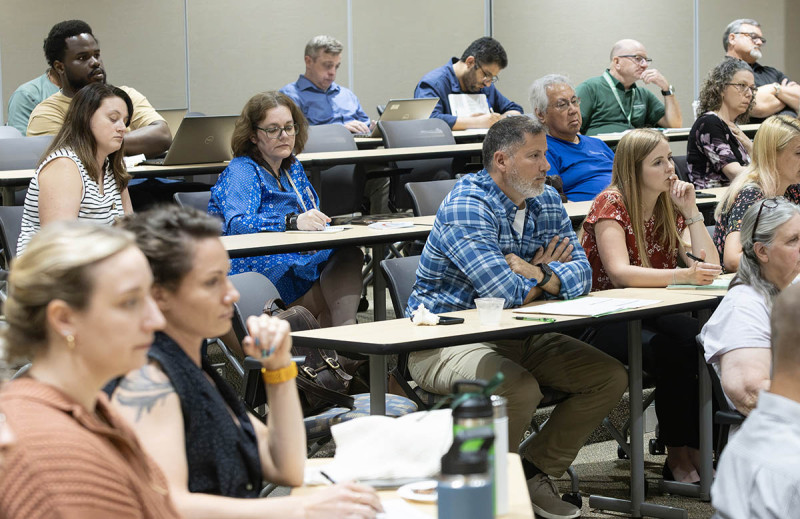
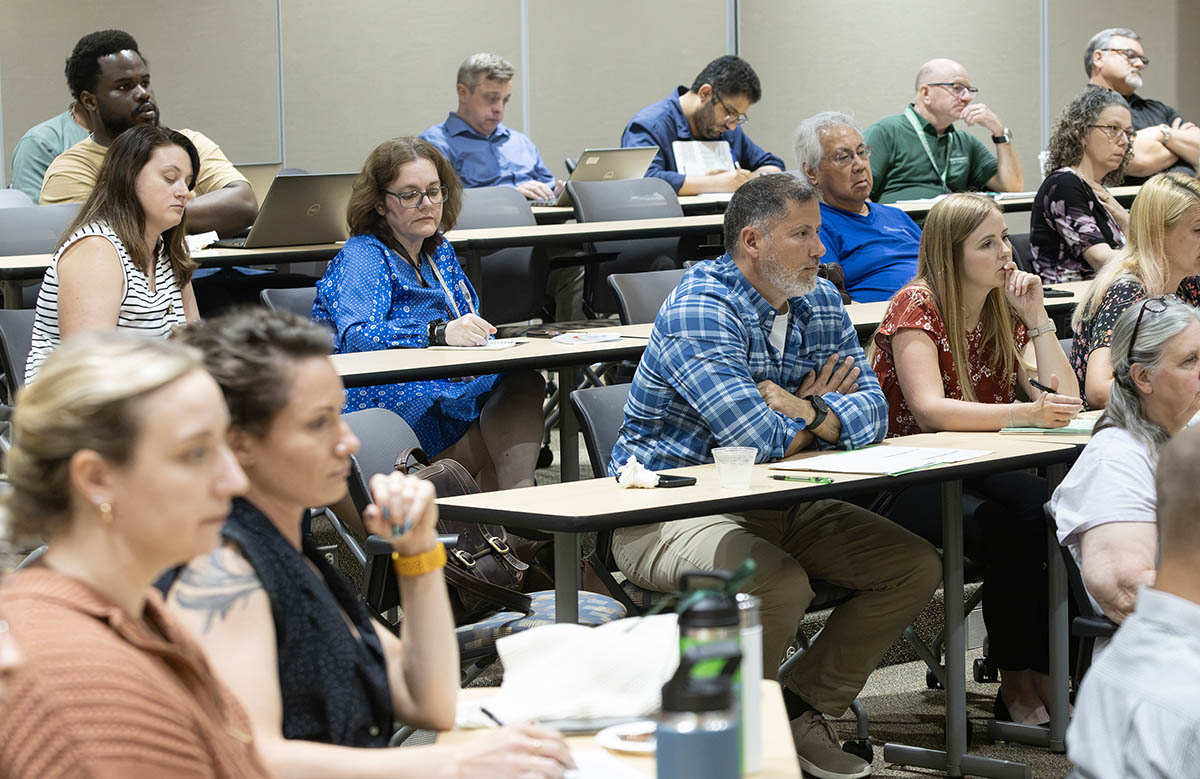
Panelists pointed out that feeding tech industry growth can aid the entire economy, since it also creates supporting roles such as human-resources managers and administrative staff.
"Thanks to the work at Binghamton University, Cornell, our SUNY network, and our community colleges, this area graduates three times the national average of engineers," said Amy Williamson '20, the planning and community development manager for The Agency (The Broome County Industrial Development Agency and Local Development Corporation). "We have the talent here. We have incredible companies already in the microelectronics space and the advanced manufacturing space, and we have the research assets that can continue driving more folks into this area. That's going to grow opportunities, especially for those with advanced degrees, but all along the pipeline, too."
Christine McLear, workforce development senior lead at multinational semiconductor firm GlobalFoundries Inc., sees how the most successful job candidates and employees learn key lessons beyond the classroom.
"We say a lot that your technical skills will get you in the door, but your professional skills will keep you in a job and keep you moving up," she said.
Matthew Sheehan, director for the Center for Career and Technical Excellence at Broome-Tioga BOCES, agreed that "soft skills" are important, and he stressed "the three Ps" to high school students when they are on the job: Be present, positive, and productive.
He also knows first-hand about getting children interested early: "I was at a panel once, and there were 14 well-accomplished women in STEM. Every one of them was asked the question, 'When did you decide you wanted to be involved in STEM?' And every one of them answered somewhere in middle school, because that was the first time they went to a class that had math or science predominant."
Professor Amber Simpson - a faculty member from the College of Community and Public Affairs' Department of Teaching, Learning, and Educational Leadership, and one of the RET coordinators - led the panel discussion. The program is a collaboration among CCPA, the Thomas J. Watson College of Engineering and Applied Science, and the University's Analytical and Diagnostics Lab.


