
An international clinical trial suggests that multidisciplinary team-based assessments performed early during immunotherapy and chemotherapy treatment could make curative surgery or radiation plans possible for patients whose tumours are difficult to remove surgically.
Despite significant advances in treatment, lung cancer remains the leading cause of cancer-related deaths worldwide. A clinical trial recently published in Nature Medicine suggests that a more flexible approach to treating locally advanced non-small-cell lung cancer could open up new treatment options for patients. By starting with a combination of chemotherapy and immunotherapy (durvalumab), followed by reassessment by a multidisciplinary team, doctors may be able to offer curative surgery to more patients. The study also suggests that patients who remain ineligible for surgery after this initial treatment may still have another potentially curative option: a combination of chemotherapy and radiation therapy.
Non-small-cell lung cancer (NSCLC) accounts for 80 to 85 per cent of lung cancer cases. Today, treatment plans are generally established at diagnosis, based on the stage of the cancer, the patient's overall health and whether the tumour can be removed through surgery. The initial assessment therefore plays an important role in determining whether surgery is an option.
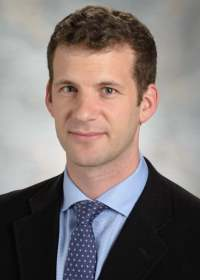
"The main innovation of this study is not a new drug, but a different way of harnessing the power of immunotherapy and adapting treatment to each patient. By assessing how the cancer responds to initial treatment, we can better evaluate whether surgery is the ideal next step, particularly for patients whose cancer could potentially be cured but whose tumours were initially considered risky or difficult to remove," says Dr. Jonathan Spicer, principal investigator and senior author of the study, and a senior scientist in the Cancer Research Program at the Research Institute of the McGill University Health Centre.
Making surgery possible for more patients
In the phase 2 clinical trial called MDT-BRIDGE, 142 patients aged 46 to 82 with locally advanced NSCLC, ranging from stage IIB to IIIB, were enrolled at 43 centres across 11 countries. All patients initially received the same treatment: two cycles of chemotherapy combined with durvalumab, an immunotherapy drug that helps the immune system recognize and attack cancer cells. Their condition was then reassessed by a multidisciplinary team.
A total of 92 patients whose tumours were considered resectable (removable through surgery) and 50 whose tumours were considered borderline resectable (difficult to remove through surgery) received this initial treatment. Following reassessment, patients deemed eligible for surgery received one or two additional cycles of chemotherapy and immunotherapy before undergoing surgery. The remaining patients received approximately six weeks of combined chemotherapy and radiation therapy. Both groups of patients could then receive durvalumab for up to one year.
The results are promising:
- 84.5 per cent of patients (120/142) were deemed eligible for surgery at reassessment, including 76 per cent of those whose tumours were initially considered difficult to remove (38/50).
- 74.6 per cent of patients (106/142) underwent surgery to remove their tumour. Among them, 96.2 per cent (102 patients) had their tumours completely removed.
- 92.3 per cent of patients (131/142) received treatment aimed at curing their cancer, either through surgery (106 patients) or a combination of chemotherapy and radiation therapy (25 patients).

"From a clinical point of view, it is very reassuring that 92.3 per cent of the patients included in the trial, including more than 30 per cent with borderline resectable NSCLC, received treatment with curative intent, reflecting appropriate clinical management throughout the treatment process," says first author Dr. Martin Reck, from the LungenClinic in Grosshansdorf, Germany. "In addition, no new safety signals were observed and the tolerability data clearly support the safe use of chemoradiotherapy and consolidation treatment in patients not suitable for resection after two preceding cycles of chemoimmunotherapy, opening our treatment opportunities for these patients."
Bridging two treatment approaches to expand options for patients
When a patient's tumour is considered resectable, the usual approach is to combine chemotherapy and immunotherapy before surgery, followed by additional immunotherapy after the tumour is removed. When the tumour cannot be removed or surgery is considered too risky, standard treatment involves a combination of chemotherapy and radiation therapy, followed by immunotherapy.
The study authors point out that, with current treatment approaches, 15 to 20 per cent of patients who are initially considered eligible for surgery and begin treatment with chemotherapy and immunotherapy do not ultimately undergo surgery, usually because their cancer has progressed or they experience significant side effects. The authors also stress that until now, there has been limited evidence to guide treatment decisions for these patients, particularly regarding whether they can safely transition to combined chemotherapy and radiation therapy.
"This clinical trial provides new evidence that a response-adapted approach that leverages the expertise of the entire lung cancer treatment team can ensure that patients are offered the ideal curative plan," says Dr. Spicer, who is also a thoracic surgeon at the Montreal General Hospital of the McGill University Health Centre and Medical Director of the McGill Thoracic Oncology Surgery Network.
A blood test to track how well cancer treatment is working
The researchers also investigated whether circulating tumour DNA (ctDNA)-tiny fragments of DNA released by cancer cells into the bloodstream-could help them assess how well each patient was responding to treatment. Using highly sensitive, personalized blood tests developed from a biopsy of each patient's tumour, they tracked ctDNA levels before treatment began, after the initial chemotherapy and immunotherapy and during follow-up after surgery or combined chemotherapy and radiation therapy.
The researchers found that in approximately 37 per cent of patients evaluated, ctDNA was no longer detectable in the blood before surgery or the start of combined chemotherapy and radiation therapy. Patients whose ctDNA had disappeared after initial chemotherapy and immunotherapy were also more likely to be considered eligible for surgery and showed more favourable early survival outcomes.
"Our findings suggest that new ultra-sensitive ctDNA tests could provide useful information for the patient's lung cancer treatment team to better adapt the plan to how the cancer is responding to initial treatment," says Dr. Spicer. "The information contained within these tests could one day serve to possibly omit treatment components like surgery or radiation when the disease may already have been eradicated by the chemotherapy and immunotherapy. Conversely, it could help guide escalation to more potent treatments if the test shows that the patient is not responding. The optimal scenario is a response-adapted strategy ensuring that patients get the best chance of cure with the shortest and least toxic treatment plan".
About the study
The study Neoadjuvant durvalumab plus chemotherapy in resectable or borderline resectable non-small-cell lung cancer: the phase 2 MDT-BRIDGE trial, by Martin Reck, Ernest Nadal, Carl M. Gay, Nicolas Girard, Andrea Riccardo Filippi, Linda W. Martin, Cordula Petersen, David A. Cairns, Margarita Majem, Andrea Ardizzoni, Rosa Alvarez Alvarez, Andrew Robinson, Benoit Roch, Arnaud Boyer, Ilaria Attili, Maximilian Diehn, David Kurtz, Ugochinyere A. Emeribe, Ignacio Diaz Perez, Matteo Giaj Levra, Davina Gale, Zhou Zhu, Nefeli Georgoulia and Jonathan Spicer, was published in Nature Medicine.
DOI: https://doi.org/10.1038/s41591-026-04742-7
The MDT-BRIDGE trial was funded by AstraZeneca.


