
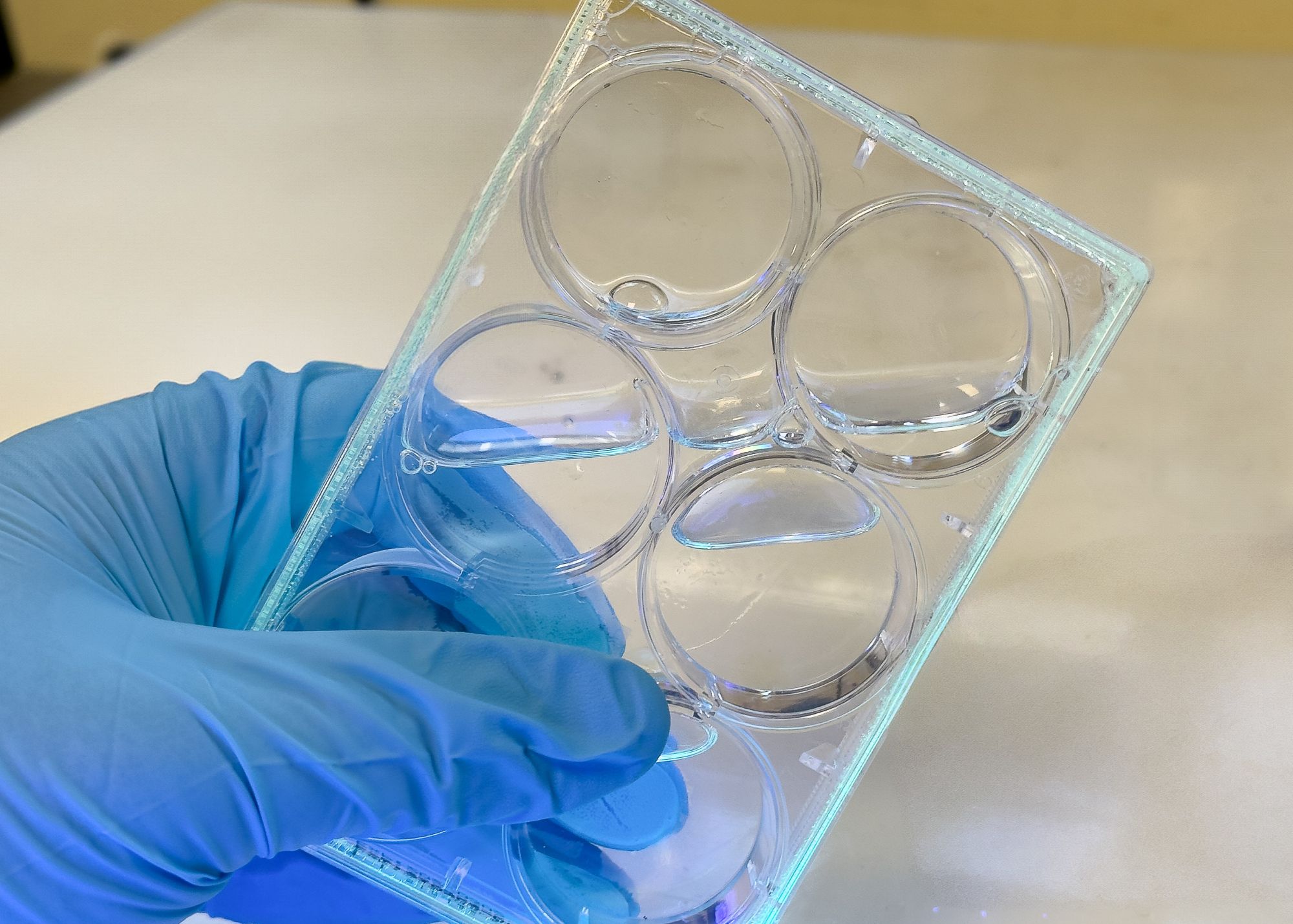
A form-in-place gasket is cured instantly with a handheld UV light to create a water-tight seal, showcasing the compound's utility for custom sealants and biomedical devices. Credit: NTU Singapore.
Scientists from Nanyang Technological University, Singapore (NTU Singapore) have developed a new class of light-activated compounds that could lead to safer and more versatile applications in 3D printing, cosmetics, and medicine.
These compounds, known as aryl diazirine photoinitiators, are used to solidify liquid resins into hard plastics with speed and precision using light. The current industry-standard photoinitiators often face issues of toxicity and poor solubility in water.
The NTU study, led by Assoc Prof Terry W. J. Steele from the School of Materials Science and Engineering, found that the aryl diazirine photoinitiators are not only non-toxic to human cells but also offer superior performance, including reduced material shrinkage and compatibility with water-based sustainable resins.


