
A step toward early detection of dementia

As people live longer, age-related disorders are becoming increasingly common, including neurodegenerative diseases. Dementia currently affects around 55 million people worldwide, and in the absence of effective interventions, this number is projected to rise to 150 million by 2050.
In a new study published in Translational Psychiatry, researchers from Hokkaido University have identified promising biological markers that could help detect mild cognitive impairment, an early stage of dementia, in a simple and non-invasive way. "Mild cognitive impairment affects about 15% of adults aged 50 years and older and represents a critical window for intervention," says Associate Professor Siddabasave Gowda, lead author of the study.
The research team analyzed saliva, blood plasma, and fecal samples from participants aged 65-85 years with mild cognitive impairment and compared them with healthy individuals. They examined more than 200 lipid molecules and found clear differences in lipid composition across saliva, plasma, and fecal samples between healthy individuals and patients.
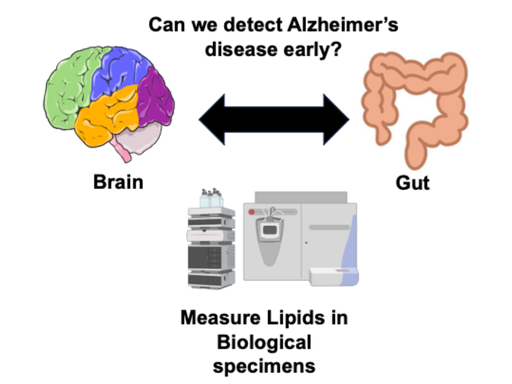
Demonstration of brain-gut connections through lipid analysis using mass spectrometry. (Image: Laboratory for Advanced Lipid Analysis, Hokkaido University)
One of the most surprising findings came from fecal samples. People with mild cognitive impairment had significantly higher levels of a specific group of lipids called triacylglycerols containing medium-chain fatty acids, commonly known as MCTs. This increase was more noticeable in female participants.
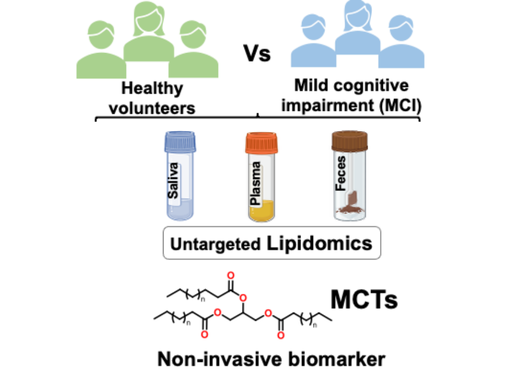
Overview of the study design that led to the detection of medium-chain triacylglycerols (MCTs) as biomarkers for mild cognitive impairment. (Image: Laboratory for Advanced Lipid Analysis, Hokkaido University)
"These findings suggest that changes in how the body processes certain fats, possibly linked to lipid malabsorption in the gut, occur early in the disease," Gowda explains.
The study also identified three key lipid molecules-α-linolenic acid, docosapentaenoic acid, and cholesteryl linoleate-as showing potential to distinguish individuals with mild cognitive impairment from healthy controls.
In addition, elevated MCTs in feces emerged as a promising non-invasive biomarker. Because MCTs are normally absorbed and used by the body, their loss through stool in patients may signal altered lipid processing. " We were surprised to find that fecal samples showed the strongest signal for non-invasive detection of mild cognitive impairment, given the traditional focus on blood and cerebrospinal fluid for detection," says Gowda.
Current diagnostic approaches for dementia often rely on invasive procedures or expensive imaging techniques. In contrast, this study highlights the potential of using easily accessible samples, like fecal samples, for early screening.
The findings are a step toward the development of simple, at-home tests that could help identify individuals at risk of dementia long before symptoms become severe. The study opens possibilities for early intervention and, ultimately, better outcomes for patients.
"As Japan grapples with a rapidly aging population and rising dementia prevalence, our findings offer a promising avenue for early detection through accessible lipid biomarker analysis," says Gowda.

A group photo of the team lead by Dr. Siddabasave Gowda B. Gowda and Dr. Shu-Ping Hui at the Laboratory for Advanced Lipid Analysis (LALA). (Photo: Laboratory for Advanced Lipid Analysis, Hokkaido University)
Original article:
Jayashankar Jayaprakash et al., Lipidomic signatures reveal biomarkers of mild cognitive impairment. Translational Psychiatry. 2026. DOI: 10.1038/s41398-026-03893-y
Funding:
This work was conducted as part of the Microbiome in Aging Gut and Brain (MiaGB) consortium, with contributions from Hokkaido University and the University of South Florida.


