
UConn researchers have found that a crucial enzyme could be the key to safer, more effective medicines
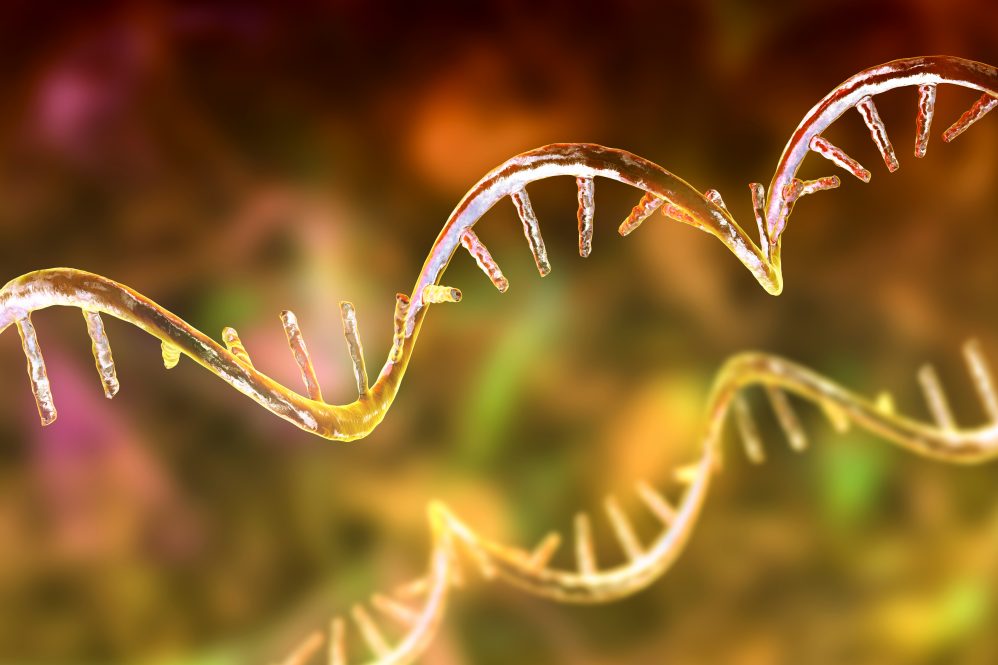
(Adobe photo)
African sleeping sickness and related diseases can only be treated with toxic and sometimes ineffective drugs. Now, University of Connecticut researchers show in the June 24 issue of Nucleic Acids Research that a crucial enzyme could be the key to safer, more effective medicines.
Sleeping sickness, Chagas disease, and leishmaniasis are all caused by trypanosomes and leishmanias, a group of single-celled microorganisms that are very distantly related to animals. They're parasites that typically slip into human bodies via insect bites. Trypanosomes tend to use the same basic machinery to express their genes as our cells do, so finding medications that kill these parasites but don't hurt us is difficult.
UConn School of Medicine molecular biologist Arthur Gunzl and his research group have found a small but important difference in trypanosomes' cellular machinery. It happens when messenger RNA (mRNA) is stitched together. mRNA is used to carry messages from DNA to a cell's protein making machinery. And like any important message, it needs to be spelled properly. Both trypanosomes and human cells have to splice together RNA pieces to make precise mRNA messages. What Gunzl's team found was that trypanosomes use an enzyme for this process that is quite different than the one humans use. The trypanosome version of the enzyme, a cyclin-dependent kinase called CRK9, is insensitive to a compound that inhibits the human version. This suggests that the active sites of these enzymes are different, and an inhibitor could be found to work against the trypanosome kinase that doesn't affect the human counterpart.
The discovery is particularly surprising because other single cell organisms, such as yeast, don't use a cyclin-dependent kinase for mRNA splicing at all. It was thought to be unique to multicellular organisms. Gunzl's group is the first to show this enzyme at work in trypanosomes. The fact that we share it with these very different organisms suggests it is evolutionarily ancient.


