
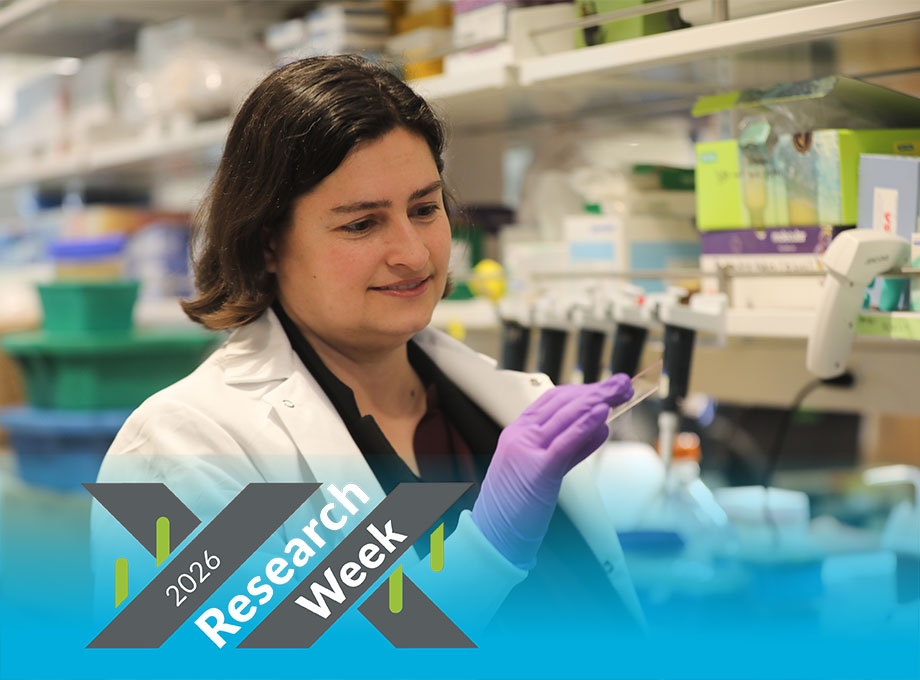
When Molly Thomas, M.D., Ph.D., arrived at Oregon Health & Science University in 2023, she brought with her a bold vision: protecting cancer patients from the dangerous inflammatory reactions that can accompany modern immunotherapy.
As an assistant professor in the Division of Gastroenterology and Hepatology and the Department of Cell, Developmental and Cancer Biology in the OHSU School of Medicine, Thomas is a physician‑scientist who specializes in the gastrointestinal side effects of immune checkpoint inhibitors, which are a type of cancer immunotherapy. These powerful drugs can shrink tumors by unleashing the immune system, but the heightened immune response can trigger severe, autoimmune‑like diseases in some patients.
Her mission is to help patients stay on the cancer treatments that could save their lives — without suffering life‑threatening immune complications.
Firsthand experience
Thomas' interest in this work began years earlier during her postdoctoral work at the intensive care unit, or ICU, in Massachusetts General Hospital. She cared for a patient with metastatic melanoma whose cancer went into full remission due to immunotherapy — only for him to later die from multiple immune disorders caused by the treatment's toxic effects.
"It became obvious that we didn't have the right systems in place — not for diagnosis, not for treatment and not to understand the biology driving it," Thomas said.
Thomas said she "felt helpless as a medical provider in the ICU that we just didn't have better ways of recognizing and treating these toxicities earlier without compromising his immune system."
She realized that understanding these reactions could help researchers learn rules about immune tolerance that might protect future patients.
When she began searching for faculty positions, OHSU stood out because it offered both a strong immunology community and large numbers of patients receiving immunotherapy. She appreciated that colleagues across the OHSU Knight Cancer Institute were "asking similar questions, just on the different side of the same coin."
"It felt like the right place to build something," she said.
Now at OHSU, she sees firsthand how common these conditions are. While only about 20% of patients with solid tumors respond to checkpoint inhibitors, anywhere from 60% to 90% of patients experience some form of immune toxicity from immunotherapy. In the digestive system, this can mean severe colon inflammation called colitis, which can cause dehydration, hospitalization, or, in extreme cases, intestinal perforation requiring surgery.
To address this growing patient population, Thomas started the OHSU GI Immune Toxicity Clinic, which provides rapid, specialized care for people on immunotherapy who develop gastrointestinal symptoms. The clinic also creates a direct line to research, allowing Thomas' team to collect blood and tissue early in the disease process.
This clinical‑research loop is essential, she said, because "every patient with an autoimmune or inflammatory condition is completely unique."
Understanding that individuality is key to treating toxicity without weakening cancer control.
Collaboration as scientific engine
One of the hallmarks of Thomas' work at OHSU is the network of colleagues who have become integral to her clinical innovations and research discoveries.
Many of her earliest referrals came from palliative care providers including Sarah Lowry, D.N.P., ACNP-BC, AOCNP, ACHPN, and physician and oncologist Eric Roeland, M.D., FAAHPM, FASCO, whose work in symptom science at the Knight Cancer Institute helped define the need for a unified toxicity‑care model. Thomas said Roeland understood immediately that these toxicities "have such a profound impact on other organ systems and on the patient's cancer treatments" that specialty silos would not work.
She found another major partner in Amy Moran, Ph.D., a Knight Cancer Institute researcher who studies sex differences in cancer immunity. It was through learning about Moran's work on how androgens shape immune responses that Thomas first became aware of how little was known about the effect of sex hormones on immunotherapy toxicities. Moran later introduced Thomas to Deanne Tibbitts, Ph.D., M.C.R., a researcher in the Knight Cancer Institute who studies patient‑level factors — including sex‑based differences — that shape immunotherapy toxicity risk.
Thomas said Tibbitts' expertise in understanding "why women may be more prone to these toxicities from immunotherapy" has been invaluable as they build patient cohorts together.
Her collaborations also extend to dermatology and rheumatology, where Noah Hornick, M.D., Ph.D., and Whitney Elg‑Salsman, D.O., treat skin and joint‑related toxicities, respectively. Thomas noted that their partnership emerged naturally because "these toxicities often co‑occur together," creating a built‑in need for teamwork.
These relationships now form the backbone of OHSU's developing Immuno‑Oncology Toxicity, or IOTOX, Program, a multidisciplinary effort Thomas describes as "a village of clinicians and researchers" working to make immunotherapy safer and get discoveries from the lab to patients faster.
Human‑derived models
In her laboratory, Thomas is building complex organoid models — tiny versions of intestinal tissue grown from patient biopsies — to better understand how inflammation unfolds at the cellular level.
She said that when she began this work, it became clear that "we'd never be able to design better therapeutic treatments for these toxicities unless we understand at a really deep level what they look like and what immune cells are involved."
That pushed her to create organoid systems that include not just epithelial cells, but also tissue‑resident immune cells that her prior work suggests may be important drivers of intestinal inflammation.
These models will allow her to test current treatments as well as possible future therapies.
"We want to see why inflamed tissue in some patients responds to certain immune‑suppressive therapies and not others," she said. "If we can mimic these toxicities in vitro, we can test what actually works."
She envisions a future where a patient's own organoid cultures can guide clinical decisions.
"There is really an opportunity here to develop a personalized medicine approach," Thomas said.
Toward better, faster diagnosis
Another major goal of Thomas' lab is developing noninvasive biomarkers, especially blood‑based and ultrasound tests that can detect early signs of intestinal inflammation.
Thomas said the research so far shows that there are no cellular transcriptional biomarkers in blood for colitis, myocarditis or hepatitis triggered by immunotherapy. Because of this, invasive tissue biopsies are still the gold standard for diagnosing many immunotherapy toxicities. That realization led her team to explore cell‑free blood markers, which may help detect early signs of intestinal inflammation without needing a colonoscopy. A blood test might someday show if immune therapy is harming the gut — long before symptoms get severe.
She believes this approach could fundamentally change patient care.
"If we could predict who's more likely to get an organ‑specific toxicity and pretreat or monitor them more closely, we could keep more people safely on their immunotherapy," Thomas said.
Integrated cancer care
Thomas is channeling her commitment for patient care into building the IOTOX Program, creating human‑derived models of toxicity, and working with colleagues across OHSU to streamline patient care.
She says the timing is critical.
"Immune therapy is becoming more and more common in oncology," she said. "But the toxicities are not going away."
Thomas is hopeful. Each new patient seen in the clinic, each biopsy analyzed, and each organoid grown brings her team one step closer to safer, more effective cancer treatments.
"Every day we're driven by the possibility that we can make immunotherapy safer and make a real difference for people living with cancer," she said.
Thomas said she is energized by the direction of the new Knight Cancer Group and the collaborative spirit taking shape across OHSU. She described the timing of the IOTOX program as "well-aligned" with the cancer center's ambitions to build more integrated, patient‑centered systems of care.
"I think the rollout of our toxicity program is really well-timed with the development of the Knight Cancer Group," she said. "It feels like we're building toward an integrated approach that will truly improve care for patients."


