
Swedish old-growth forests store 83 percent more carbon than managed forests, according to a new study from Lund University. The difference is substantially larger than previous estimates and is mainly due to large carbon stocks in the soil.
The study, published in the scientific journal Science, is the most comprehensive mapping of how much carbon is stored in Swedish old-growth forests to date. The results show that old-growth forests store 78-89 per cent more carbon than managed forests in living trees, dead wood, and in the soil down to a depth of 60 centimetres.
"The most surprising result is the large amounts of carbon stored in the soil of old-growth forests. It is the same amount as all the carbon in managed forests - trees, dead wood, and soil, combined," says Anders Ahlström, researcher at the Department of Environmental and Earth Sciences at Lund University.
The work behind the study took nearly ten years. Because there was no national map of old-growth forests, the researchers first had to identify and map forests that had been very little affected, or not affected at all, by direct human activity. Extensive fieldwork was then carried out across the country, including nearly 220 soil pits dug to a depth of one meter to measure carbon storage in the soil.
Total difference in numbers
The total difference in carbon storage between old-growth forests and managed forests -including carbon stored in wood products - is about 3 to 8 times greater than previous estimates. This difference corresponds to approximately 211 years of Sweden's current fossil carbon dioxide emissions, or about 1.5 times all fossil emissions since 1834.
"Carbon stored in wood products from harvested forests is relatively small and does not even compensate for the difference in dead wood, let alone the differences in living trees and soil. This is because most products are short-lived, such as paper and bioenergy, where the carbon quickly returns to the atmosphere," says Didac Pascual, researcher at the Department of Environmental and Earth Sciences.
Old-growth forests are reference points
Old-growth forests serve as a reference for what Swedish forests would look like without forest management and land use. The difference in carbon storage between old-growth forests and today's managed forests reflects the combined effect of direct human land use, all carbon gains and losses-primarily since the late 1800s, and especially since the 1950s when today's large-scale forest management was established.
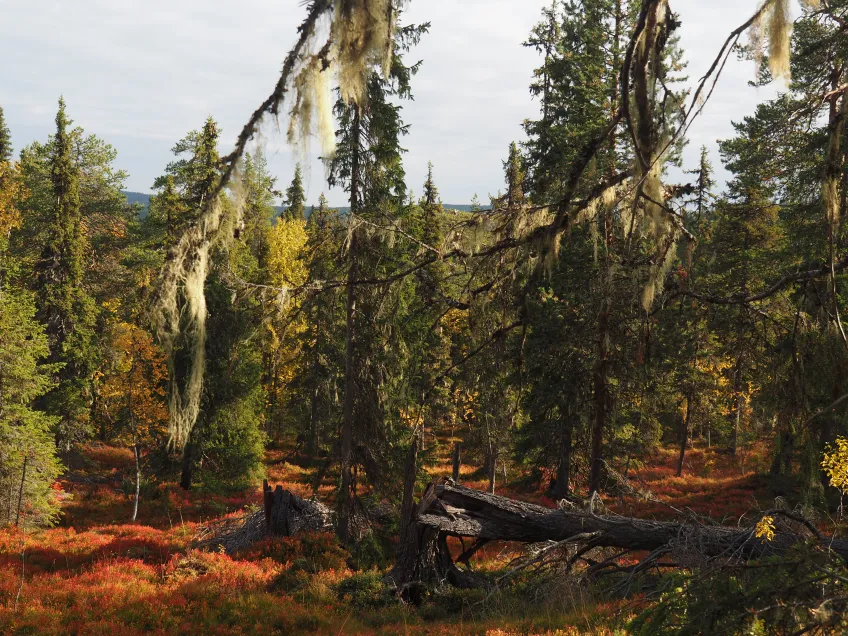
"Comparing carbon storage in old-growth and managed forests is crucial, because contemporary measurements of carbon uptake can miss large historical carbon losses. Carbon storage shows the full picture over time. Old-growth forests serve as a reference for understanding how forest management affects ecosystems and the carbon balance," says Anders Ahlström.
Role of forests in climate
The results are relevant to discussions about the role of forests in the climate transition. The large differences in carbon storage implies that converting natural forests into managed forests leads to much greater losses of carbon or potential carbon uptake than previously estimated. This affects calculations of the climate benefits of forest products such as bioenergy and building materials.
"Converting old-growth forests reduces the landscape's carbon storage more than previously believed. Protecting remaining old-growth forests and allowing unmanaged forests to recover could provide substantially greater climate benefits than earlier studies have shown. A large portion of the clear-cutting that occurs each year takes place in old-growth forests," concludes Didac Pascual.
Publication:
Link to the article in Science:
Higher carbon storage in primary than secondary boreal forests in Sweden


