
When modern photography was introduced via the daguerreotype in 1839, it had a level of verisimilitude that painting couldn't match. That forced painters to expand their creative palette with more subjective perspectives that eventually led to impressionism, modernism and other adventurous forms. At least that's the conventional thinking.
It's also very wrong, according to Andrew Moisey, associate professor of the history of art and visual studies in the College of Arts and Sciences.
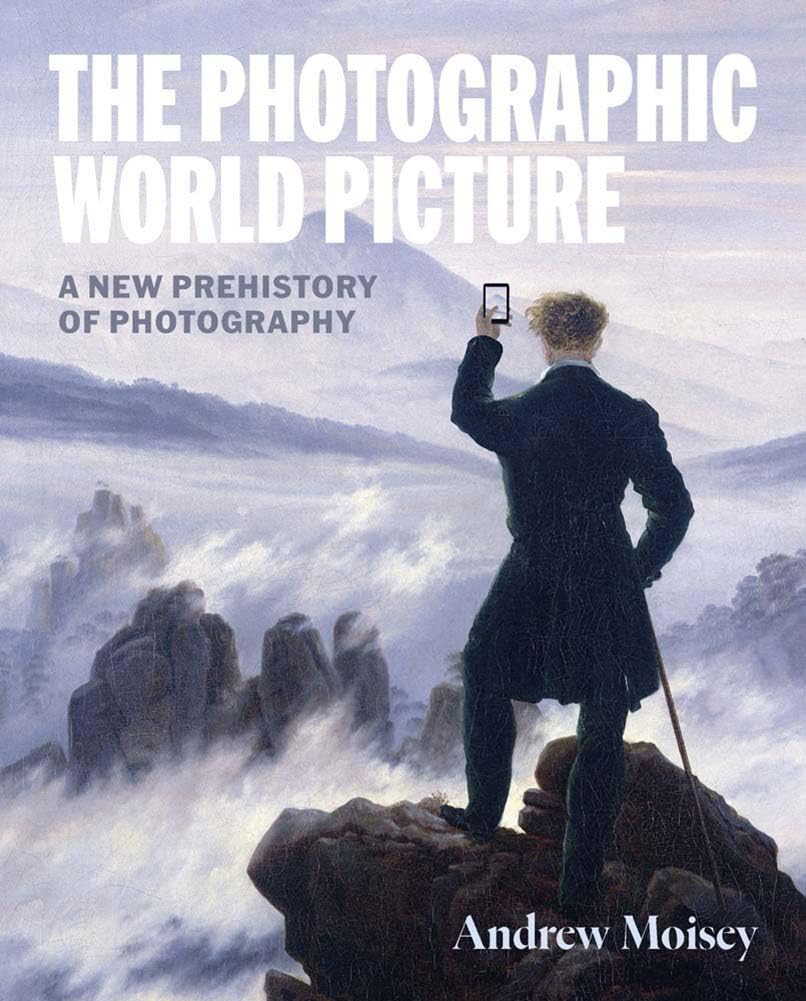
In his new book, "The Photographic World Picture: A New Prehistory of Photography," published Sept. 15 by Yale University Press, Moisey describes how the key aspects of what he calls photography's "mechanical subjectivity" - immediacy, takenness and embodiment - were already present in early modern painting.
"Painting sometimes has these characteristics before photography is invented - this sense of perceptual seeing that we have with our own vision - but photography is the first medium to bundle those three aspects of perceptual seeing together in ways that painters hadn't really done before - but after photography, they would," he said.
Art historians often frame the evolution of painting by theme and genre - i.e., landscapes, portraiture and still lives. But Moisey has a different vantage on that progression - and a potentially controversial one - because he is not a trained historian but rather a highly acclaimed photographer. His 2018 book, "The American Fraternity," was hailed for its stark, anguished look at masculinity and fraternity culture.
But his entry into the visual arts began with a different type of camera. In college, he dreamed of being a filmmaker, and he earned his doctorate in film studies. That interest led him to explore the technical aspects of photography and then - after a trip to the Getty Museum and a revelatory encounter with George de La Tour's work, "Musicians' Brawl" - painting.
"My theoretical and historical background is mainly in cinema, so I had the armature from my cinema studies to think about ways in which the models that artists were using were not identical to the models that art historians used when they categorize pictures," he said.
Another important early discovery was the German landscape photographer Andreas Gursky, whose sprawling, intricately patterned shots of industrialized life "made it seem as if the built world had just carpeted the Earth," Moisy said. "I was like, 'Wow! Photography can do this? It's truly sublime.'"
In a graduate class taught by the art historian T.J. Clark at the University of California, Berkeley, Moisey began exploring the parallels between Gursky and early modern landscape painters. The deeper he dug, the more he found some very basic facets of photography recurring throughout the history of Western art. But he also found important contrasts.
When painters in the European tradition first began rendering scenes of everyday life, for example, they did so from a perspective that was at a remove from that scene, according to Moisey, similar to how a theater audience watches a play on stage. This godlike - or "severed" - perspective allows the viewer to "reflect morally upon what we're seeing and have a judgment, the way that we will be judged someday."
By contrast, he said, "photography introduces a model of being situated in the time and place of the scene that you're seeing, and having a subjective point of view upon that scene, the way that we do in our normal perception."
That model can be broken down into three phenomenological aspects: immediacy (the scene that you're seeing is happening at the same time as you); takenness (the scene is causing you to see it and the picture is "taken" from the world that is viewed, not "made" by the photographer); and embodiment (your first-person experience of being there).
"Photography gives you an embodied point of view on the scene. If photography is bundling immediacy, takenness and embodiment in a perceived image, that's a very good surrogate for being there or seeing there," Moisey said. "It's also a very modern one that we now take for granted. 'No pictures, didn't happen,' right? But back then, the priority was not on that kind of immediacy."
In order to show how these aspects are threaded through early modern painting, Moisey searched for examples from the last four centuries, particularly among travel and geographical prints that tried to transport the viewer someplace else. By doing so, he was stitching together a new narrative for not one but two mediums.
"Primarily, the story of photography and its development has been told from a scientific and technological point of view, and the history of early modern painting has mostly been told from a religious or genre-based point of view, rather than the point of view that this book takes, which is isolating phenomenological features of photography and finding them before photography was invented," he said.
This approach may put him at odds with art historians, but Moisey welcomes the discussion.
"I expect there to be a lot of opinions about this, because it's challenging in a way. It's asking historians of photography to look at the history of art as kin, which some of them don't want to do. They want to think that photography is somehow this thing that was born without an identity," he said. "But if they pay attention to it, they will hopefully be invigorated by what will seem to them, I hope, like a fresh perspective on their field's story. It's just a different path into it."
What began as a research project in college, then grew into his dissertation, is now, 20 years later, a finished book. Moisey hopes it clarifies photography's past, but it also might do more than that.
"I'm trying to figure out where we go," he said.


