
The Connecticut Estuarine Research Reserve is providing important outreach and education on critical environmental preservation
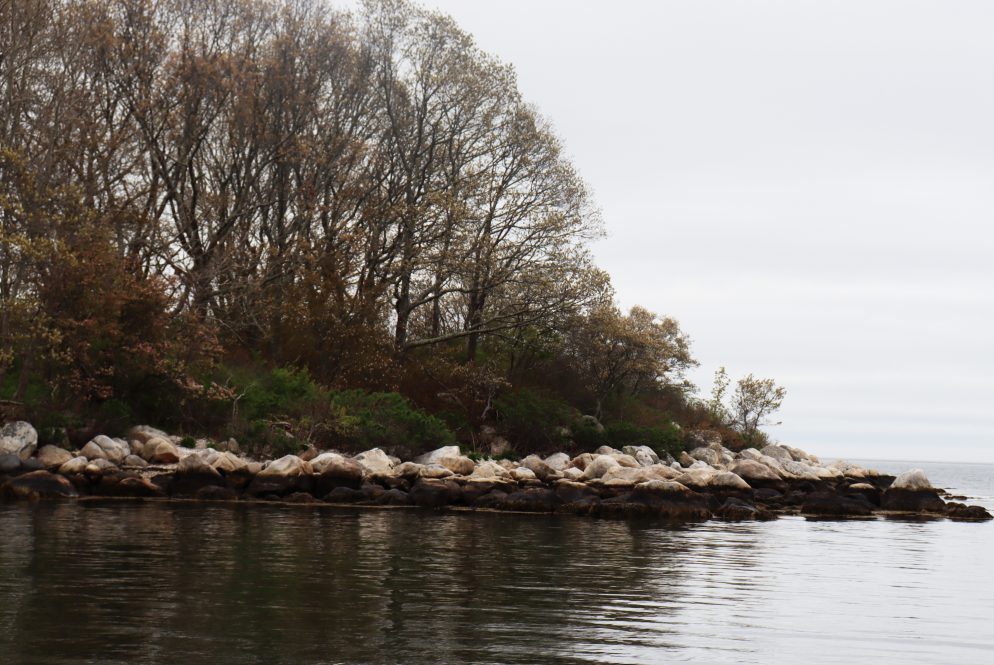
Pine Island, off the coast of Avery Point, is part of the research reserve (Matt Engelhardt / UConn Photo).
Celebrating its fourth anniversary, the Connecticut National Estuarine Research Reserve (CTNERR) is putting funding into action to create positive environmental impacts on the Connecticut River estuary and eastern Long Island Sound.
CTNERR is committed to protecting and studying more than 52,000 acres of subtidal area and state-owned land. This reserve includes 50,000 acres across the Long Island Sound shoreline and extending into parts of the lower Connecticut and Thames Rivers.
Land-based sites include UConn Avery Point, Pine Island Preserve, Haley Farm State Park, and the Bluff Point property. These coastal areas provide essential habitat for wildlife, offer educational opportunities, and serve as living laboratories for scientists and students.
Focusing on research, education, training, and stewardship of estuarine ecosystems
CTNERR was established in 2022, joining a network of reserves across the country dedicated to research and preservation. The many functions of the Reserve include:
- Preserving "living laboratories" that provide meaningful, hands-on experiences for teachers and learners of all ages. The Education Program continues to expand classroom resources for educators, including loan kits, to bring tangible, place-based lessons into schools.
- Training and Engagement delivers science-based tools, information, and skills to coastal decision makers in communities in southeastern Connecticut through place-based learning. Training and Engagement staff are leading the Long Island Sound Eelgrass Collaborative, a shared initiative between Connecticut and New York that provides guidance towards eelgrass meadow management and restoration.
- Stewardship builds programs and partnerships at the regional and local level to conserve and restore coastal habitats while promoting equitable access to coastal resources. Recently, the Stewardship Program completed three years of field work to identify and map invasive plants at Bluff Point, Haley Farm, Great Island, and Lord Cove.
- Research and monitoring supports and conducts applied research, assessments, and long-term monitoring within the Reserve ensuring science informs effective management of water quality and estuarine habitats. Reserves across the nation also support a System Wide Monitoring Program to collect and share long-term biotic and abiotic data on estuarine health and trends to researchers, resource managers, educators, and coastal decision-makers.
Delivering impact through action
CTNERR recently secured nearly $2.9 million in federal funding for a restoration project at Bluff Point State Park. This project will replace two culverts, improve access and functionality of the park's main trail for visitors, and maintain the integrity of the park's critical salt marsh habitat. The project was approved in late 2025 and will run through 2028, with a possible one-year extension.
Each year, the CTNERR Education Team hosts the Teachers on the Estuary (TOTE) workshop, designed to introduce educators to new knowledge, skills, and place-based learning opportunities both inside and outside the classroom. Past workshops have included "A Bird's Eye View," focusing on how environmental changes impact local bird populations and "A Tale of Two Rivers," which explored the history and ecology of the Thames and Connecticut Rivers - two large but very distinct riverine systems.
The Research boundaries encompass 53% of Connecticut's existing eelgrass beds and 37% of the beds across Long Island Sound and Fishers Island Sound. As a result, the NERR's Training and Engagement Program helps fund the Long Island Sound Eelgrass Collaborative, with assistance from the Long Island Sound Partnership. Program goals include identifying management and regulatory barriers to eelgrass restoration and improving coordination among partners to better understand interactions between eelgrass and aquaculture.
National system with local roots
The CTNERR marked its fourth anniversary earlier this year, celebrating its Designation Day on Jan. 14. The Connecticut Reserve is part of the National Estuarine Research Reserve System, established more than 50 years ago as a state/federal partnership. In Connecticut, the CTNERR exists as a center within the UConn campus at Avery Point and works in close coordination with the Connecticut Dept of Energy and Environmental Protection.
Each Reserve in the System was designated to protect and study estuarine ecosystems where fresh and saltwater mix, while building strong, collaborative relationships with communities within their boundaries. The Research Reserve system aims to deliver nationally relevant science and management by working collaboratively to address locally significant issues.
Connecting people, places, and science
The CTNERR collaborates with organizations such as Connecticut Department of Energy and Environmental Protection, Connecticut Sea Grant, and local partners to advance science-based conservation throughout Long Island Sound and Southeastern Connecticut, building partnerships along the way. Since beginning operations in 2022, the Reserve has conducted 21 trainings courses for more than 700 local and state decision-makers, delivered educational programs to more than 2,400 students, educators, and community members, and led 11 research studies within the Reserves boundaries.
Building on this momentum, The Reserve is poised to expand its impact through continued collaboration, innovative research, and meaningful education.
To learn more about the Reserve, visit https://s.uconn.edu/ctreserve.


