
Much of our drinking water contains hundreds of chemicals, but today we test for only a fraction of them. Researchers from the University of Copenhagen have now launched a company offering an exceptionally broad screening of drinking water that can reveal all the "hidden" chemicals. The first utility companies have already commissioned analyses.
It is not only traces of nitrate, pesticides and PFAS that may be coming out of your tap. Most likely, residues from hundreds - indeed, in some places thousands - of other anthropogenic substances are present. Most are probably harmless, and for many we do not yet know the effects, but some are known to be harmful to human health. Although drinking water in Denmark is generally of high quality, chemical contamination of groundwater is an increasing concern. While politicians in the Danish Parliament debate nitrate and other individual substances in drinking water, and authorities continuously expand their lists of regulated contaminants, researchers behind a new spinout company from the University of Copenhagen point to a more fundamental problem: drinking water monitoring still follows the principle of looking only for what is already known.
"Today, we test drinking water for only a small, selected group of substances - those we already fear. That leaves a vast number of chemicals undetected. PFAS, for example, remained effectively 'invisible' for many years for exactly this reason," says environmental chemist Jan H. Christensen, Professor at the Department of Plant and Environmental Sciences.
Avoiding unpleasant surprises
Several recent studies - including one from Jan H. Christensen's research group at the University of Copenhagen - have identified new types of concerning chemicals in Danish drinking water boreholes. These include industrial chemicals used in insecticides, cleaning products, firefighting foam and vehicle tyres, some of which are known to damage organs and may be carcinogenic.
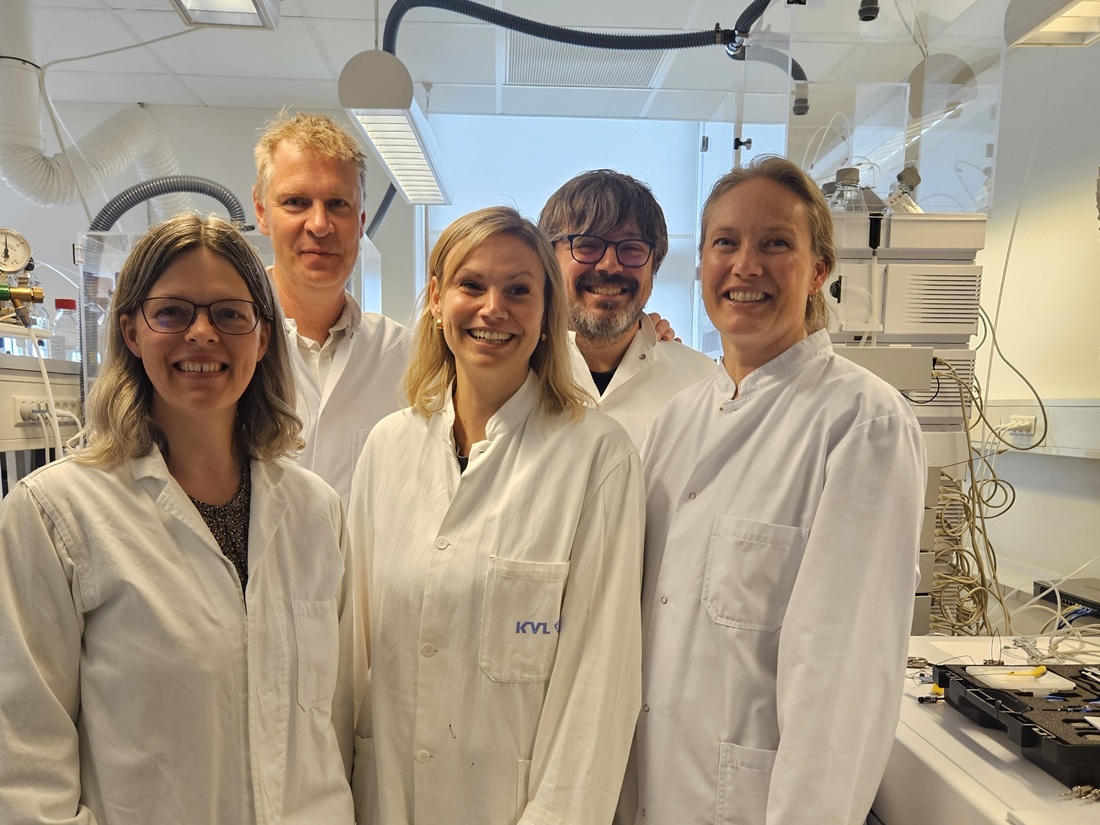
- The researchers behind NTS Analytica are Jan H. Christensen, Nikoline J. Nielsen, Selina Tisler, Giorgio Tomasi and Majbrit Hansen Dela Cruz, all of whom are employed at the Department of Plant and Environmental Sciences, University of Copenhagen.
- The company offers non-target screening based on high-resolution mass spectrometry and several other state-of-the-art analytical techniques.
- A key element of the company's approach is the combination of advanced analytical chemistry and data science.
- NTS Analytica's core focus areas are wastewater, groundwater and environmental samples, although its methods can also be applied to the analysis of bio-based products such as bio oils, material migration, food products and biological samples.
- The company delivers not only raw data but also prioritised substance lists, concentration estimates, risk assessments, source identification and recommendations for further monitoring.
"More and more studies show that drinking water wells often contain hundreds of man-made chemicals. The problem is that many of them are never detected using current analytical methods," says Jan H. Christensen.
Together with a group of fellow researchers from the University of Copenhagen, he has founded the spinout company NTS Analytica, which offers a much broader screening of chemicals in drinking water and other environmental samples.
The company uses, among other techniques, so-called non-target screening, in which advanced analytical instruments scan water samples for thousands of substances simultaneously. The result is a "chemical fingerprint" of the sample, providing a far more complete picture of the substances present.
"We need to carry out broad-spectrum screenings that give a true picture of what is actually present in the water, rather than simply telling us whether specific substances such as nitrate or PFAS happens to be there. Otherwise, we risk continued unpleasant surprises that ultimately cost consumers both in terms of health and money," says the professor.
Mapping Potential Pollution from Landfills
Among NTS Analytica's first customers are the Capital Region of Denmark, Novafos and HOFOR. The new company will help assess the risk of contamination from old landfill sites located near groundwater abstraction areas used by waterworks.
"Non-target analyses have proven to be a valuable tool in the work carried out by regions and water utilities to trace contamination and identify previously overlooked substances that may pose a risk to drinking water," says Ole Frimodt Pedersen, Head of Unit in the Environmental Department of the Capital Region of Denmark. One of the core ideas behind NTS Analytica is to support authorities and utility companies in ensuring clean drinking water. This task is set to become both larger and more expensive in the coming years.
Recent discoveries of contaminants - particularly pesticide residues - in groundwater are pushing Denmark towards far more extensive drinking water treatment than previously, including the use of activated carbon filtration, which is costly.
However, the new spin-out can provide a clear basis for determining which substances should be investigated, monitored or removed.
"Implementing new treatment technologies costs many millions of kroner, and those costs ultimately end up on consumers' water bills. At the same time, traditional analyses are expensive because costs increase with every additional substance that is tested for. We can help ensure that the money spent actually leads to the removal of unwanted substances," says Jan H. Christensen.
Today, analyses of selected substances in water are typically carried out by large environmental laboratories. Jan H. Christensen does not see NTS Analytica as a competitor but rather as a potential subcontractor that can perform broad non-target screening before selecting which substances should be included in routine monitoring programmes. These targeted analyses can then be carried out by traditional laboratories.
"We have spent many years researching these analytical methods. The time has now come to move them out of the laboratory and into practical use, enabling water utilities and authorities to protect drinking water on a better basis. We hope that non-target screening can help shift drinking water monitoring from a reactive approach to a much more preventive one," concludes Jan H. Christensen.


