
Counting the marginal dorsal hairs on blacklegged tick larvae would probably be a tedious affair for most people. But it is a normal day for me in the Medical Entomology Laboratory of the Illinois Natural History Survey.
I need a stereomicroscope to see the hairs, which vary in number and position on the ticks' backs and are useful for identifying certain species. Getting the light and position just right can be difficult, not to mention the sometimes-fragmented condition of the specimens sent to us. Finally, ticks can be quite small. The larvae of some species can be the size of a poppy seed.
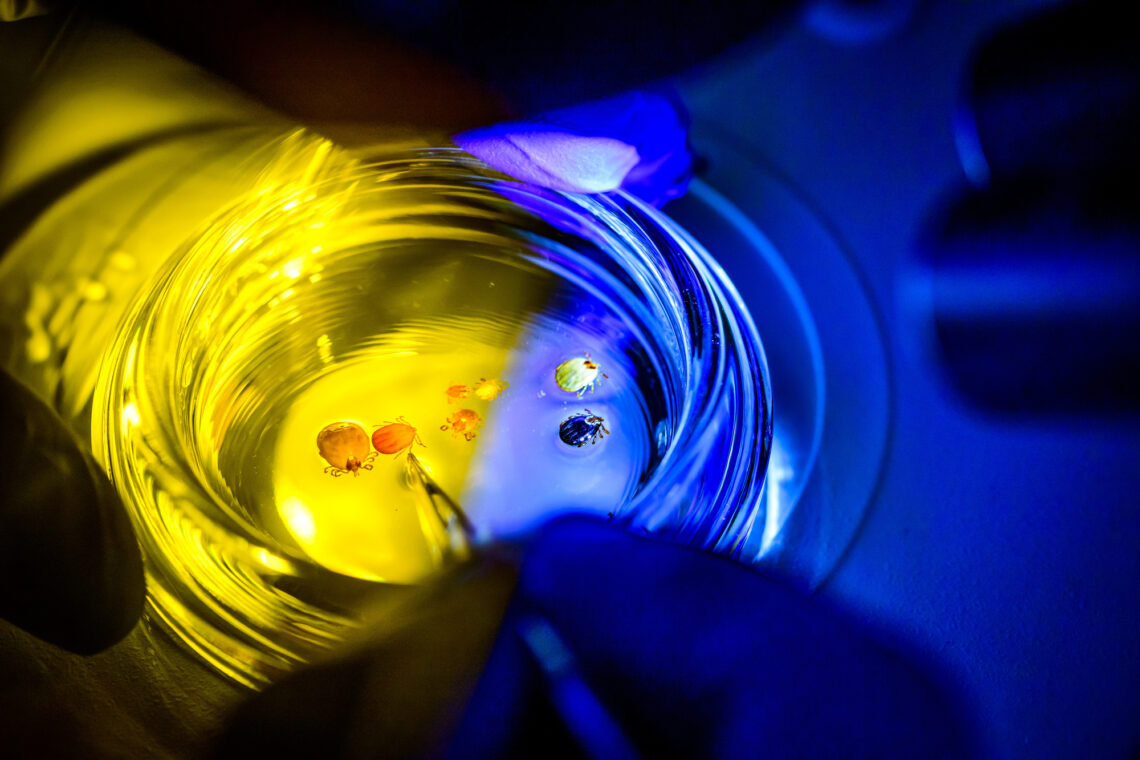
The INHS investigates and records the biodiversity and habitats in the state of Illinois. The MEL focuses on the diversity, distributions, ecology and control of arthropods, specifically those that can carry pathogens of medical or veterinary concern.

Among the arthropods, mosquitoes tend to steal the spotlight due to the disease-causing agents they carry - and rightfully so. But ticks are an increasing public health concern in Illinois. Look no further than the news of the last year: "First death reported from meat allergy caused by tick bite" and "Asian long horned tick found in new Illinois county." The latter headline involved ticks identified at the MEL.
My analysis isn't limited to an examination of hairs, however. Ticks are also identified by other means. I focus on the small appendages on the underside of their bodies that are used for grasping their animal hosts. I also look for differences in the tiny plate-like structures on their abdomens that are used for breathing.
Many tick species are adorned with beautiful markings that help me identify them without even knowing the animal host they were found on. The lab also analyzes DNA barcodes, small snippets of DNA that are unique between species.
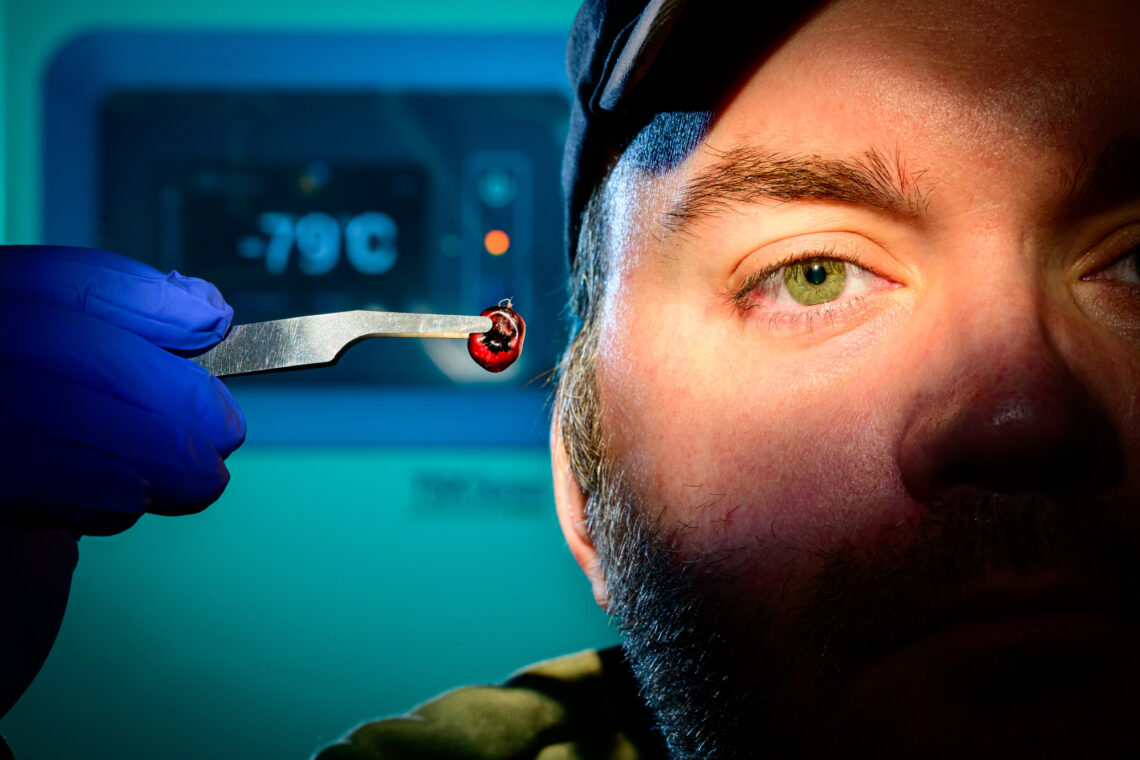
It's essential that we identify each tick specimen so that we know which pathogens they might carry. The blacklegged tick can transmit Borrelia burgdorferi, a bacterium that causes Lyme disease. The American dog tick can carry Rocky Mountain spotted fever. The list of tick-borne pathogens is long and getting longer. Tick identification also guides the testing we do in the lab to determine what pathogens are present.
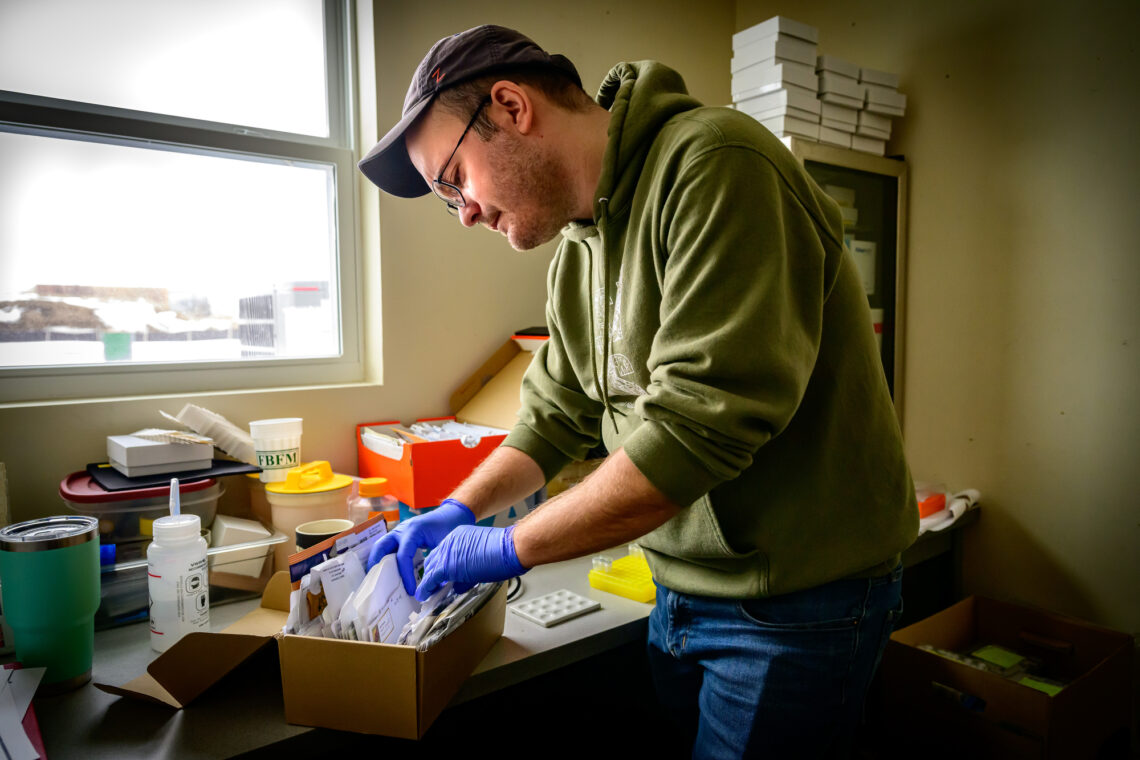
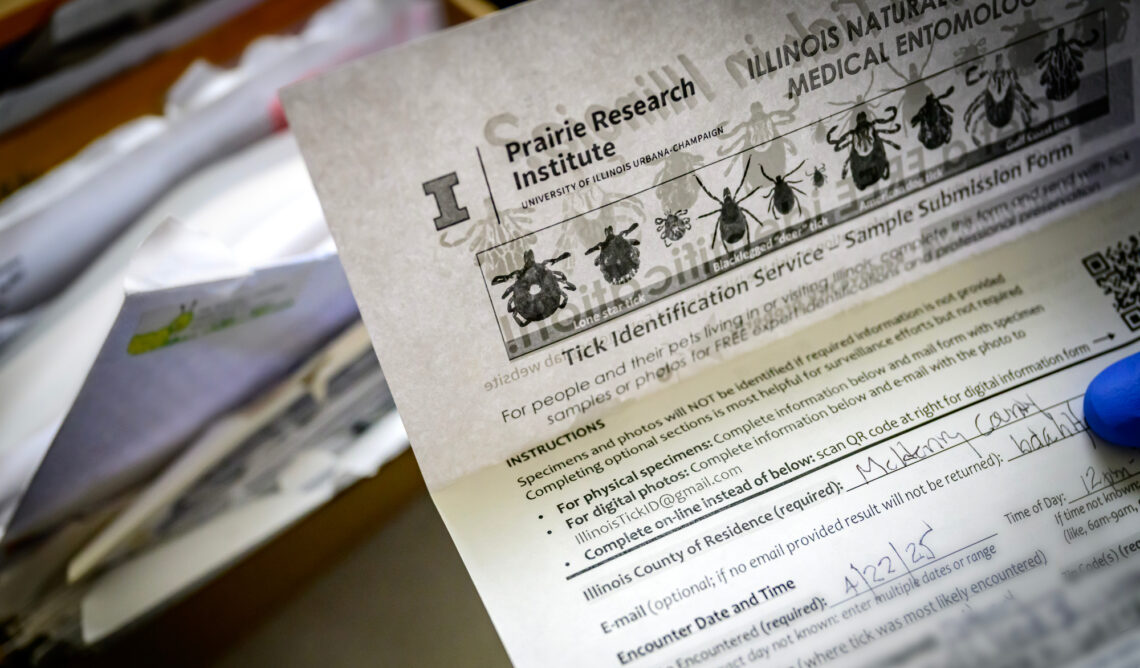
The parade of ticks across my desk rarely ceases, except in the winter months. They come from a variety of sources: Some are sent to us by the public, some involve cooperative projects with various entities, and some are captured by the lab during fieldwork.
Identification of ticks sent by the public is a free service that we are proud to provide Illinois residents.* In 2025, the public submitted 1,025 ticks to the laboratory.
My job at MEL also involves catching ticks in the field. This work, supported by the Illinois Department of Public Health, takes me around the local Champaign area and to the far northwestern counties of the state looking for blacklegged ticks.

Every time I go out into the field I wear a full bodysuit treated with the insecticide permethrin, latex gloves and knee-high rubber boots. My colleagues and I catch ticks on cloth sheets that we drag on the ground in areas where lots of people and animals are found, such as forest borders and trails. We place each tick in a vial of alcohol for later identification and pathogen testing.
There is still much to learn about the biology of ticks. Each public submission, field collection and lab experiment offers a piece of information that paints a more complete portrait of these disease-carrying arthropods in Illinois. The job may sound odd and esoteric, but it's all in a day's work for me.


