
Aluminum die-cast components are widely used in automotive and precision machinery applications due to their combination of low weight and structural strength. However, internal defects known as porosity - voids formed by entrapped air during casting - remain a persistent challenge. These defects are difficult to detect through external inspection and can compromise mechanical integrity and long-term reliability.
A research group led by Professor Jun Ishimoto at the Institute of Fluid Science, Tohoku University, in collaboration with Astemo, Ltd., has developed a simulation approach that enables time-resolved prediction of porosity formation during high-pressure die casting. The work centers on a newly developed computational tool, "DiecastCompressibleInterFoam," built on the open-source computational fluid dynamics platform OpenFOAM.
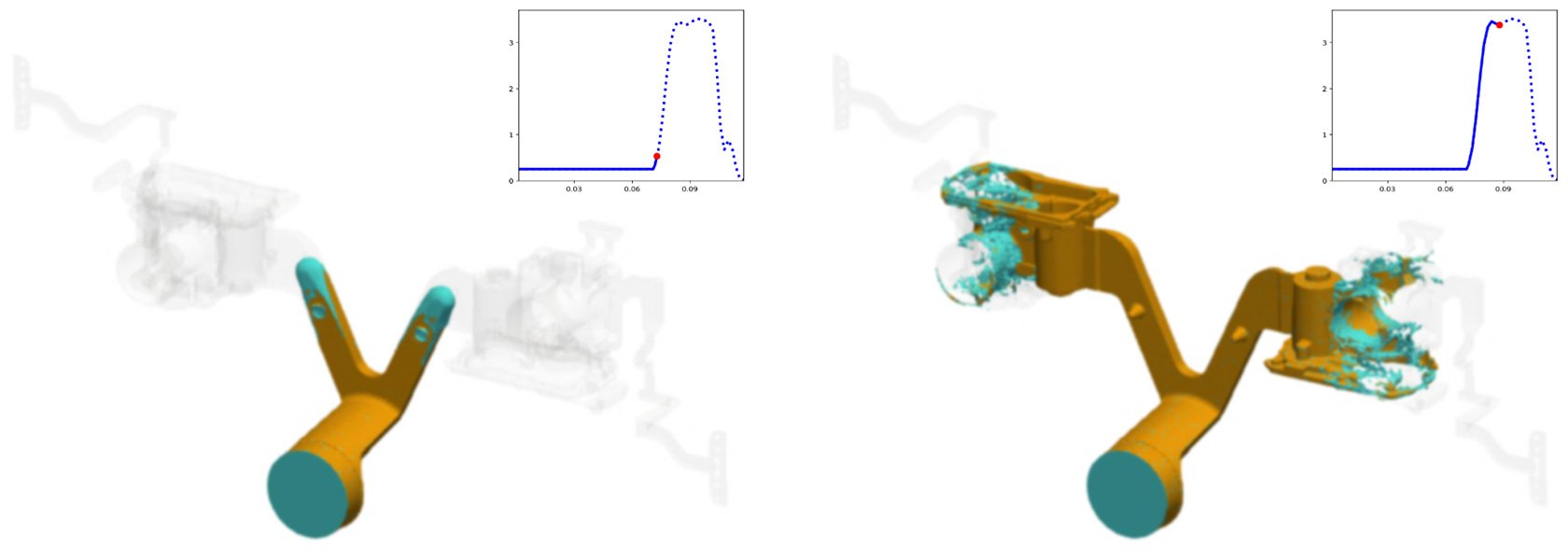
The simulation integrates the Volume of Fluid (VOF) method with Large Eddy Simulation (LES), while incorporating gas compressibility and solidification effects. This framework enables three-dimensional, high-fidelity analysis of the casting process, spanning molten-metal filling through the early stages of solidification. By leveraging large-scale supercomputing resources, the model captures the behavior of entrapped air, including bubble formation, transport, compression, and eventual entrapment within the material.
Using this approach, the team identified the locations of porosity formation over time during the casting process. The simulation also enabled visualization of the fine-scale morphology of porosity during transient solidification, offering insights into defect-formation mechanisms that are difficult to observe with conventional methods.
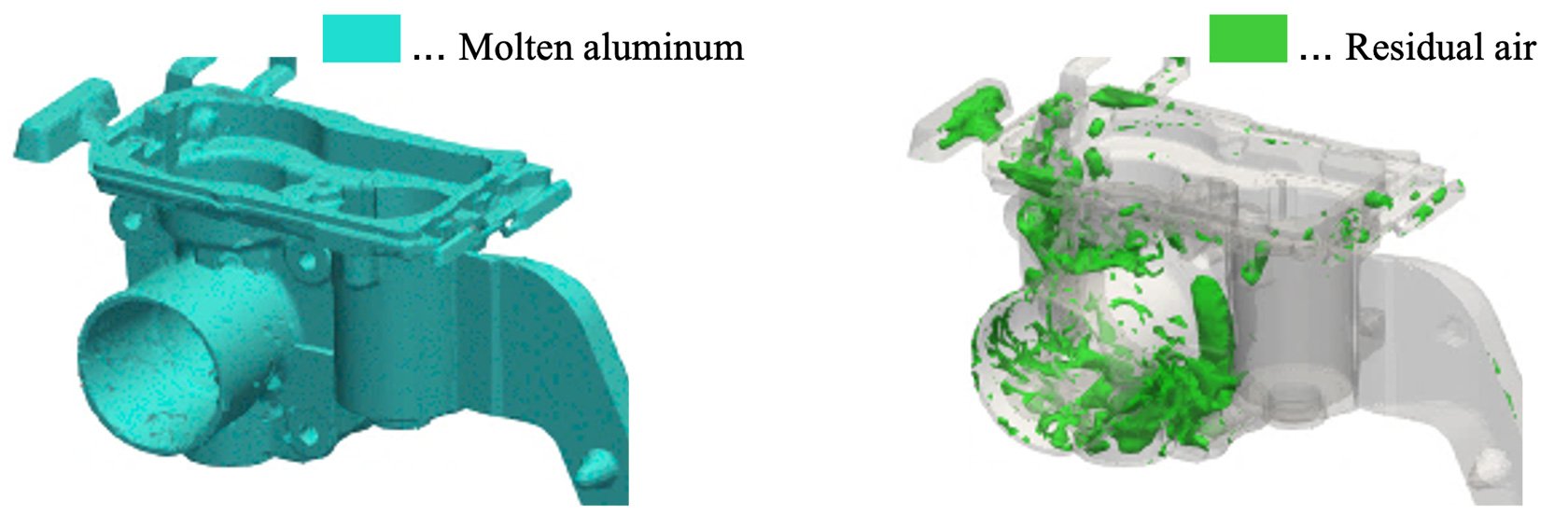
To assess the model's accuracy, the simulation results were compared with X-ray computed tomography (CT) measurements of mass-produced die-cast components. The comparison showed spatial agreement rates of up to 60% for porosity locations. In addition, the predicted porosity of 0.42% was consistent with the experimentally measured value of 0.26%.
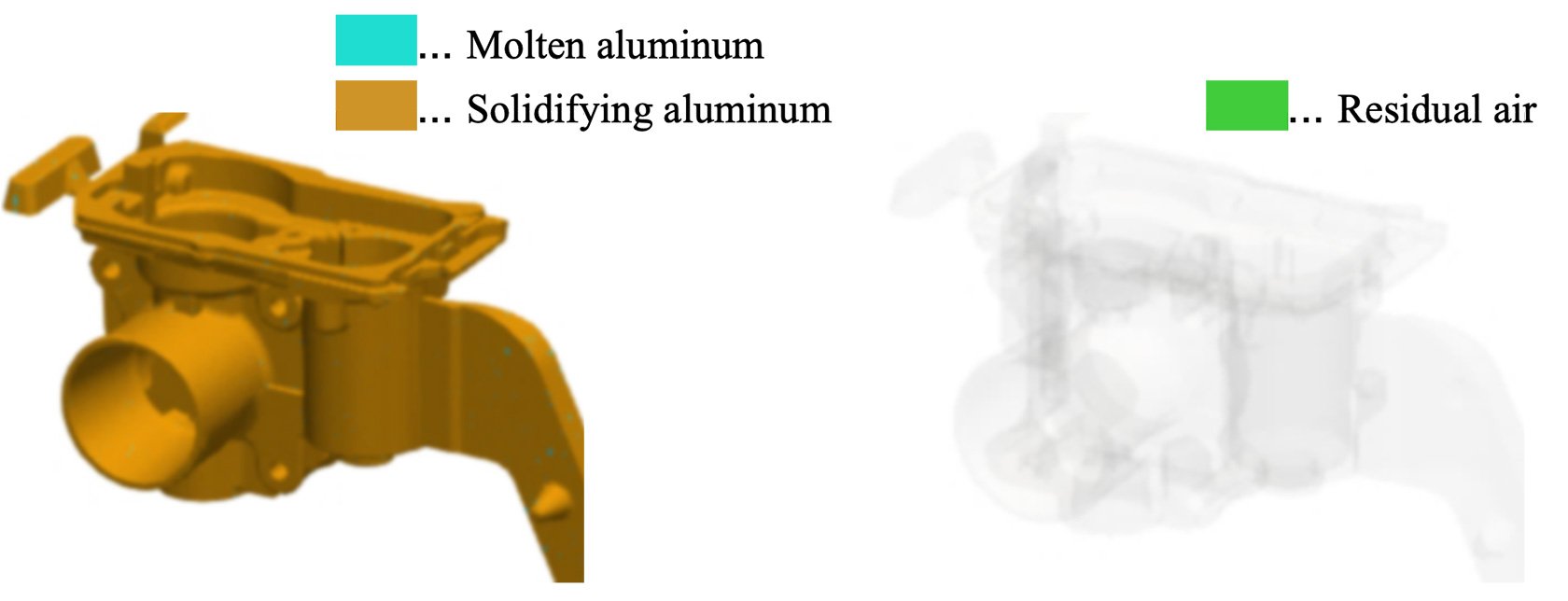
The research also incorporated computational efficiency techniques, including mesh optimization, symmetry modeling, and sleeve segmentation analysis. These improvements reduced overall computation time by approximately 55%, supporting the feasibility of applying such simulations in industrial design workflows.
"This approach allows us to follow the evolution of entrapped air throughout the casting process and link it directly to defect formation," said Ishimoto. "By identifying where and how porosity develops, we can provide practical guidance for improving casting design and process conditions."
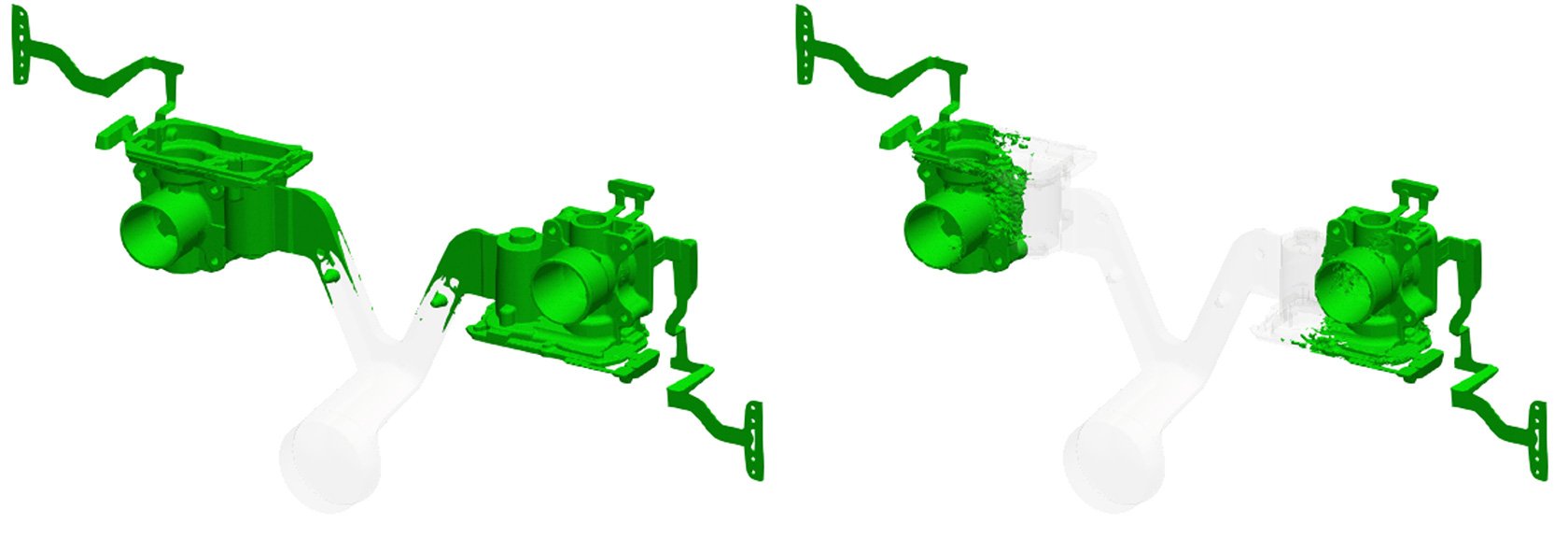
The methodology offers a pathway for integrating simulation-based defect prediction into early-stage product development. By enabling the identification of defect-prone regions prior to manufacturing, it may reduce reliance on physical prototyping while improving product consistency and safety in mass production.
Future work will extend the simulation to include later stages of the casting process, such as pressure intensification and shrinkage-related porosity. The team also plans to incorporate additional physical models, including hydrogen gas precipitation, and to explore the use of simulation data for training machine learning models aimed at real-time defect prediction in industrial settings.
- Publication Details:
Title: Visualization and Validation of Air Entrapment and Porosity Formation in Compressible Multiphase High-Pressure Die Casting
Authors: Hideaki Yamada, Jun Ishimoto, Fumikazu Sato, and Yoshikatsu Nakano
Journal: International Journal of Metalcasting


