
A new policy brief calls for national investment in world-leading aquaculture technology that could boost food security, create skilled jobs and position the UK as a global leader in sustainable seafood production.
The authors, from the University of Exeter, argue that with global demand for seafood rising rapidly, and international forecasts suggesting aquaculture production must double by 2050, the UK risks falling behind other nations in seizing this opportunity unless we act now.
The policy brief, launched today (Tuesday) at the Shellfish Association of Great Britain Annual Conference, argues that the UK has a unique opportunity to lead a global "Blue Transformation" by investing in innovative production systems to farm seafood in tanks on land.
The report, "Investing in the UK's Blue Transformation: A World-Leading Opportunity to Deliver Innovative Land-Based Seafood Solutions", sets out how recirculating aquaculture systems (RAS) - highly controlled facilities that recycle water and can operate almost anywhere - could transform seafood production across the UK and boost economic growth.
Caroline Voaden MP said: "As the Chair of the All-Party Parliamentary Group on Shellfish Aquaculture, I am very well aware of the industry's value and potential.
"Last year I had the pleasure of visiting Exeter University to learn more about the UK Sustainable King Prawn Project, and was fascinated by what I saw.
"The project shows that king prawns can be produced at scale in the UK in a cost-effective, sustainable way, also reducing the carbon footprint associated with current overseas production methods and importation.
"I will certainly be calling on the Government to consider the recommendations in this report, and hope to see the industry receive the support it requires to flourish and increase production."
RAS facilities use up to 99% less water than conventional aquaculture, offer high biosecurity standards and can be established in coastal, rural, urban and brownfield locations.
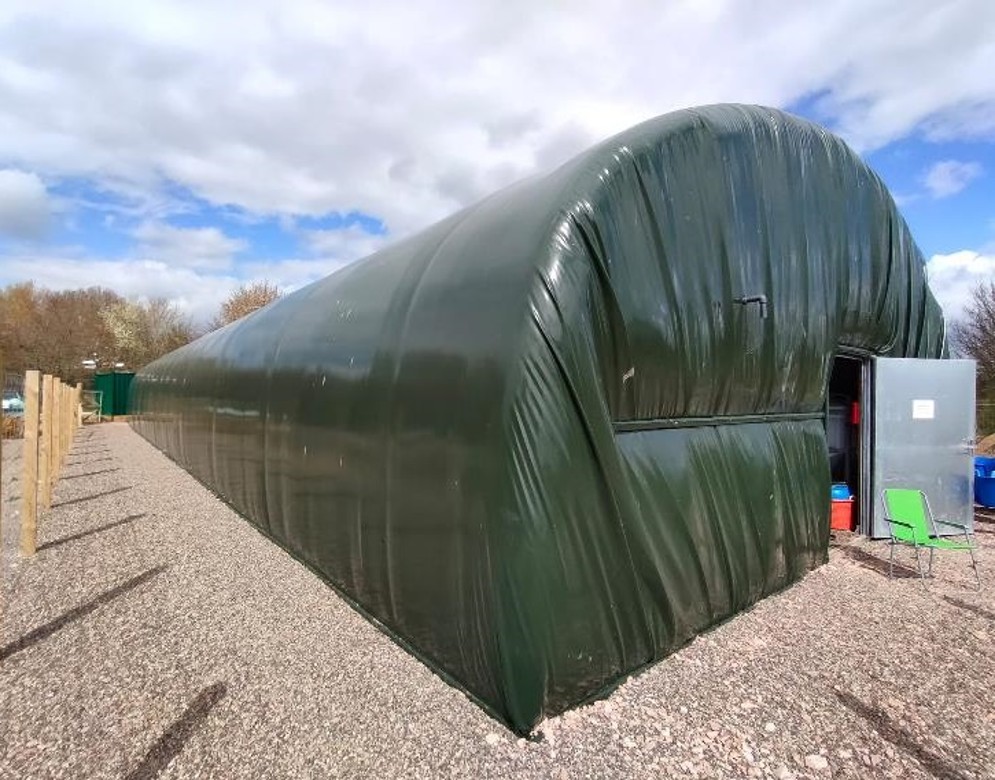
The systems can produce a wide range of species including trout, prawns, oysters, seaweed and other high-value finfish, creating new opportunities for domestic supply and export growth.
The report highlights 10 major benefits of expanding land-based seafood production, including economic growth, job creation, productivity gains, improved food security, workforce development and climate benefits.
Research published last year notes that around 80% of seafood consumed in the UK is currently imported, while domestic production remains concentrated in a small number of species.
Researchers say land-based aquaculture could help diversify UK seafood production while supporting wider government priorities on regional growth, coastal regeneration, environmental restoration and renewable energy.
As demonstrated by The UK Sustainable King Prawn Project, the technology can also make use of waste heat from facilities such as data centres and anaerobic digesters, while by-products from production can be used to generate renewable energy or support high-value pharmaceutical industries.
John Brown, Managing Director of Innovation Nursery, said: "Britain gave the world the agricultural revolution and then the industrial one. We have since become rather good at inventing the future and letting somebody else build it.
"Artificial intelligence is only the most recent idea we thought of and then watched grow up abroad. Land-based seafood is the next revolution on the table, and this one we should keep."
Sir Tim Smit KBE, co-founder of The Eden Project, co-founder of Innovation Nursery and Advisory Board Member of the UK Sustainable King Prawn Project, said: "The science is here, the entrepreneurs are here and the market is hungry. What it takes now is vision, and the spirit to go first and lead the way.
"Get this right and Britain leads the next regenerative revolution, throwing the doors open to the thinkers, makers, misfits and creators who will reimagine how a society feeds itself: a circular, sustainable food system that is better for the planet, better for our health and a great deal more delicious."
A central recommendation of the new policy brief is the creation of a UK Centre for Land-Based Seafood Production.
This proposed national hub would support innovation, skills development, business incubation, workforce training and regulatory coordination, helping accelerate investment and commercial adoption across the sector.
David Jarrad, Chief Executive of the Shellfish Association of Great Britain, said: "The UK is uniquely placed to benefit significantly from an expansion in its shellfish aquaculture sector - not just financially, but culturally and environmentally, whilst delivering on the food security agenda and supporting coastal communities with much needed jobs.
"The industry, both marine and land based, delivers nutritious and delicious products that deliver fantastic ecosystem services, such as water cleansing and carbon & nitrogen sequestration - what is not to love about Shellfish Aquaculture!
"The Shellfish Association of Great Britain is pleased to support this initiative to be a part of a diverse seafood landscape in the UK and to supplement and expand the shellfish aquaculture sector."
Professor Ian Bateman OBE, Co-Director of the Land, Environment, Economics and Policy Institute (LEEP) at the University of Exeter, said: "This is a transformational opportunity to boost not only productivity and exports but also the technology and engineering capabilities behind them."
Professor Rod Wilson, from the University of Exeter, said: "The UK has the research expertise, entrepreneurial talent and growing market demand needed to lead the next generation of sustainable seafood production."
Dr Rob Ellis added: "The question is whether we act quickly enough to capture that opportunity."


