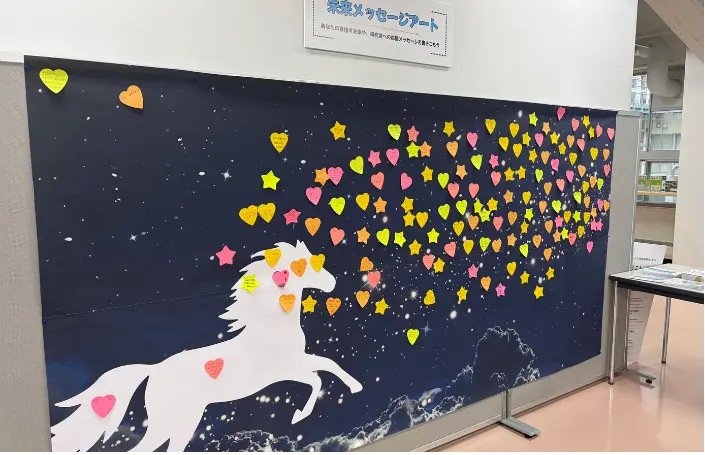
The global environment and human health, food and well-being, and mobility in an aging society. These themes, closely connected to our everyday lives, formed the starting point for "VI Agora - Talking with researchers about our future," held on May 23, 2026, as part of Homecoming Day 2026 in Ookayama.
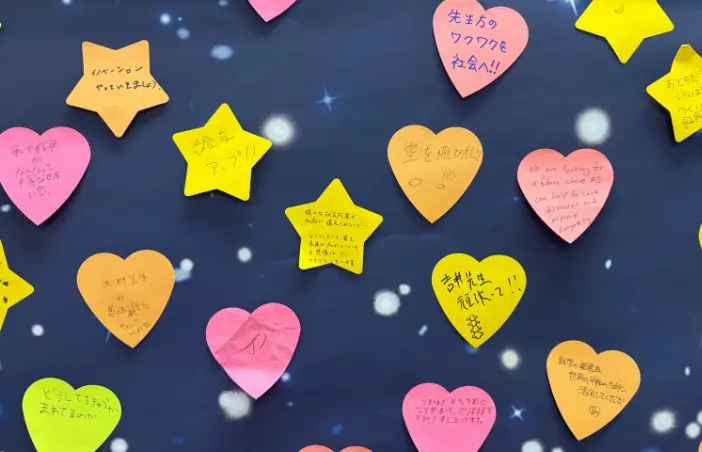
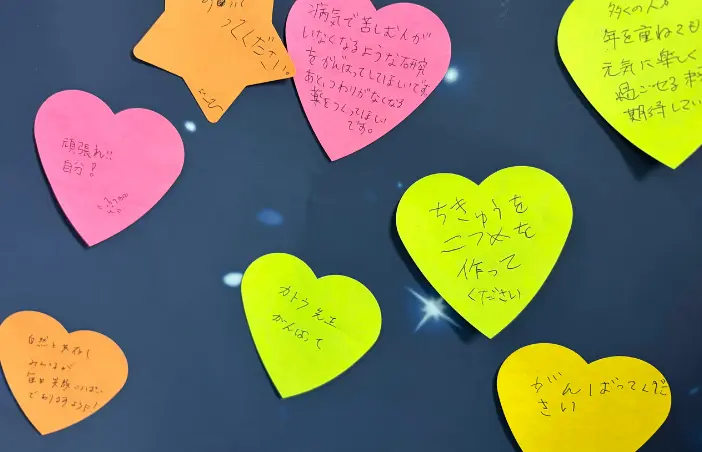
The event brought together approximately 200 visitors, including alumni, their families, and members of the local community. Through dialogue with researchers, participants explored the futures they would like to help shape. Messages of encouragement, empathy, and hope that emerged from these conversations were brought together as a single collaborative artwork, the "Future Message Art."
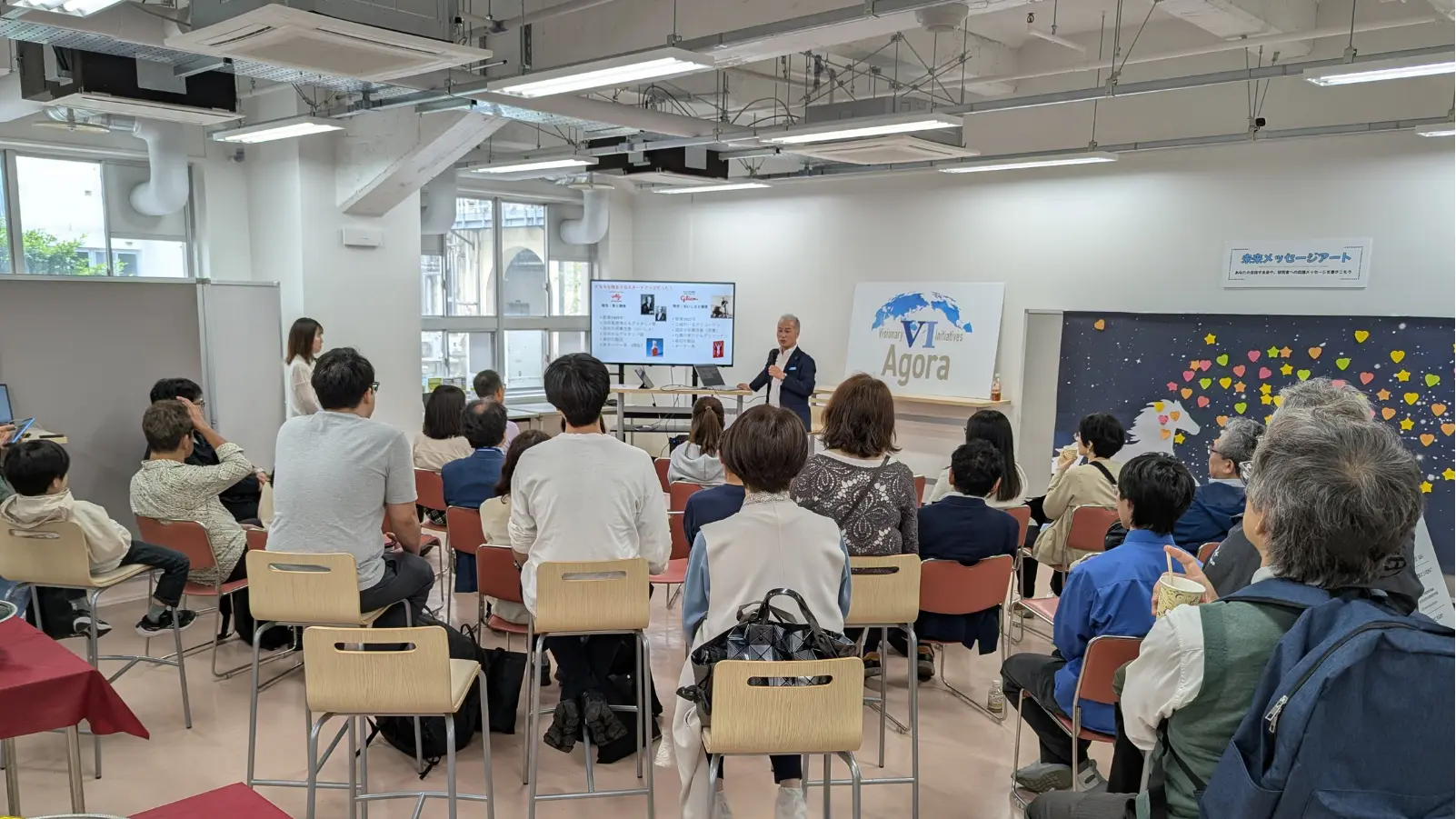
About the Visionary Initiatives and VI Agora
Science Tokyo's Visionary Initiatives (VIs) are a new framework for research and education, designed to advance vision-driven research through collaboration across disciplinary boundaries. VI Agora is an open forum where participants can learn about the VIs and reflect on future society through exhibitions and dialogue.
The word "agora" refers to public squares in ancient Greece, where people gathered and exchanged ideas. The name reflects Science Tokyo's aspiration to create a place where the university and society can come together to discuss the future.
Mini Talks: Talking with researchers about our future
The "Researcher Mini Talks" featured researchers participating in the VIs, who introduced the visions they aim to realize through their research and the initiatives being pursued toward those goals. Participants of all ages, from children to adults, asked questions and shared their thoughts, creating lively and engaging conversations.
Part 1: How are the global environment and health connected?
Speaker: Nobutoshi Nawa, Professor, Department of Global Environmental Health, Graduate School of Medical and Dental Sciences / Director, Center for Well-being Research Advancement, Institute of Future Science
GX Frontier Visionary Initiative-Realizing cutting-edge science and technology to make green transformation a reality
Prof. Nawa, a pediatrician and researcher, is working toward a future in which both the global environment and human health are protected. While continuing to work in clinical practice, he conducts research that connects scientific evidence to behavioral change and policy. In his talk, he presented data-driven research on how environmental changes such as heat and air pollution affect our health and healthcare systems.
An analysis of data on hospitalized patients nationwide showed that health risks on hot days appear not only as heat-related illnesses, but also as an increase in anaphylaxis caused by outdoor factors such as bee stings. Prof. Nawa also introduced an international joint research project that he leads in Kyrgyzstan, where severe air pollution occurs during winter. Because the country has limited monitoring sites, the project uses satellite data and machine learning to estimate pollution distribution, with the aim of informing policy and encouraging behavioral change among residents. He also discussed the use of social simulation based on survey data from approximately 10,000 people to examine how climate change mitigation measures can be adopted more widely in society.
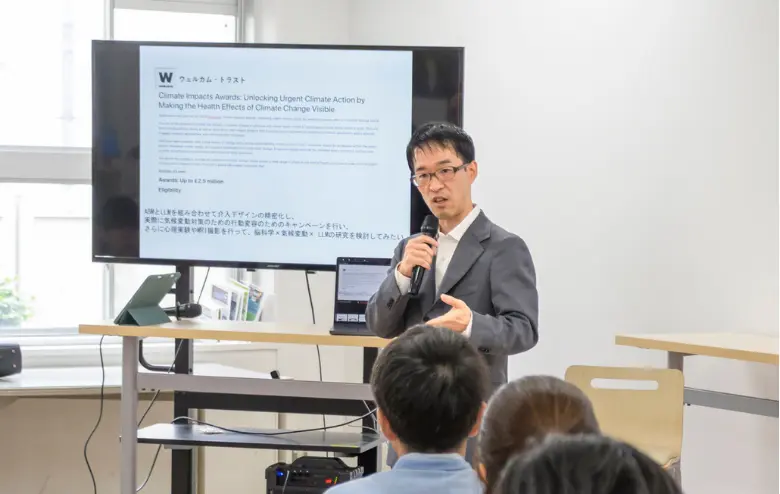
Efforts to connect such research to society are also extending to the younger generation. Prof. Nawa introduced the activities of Reaching Zero-Dose Children, an organization co-led by Science Tokyo Specially Appointed Assistant Professor Aomi Katagiri that works to bring public health research findings directly to policymakers.
Dialogue with participants
Participants asked many practical questions related to preparedness, including how to protect children from heat and how to respond to bee stings and anaphylaxis. Prof. Nawa explained that children are more vulnerable to heat than adults in part because their thermoregulatory functions are still developing. Regarding bee stings, he noted that it is difficult to predict severity immediately after a sting and encouraged participants to seek medical advice promptly depending on symptoms.
There was also strong interest in the importance of validating AI when incorporating it into research. Prof. Nawa emphasized that the goal is not simply to "use AI," but to carefully verify consistency with survey data and behavioral science theory, which he described as a responsibility of researchers. The discussion then expanded to issues spanning clinical practice and social systems, including medical education, patient acceptance systems, and medicine stockpiling in anticipation of changing disease patterns caused by climate change.
Part 2: Why does food make people happy? The future of well-being created by "shokuba"
Speaker: Eiichiro Kimura, Professor, School of Environment and Society / Director, Center for Innovation Design
Innovative-Life Society Visionary Initiative-Cyber-physical spaces opening up new areas of life
Prof. Kimura spoke from the perspective that eating is not only a means of taking in nutrition, but also an activity that connects people and contributes to well-being. He explained that the experience of deliciousness is shaped not only by basic tastes, but also by flavor, texture, physical condition, and the environment-including with whom and where we eat. For this reason, he emphasized that the various settings in which food is shared-which he refers to as "shokuba"-plays an important role in shaping well-being.
The talk also touched on the history of umami, discovered by a Japanese researcher around 100 years ago, as well as misconceptions and scientific evidence surrounding monosodium glutamate (MSG), a seasoning that provides umami. Prof. Kimura noted that communication grounded in scientific evidence can significantly change how society perceives such issues.
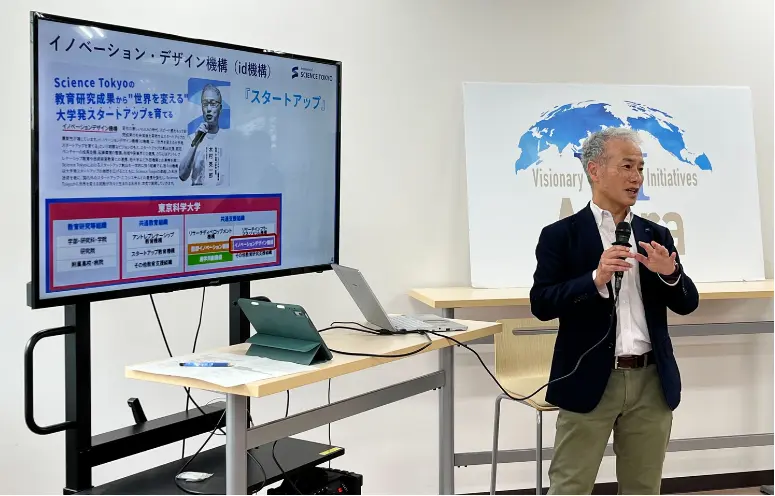
He also introduced research that uses neuroscience, including MRI, to explore how food experiences influence happiness, as well as efforts to quantify well-being. Another topic was the Digital Food Platform concept, which aims to connect data across the entire food system, from the farm to dinner table. As drones, robots, and other technologies continue to transform the world of food, Prof. Kimura described a vision for building an ecosystem that brings together different disciplines and industries, passing on human connections through food to the future.
Dialogue with participants
Participants raised a series of questions, including how far deliciousness and satisfaction can be quantified, how well-being can be measured, and why misunderstandings about MSG have persisted. One especially memorable question came from a child: "I want to build robots in the future. How are robots being used in the field of food?"
In response, Prof. Kimura introduced a range of examples, including drones used for rice planting, pesticide spraying, and harvesting; tomato-harvesting robots; fruit-sorting machines; and autonomous delivery robots. His explanation showed how technology is expanding the possibilities for the future of food. The child's question, looking toward the future, brought a warm atmosphere to the venue.
Part 3: A future shaped by the ability to walk and move - Can orthopaedic medicine help support Japan 30 years from now?
Speaker: Toshitaka Yoshii, Professor, Department of Orthopaedic Surgery, Graduate School of Medical and Dental Sciences / Deputy Director, Institute of Science Tokyo Hospital
Total Health Design Visionary Initiative-Achieving the health and wellbeing of all
Prof. Yoshii envisions a society in which people can continue to live actively, learn, and work even as they age. To realize this vision, he views orthopaedic medicine not only as a means of treatment or improving quality of life (QOL), but also as an initiative connected to social vitality and productivity.
Having pursued medical-engineering collaboration since before the integration of the former Tokyo Medical and Dental University and the former Tokyo Institute of Technology, Prof. Yoshii introduced examples such as the joint development of artificial bone, AR-assisted artificial joint surgery using smartphones, and impact-absorbing mats, using photographs and a 3D model. These examples illustrated efforts to support people's ability to move, spanning treatment, prevention, and rehabilitation.
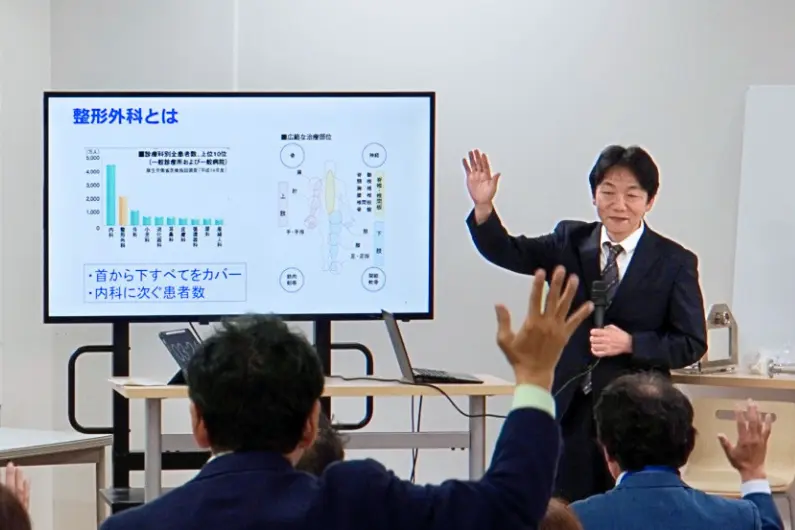
Prof. Yoshii also emphasized that as the 100-year life becomes increasingly real, the ability to walk and move actively in later life is directly connected to the ability to work and participate in society. Orthopaedic medicine, he noted, could become a foundation supporting Japan 30 years from now. He also expressed his intention to further accelerate medical-engineering collaboration through the VIs.
Dialogue with participants
During the Q&A session, participants asked a wide range of questions rooted in everyday concerns, from posture, strain on the neck and lower back, and how to approach exercise and bathing, to regenerative treatment for knee cartilage and the timing of artificial joint replacement. When Prof. Yoshii explained that the durability of artificial joints has improved significantly and that choosing the appropriate treatment according to each condition can help maintain QOL and activity levels, many participants nodded in agreement.
The discussion on medical-engineering collaboration also addressed the importance of creating domestically developed medical devices and diagnostic tools and bringing them into practical use. Prof. Yoshii emphasized the need for systems that accelerate development while ensuring safety, as well as a culture in which researchers, clinicians, and companies connect from an early stage. Through medical-engineering collaboration unique to Science Tokyo, participants shared a vision of nurturing "Made in Japan" medical innovation and building a foundation to support life 30 years from now.
Interactive experiences for envisioning the future together
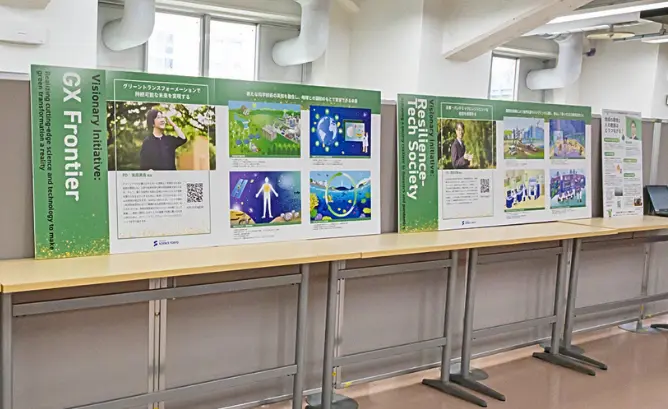
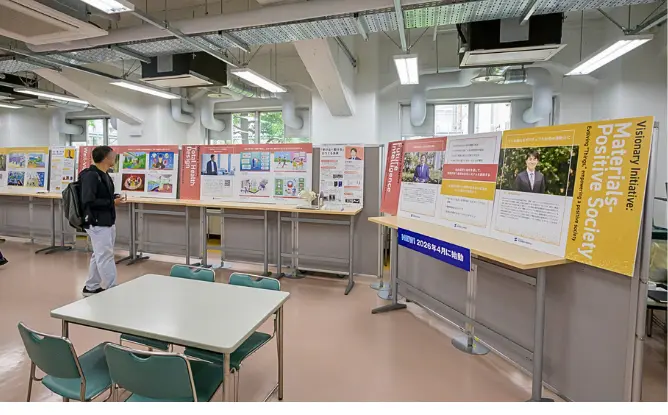
The venue featured a range of exhibits and interactive experiences designed to help visitors envision the future together, including panels illustrating the visions of each VI, messages from Program Directors (PDs), and posters introducing the Researcher Mini Talks. Many visitors stopped to read the displays closely.
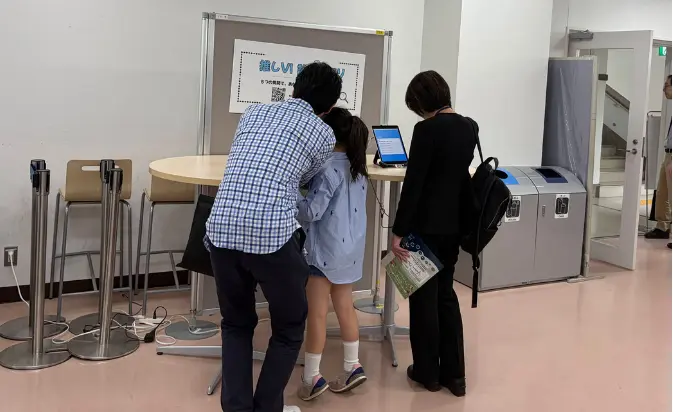
The participatory "My VI Match" app helped visitors find the VI that best matched their interests by answering just five simple questions. Some visitors compared the exhibition panels based on their results, while others shared their results with family members and friends, sparking conversations among people spending time at VI Agora.
The "Future Message Art" gathered many voices, including words of encouragement for researchers, expressions of empathy, and hopes for the future. Although the themes ranged from the environment to food and health, they were united by a shared desire to create a better future. VI Agora became a place where these hopes came together, creating a meaningful connection between Science Tokyo and society.