
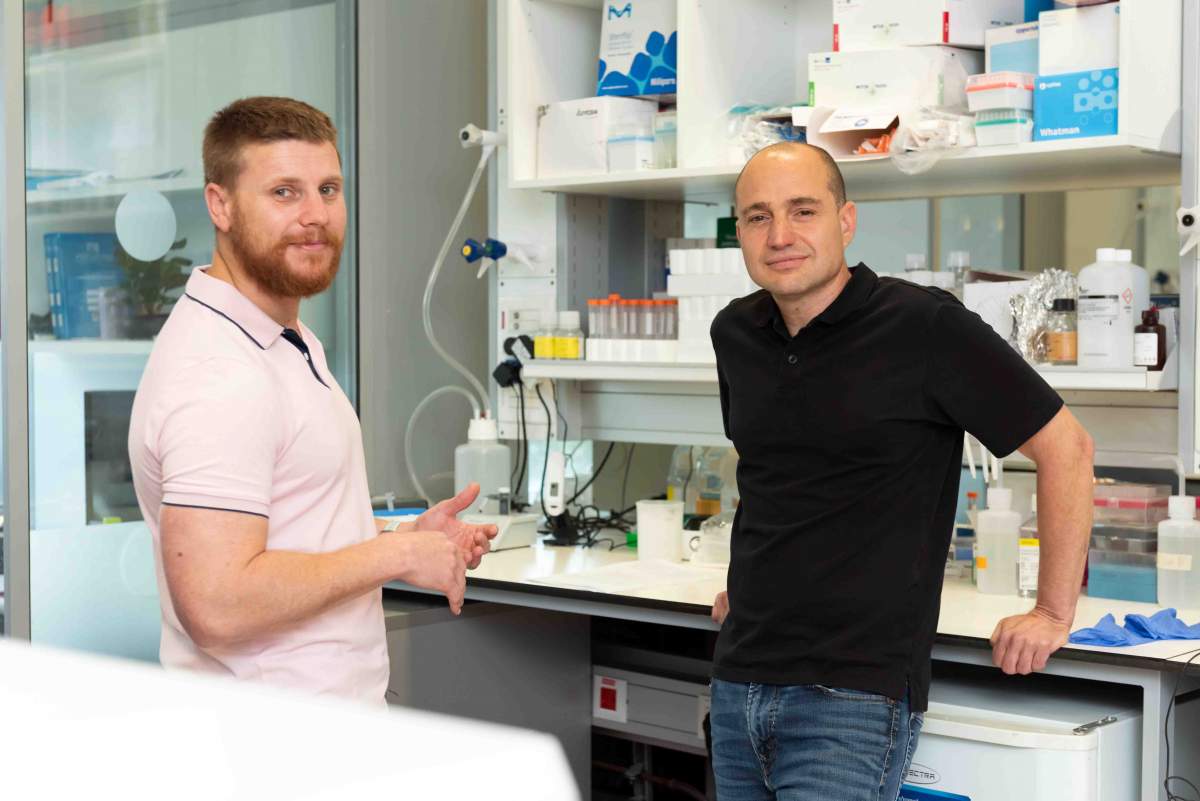
While we tend to quickly forget having been ill or having received a vaccine, the immune system remembers remarkably well. It has memory B cells - "trained" immune cells that circulate throughout the body in search of harmful invaders they have encountered previously; these cells can rapidly deploy targeted weapons when faced with a pathogen again. Now, researchers from Prof. Ziv Shulman 's laboratory at the Weizmann Institute of Science report that activated memory B cells can also recognize an internal enemy: cancer cells.
In patients with ovarian cancer, the researchers identified memory cells that are capable of homing in on the tumor, springing into action and producing effective antibodies against it. The new study, whose findings were published today in Immunity, advances the development of vaccines and therapies based on immune memory against cancer.
The immune system's arsenal contains hundreds of millions of B cell clones, each producing a unique antibody against a specific pathogen. These antibodies are proteins that identify their target and either neutralize it or recruit other immune cells to attack it. When a clone encounters its target for the first time, its antibody binds weakly and elicits a limited response. But some of these cells enter "training camps" - structures called germinal centers in the lymph nodes - where they undergo genetic changes and rigorous selection, emerging with much more effective antibodies. Some of these trained cells immediately become active antibody producers; others develop into memory cells that remain inactive, circulating between the blood and the lymph nodes, but able to rapidly snap into action if the body is exposed again to the pathogen.
In recent years, it has become clear that B cells infiltrate tumors and produce antibodies against cancer cells. In a 2022 study , for example, Shulman's group identified such cells in cancerous ovarian tumors. However, it remained unknown whether the immune system also generates memory cells that are capable of providing long-term immune protection against cancer.
""We wondered whether the antibodies were attacking human cells indiscriminately, but they turned out to be a targeted weapon against ovarian cancer"
In the new study, led by Dr. Nachum Nathan from Shulman's lab, the researchers analyzed immune cells from tumor samples and nearby lymph nodes. The samples were collected from 11 patients with the most common type of ovarian cancer, HGSOC, in collaboration with Prof. Ram Eitan and Dr. Oded Raban from Rabin Medical Center. To their surprise, the researchers found that the lymph nodes adjacent to the tumors do not support an active immune response; rather, they host memory B cells whose genetic material contains a code for tumor-binding antibodies.
"Since there had been no previous reports of effective immune memory against cancer, we were skeptical about the significance of the cells we discovered," says Shulman. "But we decided to give them a chance. We sequenced their genetic 'recipe' for antibodies and produced them artificially in the lab. We were amazed to find that more than a third of these antibodies bound strongly to ovarian cancer cells. Because cancer cells originate from the body's own healthy cells, we wondered at first whether the antibodies were simply attacking human cells indiscriminately, but they bound less effectively to non-cancer cell types. In other words, the memory cells turned out to be a targeted weapon against ovarian cancer."
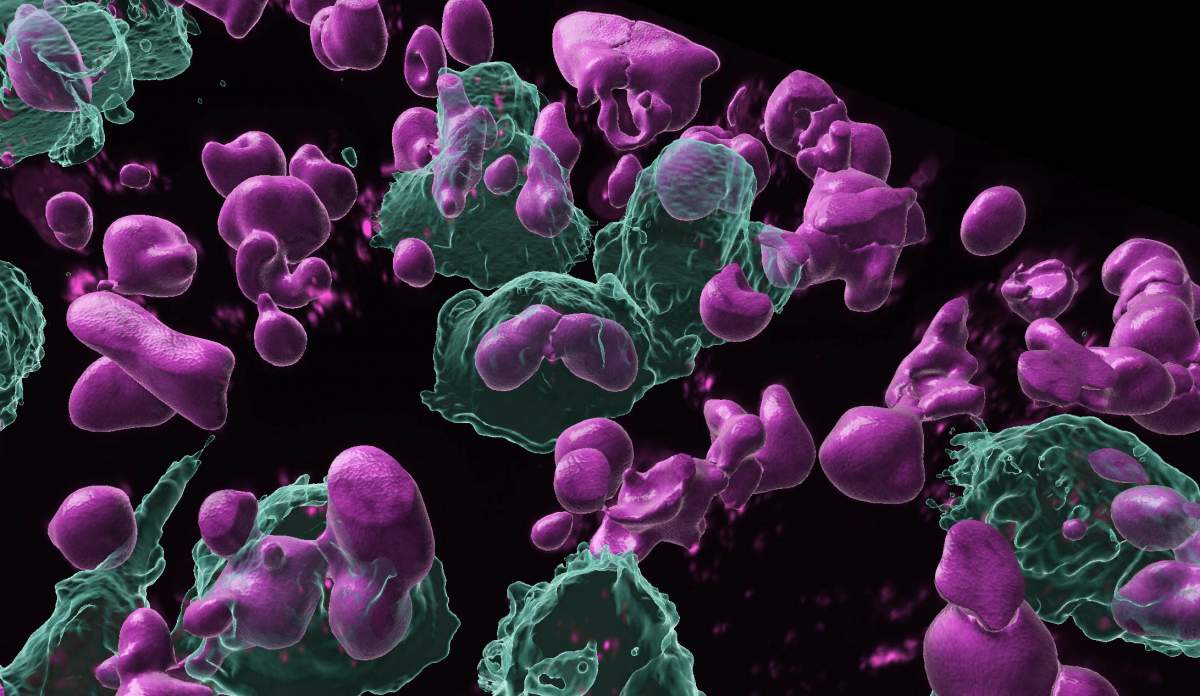
Although these cells were not active in the lymph nodes - the natural site of immune response initiation - they weren't asleep on the job. "In the tumor we found B cells that had just been activated, and they belong to the same clones as the memory cells in the lymph nodes," explains Nathan. "These findings suggest that anti-cancer memory B cells can migrate from the lymph nodes to the tumor, enter 'training camps' there and generate an effective immune response. In doing so, they participate in a long-term immune battle against cancer - a discovery that may advance the development of innovative treatments for ovarian cancer and other malignancies."
Immune memory meets cancer prevention
Over the past decade, cancer treatment has undergone a major shift with the development of immunotherapy, a therapeutic approach that harnesses the patient's immune system to fight tumors. Some of these treatments draw on a principle similar to that underlying routine vaccines, such as those against COVID-19 or influenza: exposure to a harmless substance that mimics a pathogen, thereby stimulating the production of memory B cells that can efficiently recognize and attack it upon renewed exposure. However, unlike classic vaccines designed to prevent disease, vaccine-based immunotherapies are generally intended for people who are ill. The finding that B cells are capable of generating immune memory against cancer now suggests that it might be possible to develop active vaccines not only to treat various cancers but to prevent their recurrence.
One reason that tumors commonly return is the emergence of new mutations in surviving cancer cells, which allows them to evade the immune system. In this context, the researchers made an encouraging discovery: Some of the memory B cells they identified produce antibodies against a central protein in ovarian cancer that is crucial for its spread. Cancer cells will probably find it too "costly" to mutate such an essential protein, so antibodies targeting such proteins should provide long-term protection.
The origin of the memory problem
Another question that remained in the new study was why preformed B cells were not being activated in the lymph nodes. To investigate what prevented their activation, the team collaborated with Weizmann's Dr. Leeat Keren and identified a population of scavenger cells called macrophages that suppress the formation of germinal centers in the lymph nodes, thereby preventing B cell activation. Using microscopy, the scientists watched a live broadcast of macrophages selectively engulfing B cells that were in the process of being "trained."
"The phenomenon of macrophages eating B cells is not unique to cancer," adds Shulman. "In inflammatory bowel disease, we found that as the number of suppressive macrophages in the lymph nodes increases, fewer germinal centers are formed. In the future, it may be possible to target these scavenger cells and thereby unleash the full power of immune memory. Alternatively, increasing their activity could help suppress an overactive immune response, for example, in autoimmune diseases where the immune system mistakenly attacks healthy cells."

Science Numbers
More than 55 percent of cancer patients are candidates for immunotherapy, yet only around 20 percent derive benefit from these treatments; they are ineffective in most ovarian cancer patients.
Also participating in the study were Dr. Philipp Paparoditis, Dr. Liat Stoler-Barak and Dr. Roei D. Mazor from Weizmann's Systems Immunology Department; Dr. Avital Sarusi-Portuguez, Dr. Ronnie Blecher, Revital Ronen and Inbal Bolocan Nachman from the Nancy and Stephen Grand Israel National Center for Personalized Medicine at the Weizmann Institute; Dr. Idan Milo from Weizmann's Molecular Cell Biology Department; Dr. Adva Levy-Barda and Dr. Natalia Yanichkin from the Rabin Medical Center (Beilinson and Hasharon); Dr. Nicholas Borcherding from the Washington University School of Medicine, Saint Louis, MO; Dr. Inna Goliand and Dr. Tomer-Meir Salame from Weizmann's Life Sciences Core Facilities Department; Dr. Liat Fellus-Alyagor from Weizmann's Veterinary Resources Department; Prof. Irit Sagi from Weizmann's Immunology and Regenerative Biology Department; Goni Hout Siloni and Dr. Ilan Kent from Sheba Medical Center, Tel Hashomer; and Prof. Menachem Gross and Prof. Ariel Tenenbaum from Hadassah University Medical Center, Jerusalem.
Prof. Ziv Shulman's research is supported by the Abisch-Frenkel RNA Therapeutics Center; the Belle S. and Irving E. Meller Center for the Biology of Aging; the Dwek Institute for Cancer Therapy Research; and the Moross Integrated Cancer Center.


