
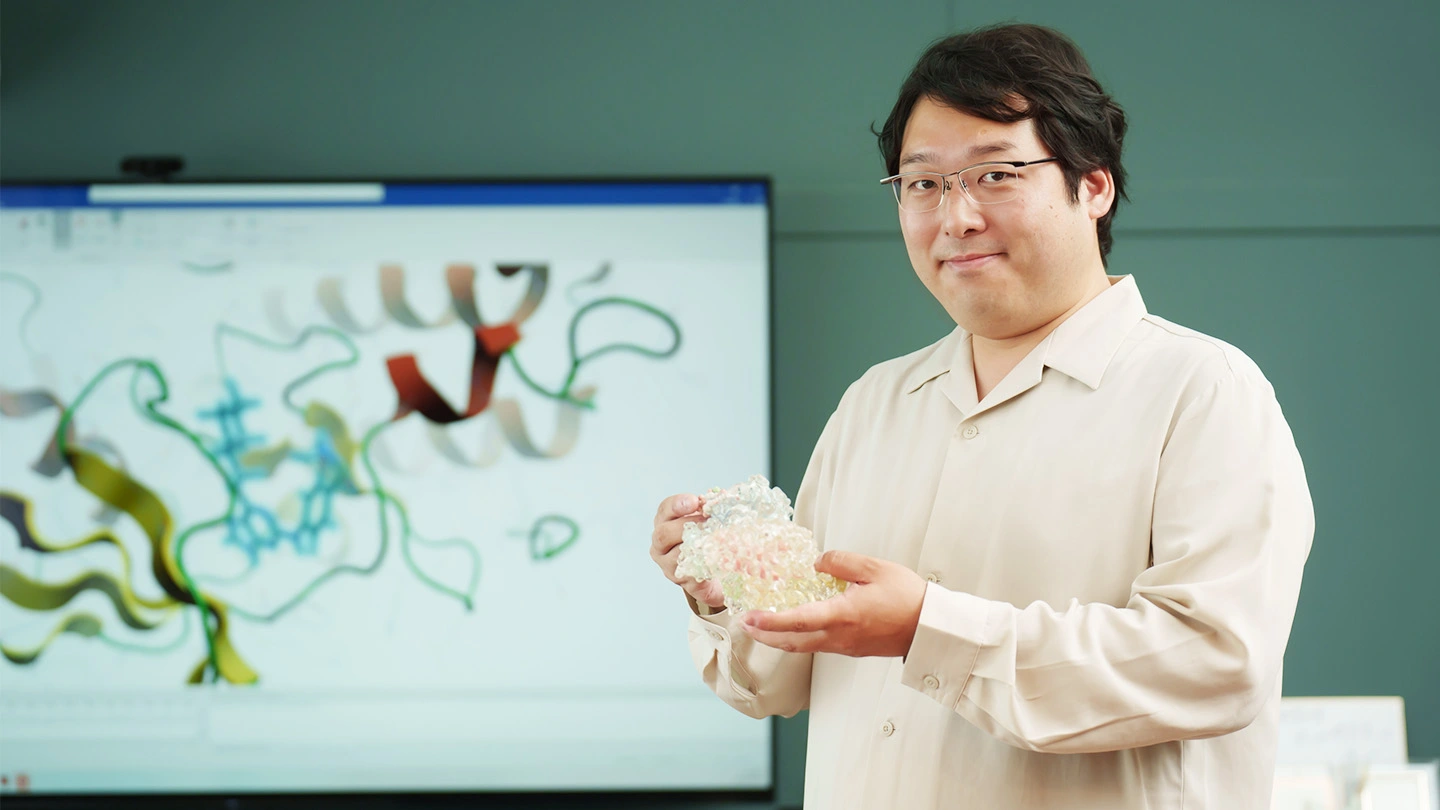
Drug discovery has long required years of research and enormous costs. Now, generative AI is poised to change that. Imagine typing a simple prompt, such as "How would I develop a new drug for this disease?" and receiving promising candidate compounds complete with rationale, properties, and even manufacturing methods. Associate Professor Masahito Ohue of the School of Computing, and a member of the Total Health Design Visionary Initiative, is researching and developing methods to support drug discovery by advancing fundamental technologies in information science, particularly AI and computer simulation.
Using AI and computer simulations where each is best suited
"Bringing a new drug to patients is said to require more than 10 years and development costs on the order of hundreds of billions of yen. Of the vast number of candidate compounds, only about one in tens of thousands is ultimately approved as a new drug, so the success rate of development is currently extremely low. At the same time, while the number of diseases with established treatments continues to grow, those that remain are mainly intractable diseases that humankind has yet to overcome, so the difficulty of drug discovery is increasing every year," explains Ohue.
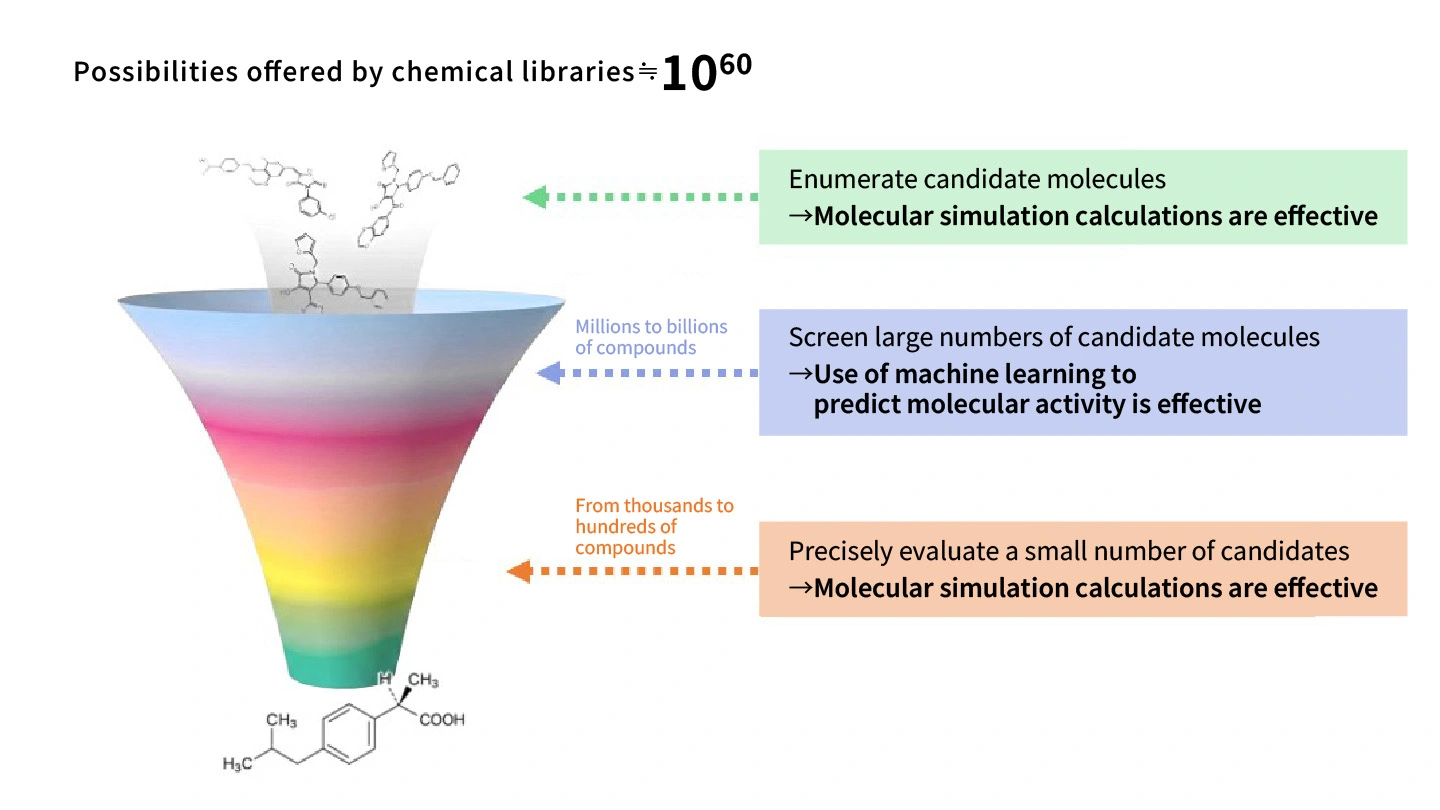
Drug development involves numerous processes, beginning with identifying the target for a drug to act on and continuing through clinical trials to regulatory application and approval. For this reason, targets that appear particularly promising must be identified at the earliest stage, and an enormous number of candidates must be narrowed down. Ohue is researching methods for narrowing down candidate compounds to the most promising ones by using AI and computer simulation where each is best suited.
Specifically, AI, which learns patterns from large volumes of data and automates prediction and decision-making, is effective for discovering and screening candidate compounds. Computer simulation, which reproduces and predicts phenomena on the basis of theory and mathematical formulas, is then essential for precise evaluation after the candidates have been narrowed down. Together, these technologies make it possible to predict promising compounds and their properties with high accuracy. This greatly reduces the number of trial-and-error experiments, thereby shortening development timelines and lowering costs.
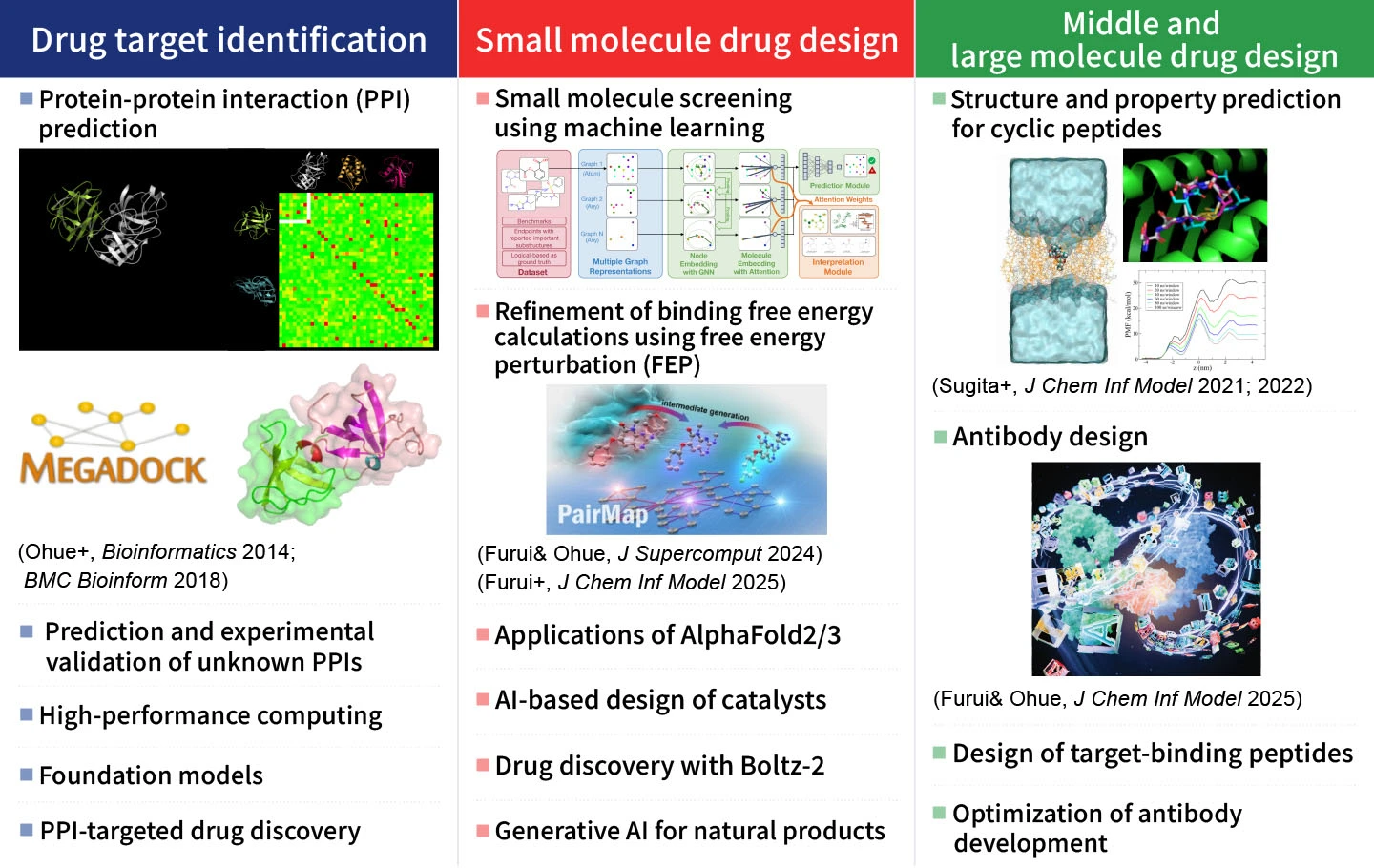
Based on this approach, Ohue Laboratory conducts a wide range of research, from drug target identification to small molecule drug design and middle and large molecule drug design. "Our mission is to rapidly connect fundamental information science technologies to other fields," says Ohue. Several of the laboratory's latest findings are introduced below.
Using computer simulation for highly accurate predictions of candidate compounds for new drugs
"Proteins in the influenza virus have pocket-like sites where drugs can bind. When a drug compound binds to these pockets, the protein's function is inhibited and viral replication is suppressed. The anti-influenza drug Tamiflu utilizes this mechanism. When developing a new drug, it is important to predict with high accuracy how strongly a protein binds to a candidate drug compound," explains Ohue.
For this purpose, Ohue employs a molecular simulation technique known as free energy perturbation (FEP). The distinguishing feature of FEP is its ability to analyze intermolecular interactions in detail on the basis of physical chemistry. However, FEP requires substantial computation time and capacity, which makes it challenging to perform calculations on a vast scale.
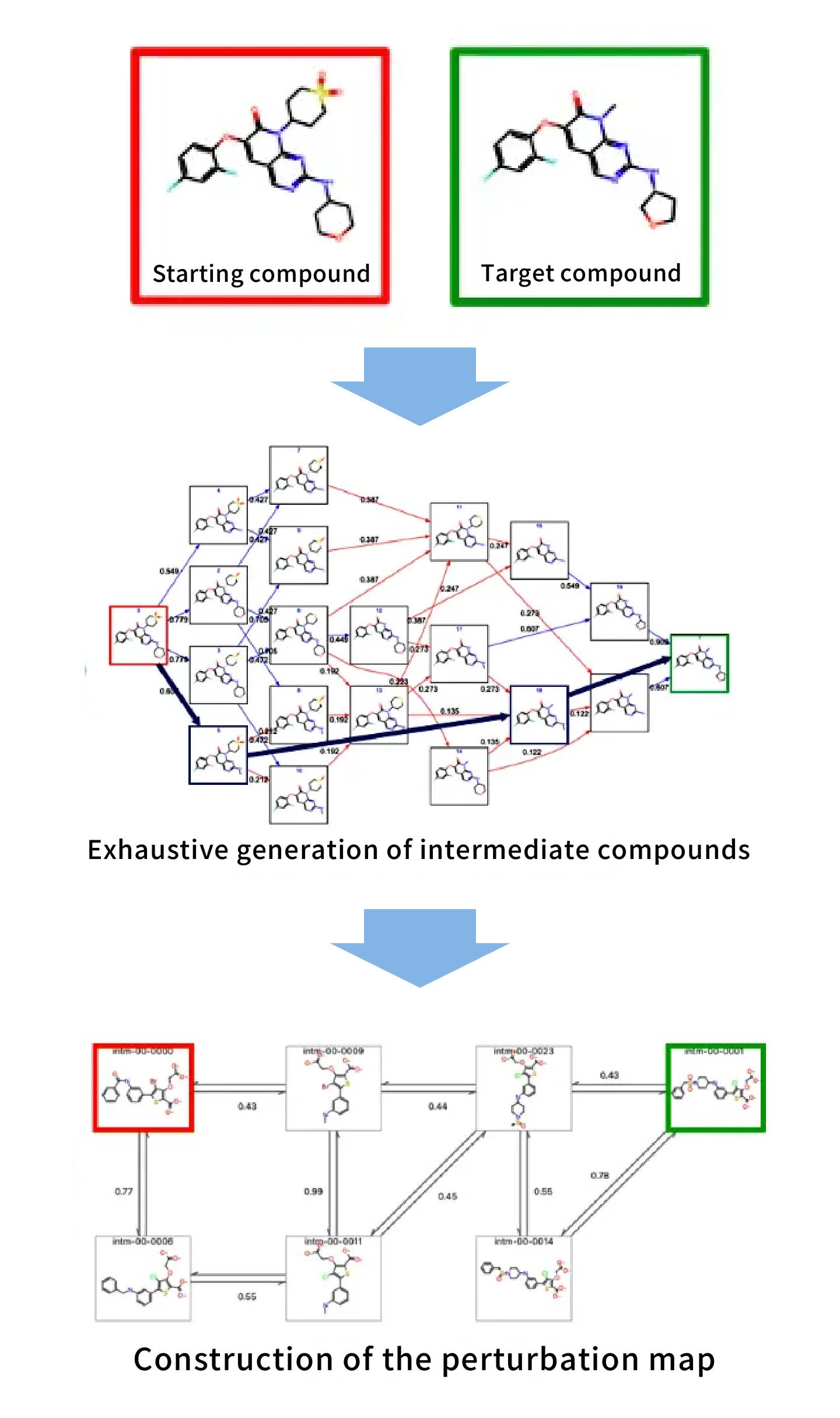
One concrete example of Ohue's recent work using FEP is PairMap, a new method released in January 2025. PairMap enables highly accurate predictions even between compounds with markedly different molecular structures.
The binding strength between a protein and a compound is expressed as a value called the binding free energy. The smaller this value, the stronger the binding is considered to be. With this in mind, conventional FEP-based molecular simulation compares the difference in binding free energy between two compounds in order to evaluate how strongly they bind to a disease-causing protein and to narrow down candidate compounds.
However, this approach faced a challenge: when the molecular structures of the two compounds being compared differed greatly, the difference in binding free energy could not be predicted with high accuracy. To address this challenge, Ohue developed a new program that automatically generates multiple intermediate compounds between two compounds. That program is PairMap. Through step-by-step calculation via these intermediate compounds, PairMap enables highly accurate predictions of differences in binding free energy even between compounds with markedly different molecular structures.
Using a generative AI model to propose catalysts suited to specific chemical reactions
In October 2025, Ohue announced CatDRX, a generative AI model that supports the discovery of catalysts essential to the synthesis of organic compounds. By training the AI on past chemical reaction data, the model proposes catalysts suited to a specific chemical reaction. The development of CatDRX grew out of joint research with researchers specializing in organic synthesis. Up until that point, Ohue had developed information science methods for drug discovery, so he was relatively unfamiliar with catalysts as materials. However, through the joint research, Ohue came to understand the importance of catalysts and the challenges they present. He also saw the possibility of using information science to solve those challenges.
The current focus is on organic reactions for which sufficient experimental data has been accumulated. In the future, depending on the available training data, the approach could be applied to a wide range of fields, including compounds that could lead to pharmaceuticals and inorganic materials.
"Information science has countless applications. This joint research led me to think constantly about what challenges exist in which fields, and how information science can be used to solve them," says Ohue.
Working toward generative AI for drug discovery
The future Ohue envisions is a world in which AI serves as a capable assistant to researchers, supporting research and development in drug discovery, medicine, and chemistry. For example, the goal is generative AI for drug discovery that, when a new, unknown virus emerges, could respond instantly if asked, "I want to quickly develop a drug effective against this virus."
The 2024 Nobel Prize in Chemistry was awarded for the computational design of entirely new proteins and for the computational prediction of the three-dimensional structures of proteins. The groundbreaking AI model AlphaFold 2 played a central role in the latter. The subsequently developed AlphaFold 3 can predict the three-dimensional structures of a wide range of molecules, including not only proteins but also nucleic acids such as DNA and RNA and small molecules that could serve as drug candidates. However, according to Ohue, its accuracy is still only around 60% to 70%. "There is no doubt that it is groundbreaking, but it needs to be applied more deeply to specific drug targets and become more practical as an information science tool for drug discovery," says Ohue, expressing his expectations for further advances.
Generative AI and large language models (LLMs) have also advanced remarkably in recent years. Research is under way to apply the same principles used by LLMs trained on natural language to biological and chemical data such as proteins, compounds, and genomes. By changing what the models are trained on, it is possible to build protein language models, compound language models, genome language models, and others. Results that could lead to generative AI for drug discovery are gradually emerging. These technologies are expected to prove valuable for drug discovery in the coming years.
Challenges specific to generative AI for drug discovery that natural-language generative AI does not face
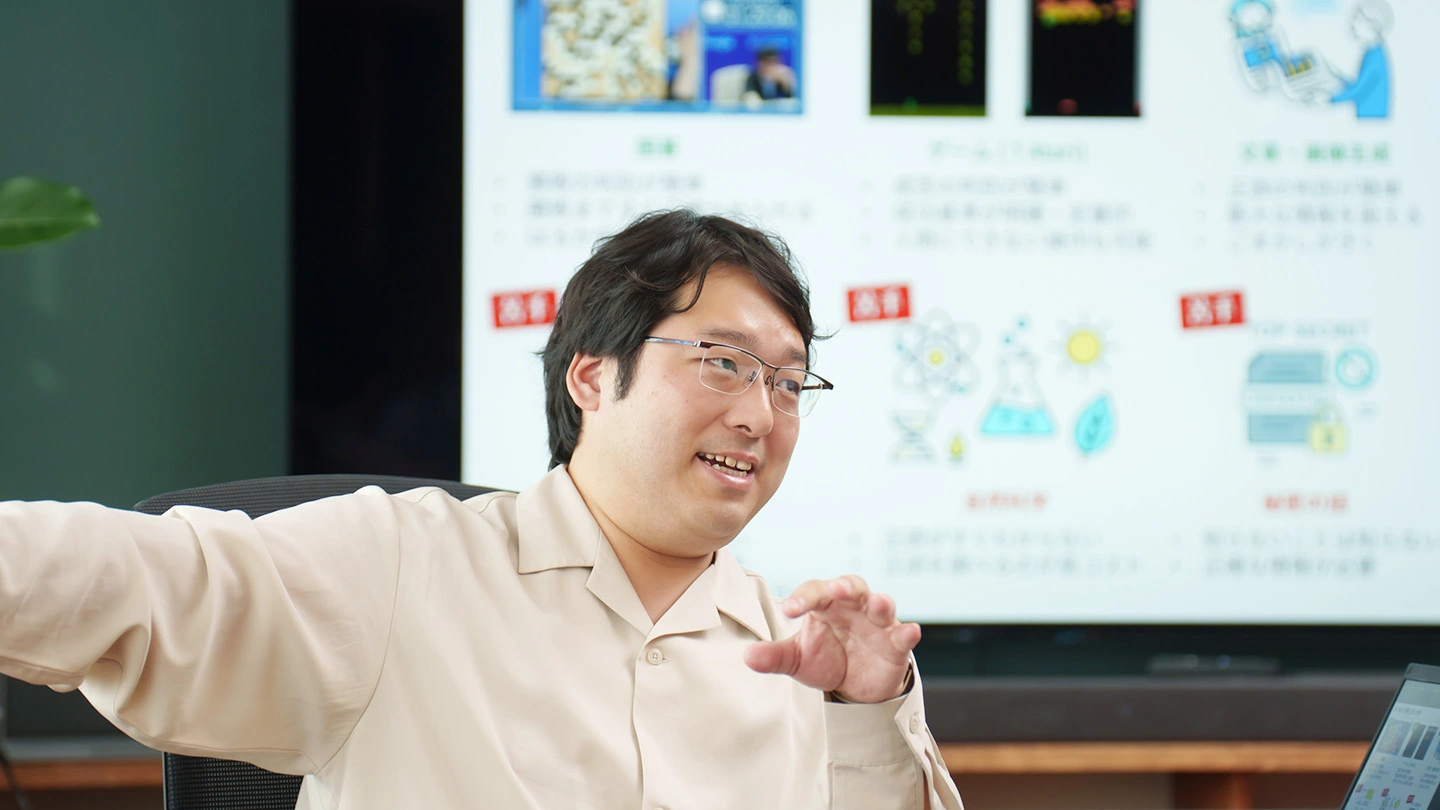
A major strength of generative AI is that it returns output in natural language in response to input. This allows people to judge intuitively whether the output is valid or correct. Drug discovery, however, presents challenges not faced by natural-language generative AI, Ohue says. This is because a drug must ultimately be administered to people, and its safety and efficacy must be confirmed. No matter how much computational prediction accuracy improves, the reactions that occur in the human body cannot be reproduced perfectly. Moreover, disease symptoms vary from person to person, and almost every instance is a unique case. Ohue says this final barrier is the greatest challenge facing information science in the field of drug discovery.
Against this backdrop, Ohue has high hopes for organoids, which are miniature organs created by culturing stem cells such as iPS cells, and for digital twins, which reproduce behavior close to that of the actual human body on a computer. "AI has areas of strength and areas of weakness. Generative AI for drug discovery, a weaker area, is developing more slowly than natural language generative AI, a stronger one. Even so, we will keep developing a range of methods toward our goal, while also looking forward to advances in new technologies such as organoids."
Exchange with medical and dental researchers accelerated by the new research framework (VI)
The new research framework Visionary Initiatives (VI), introduced across the Institute in fiscal year 2025, is a structure that transforms the research system from a discipline-siloed model into a cross-disciplinary one, and collaboration across fields is advancing throughout the Institute. Currently, eight VIs have been established, and Ohue belongs to the Total Health Design Visionary Initiative.
"Total Health Design has dramatically increased my interaction with researchers in the medical and dental sciences. I now have far more opportunities to encounter challenges in clinical settings that I had little contact with before. I see this as a valuable chance to broaden the scope of new challenges. Clinical settings hold many latent challenges to which information science could contribute. Lately, I have been particularly interested in complex diseases such as autoimmune diseases and allergies, where symptoms and causes differ from person to person. Because these diseases vary greatly among individuals and require handling outlier data, highly accurate predictions are especially difficult. That difficulty is precisely what makes my work so rewarding. By skillfully combining AI and computer simulation, I am truly determined to overcome this difficult challenge," Ohue says, with visible enthusiasm.
Always taking on challenges with a broad perspective
"I wanted to become a game creator," says Ohue, who chose electronic and information engineering at the National Institute of Technology (KOSEN). However, through research activities at KOSEN, Ohue unexpectedly encountered a field far removed from game development - analyzing leukemia gene data with machine learning. For the first time, that experience exposed Ohue to the potential for information science to contribute to the life sciences and medicine, and it set the direction of his career as a researcher. After transferring to the former Tokyo Institute of Technology, Ohue joined a laboratory in bioinformatics and further pursued that path.
Ohue also tells students how important it is not only to delve deeply into their own specialty but also to stay curious about other fields. "Information science has countless applications, and conversations with researchers in other fields often lead to unexpected challenges. That is exactly why I want students to value having a broad perspective and asking themselves, 'Could this research be useful in another field?' To everyone aiming to become researchers, even if results do not come immediately, I hope you will keep taking on challenges. Always believe that your research will someday be of use to someone."
Profile
Masahito Ohue
Associate Professor, Department of Computer Science, School of Computing
Total Health Design Visionary Initiative
- October 2024 to present
- Associate Professor, School of Computing, Institute of Science Tokyo
- 2024
- Associate Professor, School of Computing, Tokyo Institute of Technology
- 2020 to 2023
- Assistant Professor, School of Computing, Tokyo Institute of Technology (tenure track, became
an independent principal investigator)
- 2016 to 2020
- Assistant Professor, School of Computing, Tokyo Institute of Technology
- 2015 to 2016
- Assistant Professor, Graduate School of Information Science and Engineering, Tokyo Institute of Technology
- 2014 to 2015
- JSPS Research Fellow (PD)
- 2011 to 2014
- Doctoral Program, Department of Computer Science, Graduate School of Information Science
and Engineering, Tokyo Institute of Technology; PhD in engineering
JSPS Research Fellow (DC1)
- 2009 to 2011
- Master's Program, Department of Computer Science, Graduate School of Information Science and Engineering, Tokyo Institute of Technology
- 2007 to 2009
- Department of Computer Science, Faculty of Engineering, Tokyo Institute of Technology (transferred in as a third-year student)
- 2007
- Graduated from the Department of Electronics and Information Engineering, National Institute of Technology, Ishikawa College


