
A team led by researchers from the UAB and from the network of biomedical research centres in cardiovascular diseases CIBERCV has demonstrated that the fatty tissue surrounding the aorta actively participates in the regulation of vascular function in Marfan syndrome, and that its influence depends on both the anatomical region analysed and sex. The study, conducted with murine models, has been published in Biochemical Pharmacology.
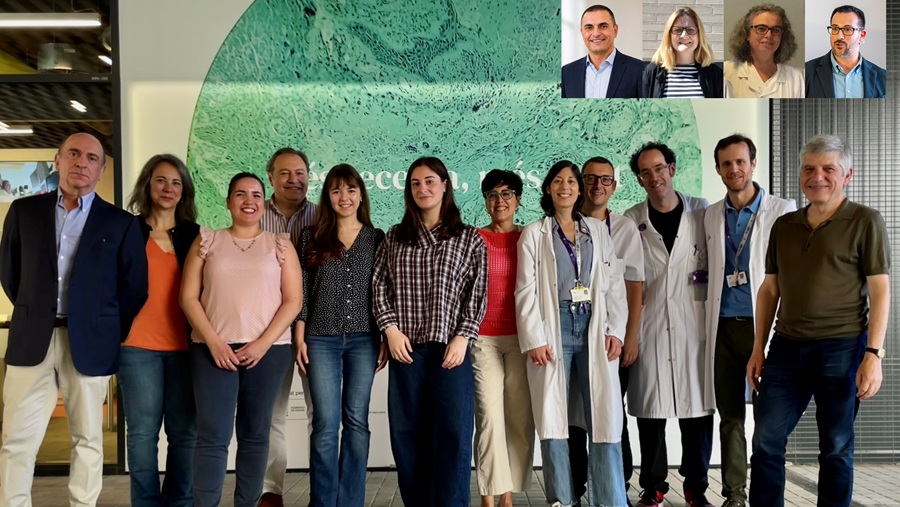
The results of the study, led by Francesc Jiménez-Altayo, researcher from the Department of Pharmacology, Therapeutics and Toxicology at the UAB, reveal that fatty tissue, far from being a passive structure, can influence the behaviour of blood vessels and contribute to the adaptation of the vascular wall to changes associated with the disease.
Marfan syndrome, one of the most common inherited connective tissue disorders, affects the tissue responsible for providing support and elasticity to structures such as bones, blood vessels, and various organs. It is caused by modifications in the fibrillin-1 gene and among its most serious manifestations are progressive alterations of the aorta. These alterations can cause the vessel wall to dilate abnormally and increase the risk of serious injuries, such as potentially fatal tears or ruptures.
Although it affects men and women with similar frequency, there is increasing evidence that the clinical evolution and cardiovascular complications may differ according to sex, an aspect still little explored in this disease. To investigate the role of this tissue, the team analysed a murine model of Marfan syndrome and studied the response of different regions of the aorta, comparing male and female animals of different ages.
The results showed that the influence of perivascular adipose tissue (PVAT) on the contractile capacity of the aorta depends both on the anatomical region analyzed and on the sex of the animals. In particular, in females with Marfan syndrome, the fatty tissue surrounding the aorta — PVAT — reduces the force with which the ascending aorta contracts. This effect is related to cellular mechanisms associated with oxidative balance and disappears with aging. Furthermore, the study shows that these mechanisms act independently of the endothelium, the inner layer that covers the blood vessels.
The results showed that the influence of perivascular adipose tissue (PVAT) on the contractile capacity of the aorta depends both on the anatomical region analysed and on the sex of the animals. In particular, in females with Marfan syndrome, the fatty tissue surrounding the aorta—PVAT—reduces the force with which the ascending aorta contracts. This effect is related to cellular mechanisms associated with oxidative balance and disappears with aging. Furthermore, the study shows that these mechanisms act independently of the endothelium, the inner layer that covers the blood vessels.
"The findings suggest that the immediate environment of the aorta is not a mere anatomical companion, but a dynamic element capable of influencing the evolution of the disease", explains Jiménez-Altayo.
The research provides new clues about the cardiovascular alterations associated with Marfan syndrome and highlights the importance of considering biological factors such as sex, age and anatomical location when studying the disease. The study also identifies the local metabolism of the vascular environment as a possible key player in the disease. These findings open new perspectives for the future development of more personalised treatments targeting not only the vascular wall, but also the biological and metabolic mechanisms that influence its behaviour.
The study also included the participation of research staff from the CIBER Neurodegenerative Diseases Area (CIBERNED), as well as other national and international centres.
Original article: Hua-Monclús J., Penas C., Pérez B., Almendra-Pegueros R., Galán M., et. al. Perivascular adipose tissue modulates aortic reactivity in Marfan syndrome mice in a sex- and region-specific manner: Redox-dependent anticontractile effects in the female ascending aorta. Biochemical Pharmacology (2026). 250( Pt 2): 118095. doi: 10.1016/j.bcp.2026.118095


