
When Allen Rush learned he carried the genetic mutation known as Lynch syndrome, he understood what was at stake.
Years earlier, his daughter Jacqueline was diagnosed with colorectal cancer at age 20, as a result of Lynch. She died three years later. Rush did not know about Lynch syndrome even though his father passed away from colorectal cancer many years before, when he was in his mid-fifties.
Lynch syndrome affects about 1 in 279 people in the U.S. and significantly increases the lifetime risk of colorectal cancer and several other cancers. An estimated 95% of people with Lynch syndrome do not know they carry the mutation.
"Colorectal cancer is one of the cancers that if you catch it early it can be easily treated- or even screened early enough, you can prevent it," Rush said. "Had we known about Lynch syndrome before, none of this would have happened."
Today, Rush undergoes annual colonoscopies at UCSF and is participating in a National Institutes of Health (NIH)-sponsored clinical trial designed to prevent cancer in people with Lynch syndrome.
UCSF is the only site in California participating in the randomized, placebo-controlled vaccine study.
"This is a true cancer prevention trial," said Aparajita Singh , MD, director of the UCSF Lynch Syndrome Center . "Patients are receiving a vaccine to see if we can activate immune cells to eliminate cancer cells as they are forming."
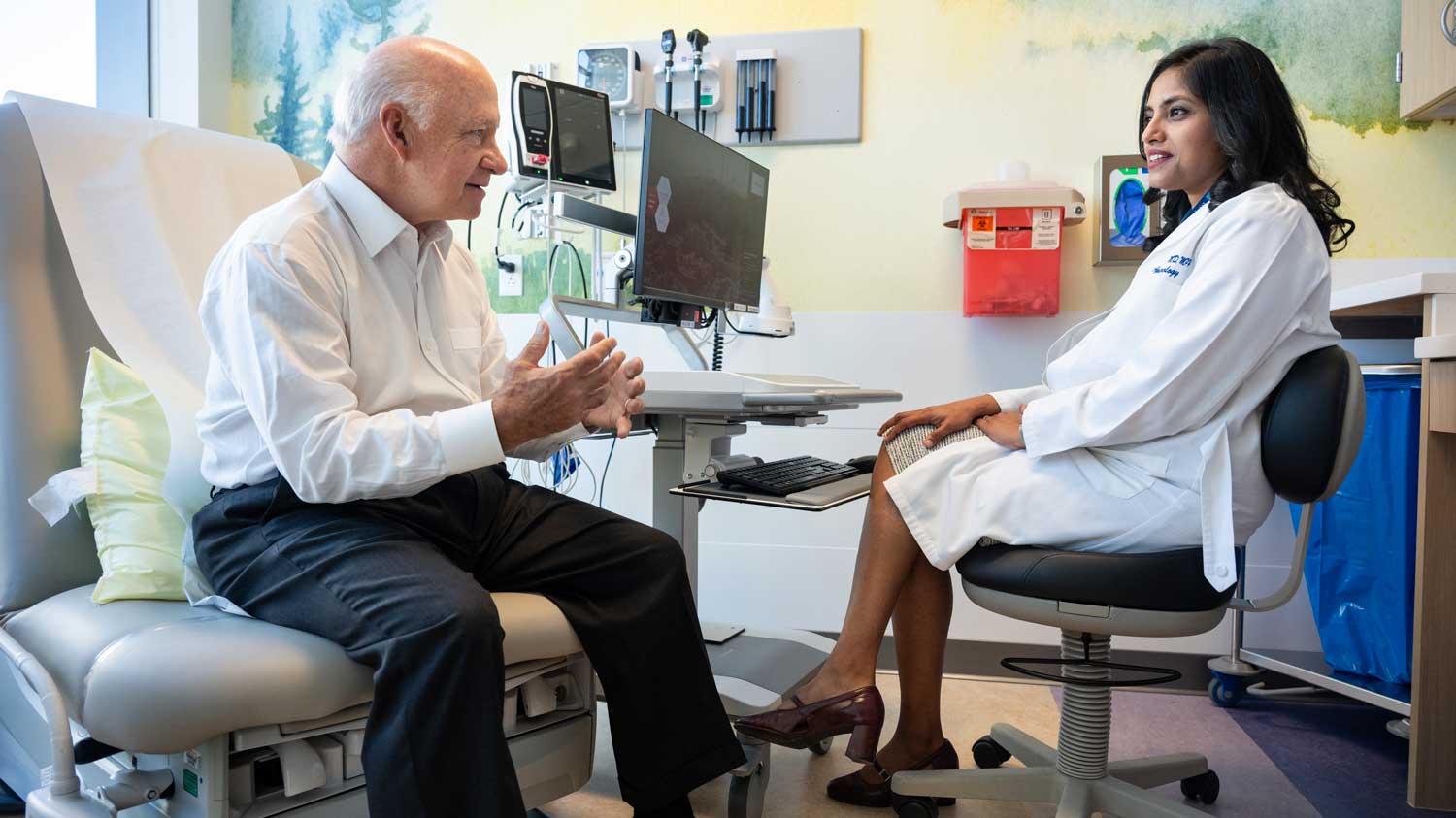
Vaccine aims to destroy tumors before they start
Currently, the primary strategy for reducing cancer risk is intensive surveillance, including colonoscopy every one to two years.
Research conducted at UCSF has shown that patients who adhere to recommended colonoscopy intervals significantly reduce their risk of developing advanced cancer.
If we can prevent cancer instead of just detecting it, that changes everything.
Allen Rush, Patient
"If patients stay engaged in care, most of the time we can prevent cancer or detect it at a very early stage," Singh said.
The vaccine trial represents a different strategy: stimulating the immune system to recognize and destroy abnormal cells before they become tumors.
The study is ongoing at multiple centers nationwide. Participants are randomly assigned to receive either the vaccine or a placebo, and neither patients nor investigators know which was administered. Researchers will compare cancer outcomes over time to determine whether the vaccine reduces cancer incidence.
"We don't know yet whether the vaccine will work," Singh said. "But if it does, patients who participated had the opportunity to receive it years before potential approval."
Rush chose to enroll.
"If it's successful, it's going to help an enormous number of people," he said. "I'm perfectly willing to participate if it advances the science."
He emphasized that while he maintains regular screening, contributing to research is equally important.
"There's been enormous progress in Lynch syndrome research in just the last few years," Rush said. "If we can prevent cancer instead of just detecting it, that changes everything."
Focused on lifelong care
The vaccine trial is part of the broader work of the UCSF Lynch Syndrome Center, launched in 2025 within the Division of Gastroenterology. The center provides coordinated, multidisciplinary care for approximately 1,000 patients and is likely the only dedicated Lynch syndrome center in Northern California.
Lynch syndrome affects multiple organs, requiring care from gastroenterologists, genetic counselors, gynecologists, dermatologists, urologists and, when needed, oncologists and surgeons.
Singh serves as a central coordinator.
"I tell my patients, I'm not just your gastroenterologist - I'm your Lynch provider," she said. "We talk about everything that's due, when it's due, and I help coordinate the referrals. The biggest burden for patients is not knowing what's needed and when."
For patients like Bill Shea, that structure has been critical.
"It's all about education," Shea said. "If they find they have Lynch syndrome, then go through the center to really understand what it means."
Shea first learned he had Lynch syndrome after being diagnosed with colon cancer at age 43. Years later, after a lapse in regular screening, he was diagnosed with colon cancer again. He credits early detection and coordinated care with saving his life.
"Without that proactive plan, I would not be here," Shea said. "Build a strong medical team. Believe in your doctors. Execute the plan."
For women with Lynch syndrome, the center also offers an uncommon service: performing endometrial biopsies, which screen for uterine cancer, at the same time as colonoscopy under sedation. Only a few centers nationwide provide this option.
"Most endometrial biopsies are done without sedation," Singh said. "Combining it with colonoscopy reduces pain and makes it easier for patients to stay on schedule."
The center also assists families in identifying relatives who may need genetic testing and screening, an important step for a hereditary condition in which first-degree relatives have a 50% chance of carrying the mutation.
"Understanding your family history is critical," Singh said.
Advancing treatment as well as prevention
In addition to prevention research, advances in immunotherapy have transformed treatment for Lynch-related cancers.
Because Lynch-associated tumors often respond particularly well to immunotherapy, some patients with advanced colorectal cancer have achieved complete remission. Emerging studies suggest that certain Lynch-related cancers may, in some cases, be treated without surgery.
"The science is moving very fast," Singh said. "For Lynch-associated cancers, we now have treatment options that didn't exist even a decade ago."
For Rush, the combination of surveillance, research access, and specialized care provides reassurance.
"When you have a center of excellence like UCSF focused on Lynch syndrome, you get a higher level of expertise and attention to detail," he said. "If you know you have Lynch syndrome, there are many things you can do. But having a team that understands it makes all the difference."


