
Millions of Americans gather around the table every November for the most anticipated (and likely calorie-packed) meal of the year: Thanksgiving dinner. But as delicious as that meal can be, the reality is that your body has to process all that food - and it can leave you feeling more full and more bloated than a balloon in the Macy's Thanksgiving Day parade. One of the most integral parts of your digestive system that breaks down those starches and dietary fibers is your gut microbiome.
We sat down with Yanyan Li, assistant professor of pharmaceutical sciences in Binghamton University's School of Pharmacy and Pharmaceutical Sciences to discuss her expertise on our gut microbiome and how it impacts our body. In this Q&A, she explains which components of this meal impact the gut microbiome the most, as well as what changes can be made to make Thanksgiving more gut-friendly. 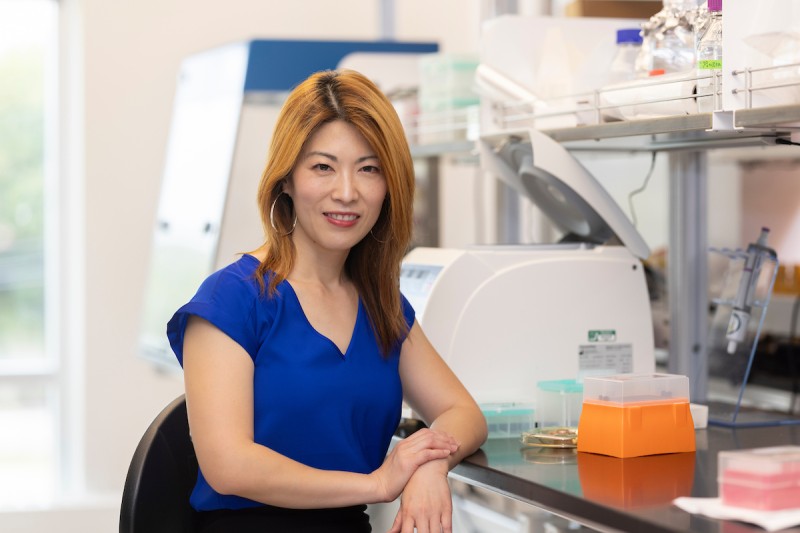
What exactly is the gut microbiome, and why is it so important to your body?
The gut microbiome is a community of microorganisms that live in our gut. We also have other microbiomes - we have the skin microbiome, we have the respiratory microbiome - but the gut is what I'm mostly interested in. They primarily live throughout our entire digestive system. The most dense population lives in our large intestine or colon, and they do a lot of things in there for us! They help digest some of the nutrients we do not digest by ourselves. A lot of the bacteria living in our colon can digest dietary fibers and then convert them into something called "short-chain fatty acids." Many studies have been done on short-chain fatty acids showing they have many beneficial effects on our gut integrity, our immune function, and inflammation.
The health status, the diversity, and the population of our gut microbiome can dramatically increase or decrease our risk of developing many diseases, inflammatory bowel disease, or even brain conditions, like depression and Parkinson's disease. Cardiovascular diseases and even cancers are associated with the gut microbiome, as well.
What effect does the large, traditional Thanksgiving meal have on a person's gut microbiome?
When we talk about the impact of food on our gut microbiome, most of the time we look at the long-term effects. The bottom line is that habitual dietary patterns matter most. They determine what gut microbiome composition and function we have.
Temporarily, what we eat during the holiday would shift our gut microbiome, to some extent. Some people will experience symptoms like bloating and gas from eating too much of a certain holiday food. Depending on the individual, if someone has a pre-existing gut condition, like irritable bowel syndrome or inflammatory bowel disease, I think the impact on them might be a little greater than the impact on otherwise healthy individuals. But over the long term, what matters most is our habitual dietary intake.
Turkey is the star on Thanksgiving. How does eating turkey impact the gut?
Turkey itself is actually a pretty healthy food. It's very lean protein, is low in fat, and has other micronutrients associated with proteins. There is nothing wrong with eating turkey. Enjoy it!
If we look at long-term high-protein intake, that would shift our gut microbiome in a dramatic way, because we're feeding more amino acids to the gut bacteria. We are providing less dietary fiber, so that will shift the population. If we chronically eat a high-protein, low-fiber diet, we'll feed the bacteria who favor the amino acid, and will basically starve the bacteria who like fiber. Over time the microbiome diversity will decline, but that's not the case for a one-day holiday meal.
Dietary fiber is one of the best foods for our gut microbiome. The microorganisms love dietary fiber, and dietary fiber can feed them nicely, encouraging the growth of beneficial bacteria, and retaining our gut barrier integrity. Turkey is an animal food, so it doesn't have dietary fiber, but that's not a problem. If we eat plant foods along with turkey, we get dietary fiber. We eat mashed potatoes, sweet potatoes, fruits, and other vegetables in our Thanksgiving meal, we get a balanced diet to feed a healthy gut microbiome.
How gut-friendly are all the starches and carbohydrates people eat during the meal?
I think we can separate two things here. One is the vegetables themselves - potatoes, sweet potatoes, and squash. They're super healthy, all plant-based foods and high in fiber, high in phytochemicals. Usually, orange vegetables are high in carotenoids, a type of phytochemical that has been shown to have many health benefits. I think the only main concern we have is regarding what we add to make the dishes -a lot of sugar or fat to make them taste better will obviously add a burden for digestion for that day. The same idea applies to these foods as turkey. As long as we don't do the same thing every day, they don't do lasting damage.
How does your body process the influx of sugar that comes from the traditional Thanksgiving pies (pumpkin, apple, pecan)?
First of all, pumpkin, apples, pecans - they're all good, but when we make them into pie, we add other things to make them less good for you. When we have a flood of sugar entering our body, most of them will get absorbed right away in our small intestine. They don't actually reach the large intestine or colon, where most of the gut bacteria live. There are quite a lot of studies looking at how sugar impacts the gut microbiome. The main message is that while a single slice of Thanksgiving pie won't cause lasting harm, chronically high sugar intake damages metabolic health and starves the gut of fiber, indirectly reshaping your microbiome over time.
What cooking methods or food swaps can someone make to create a Thanksgiving meal that is slightly easier on the gut?
Essentially, we want to feed our good bacteria with lots of fibers. Maybe make a salad with all sorts of vegetables, any vegetables you can think of - broccoli, Brussels sprouts, carrots, and leafy greens. Add a roasted vegetable or roasted vegetable dish as an option. Instead of doing sweet potato casserole, do roasted sweet potatoes with less sugar.
With mashed potatoes, if we cook the potato first, put it in the fridge, and cool it down. We can increase the content of resistant starch in the dish. Resistant starch is a little bit different from regular starch, and can resist digestion in our small intestine. It can keep moving to our colon, and then the gut bacteria can ferment it. When gut bacteria ferment resistant starch, they can produce short-chain fatty acids, especially butyrate, and they help support the intestinal epithelial cells.
We can also add a fruit-based dessert on the side, like a fruit salad with nuts - just to give one more option. Or make the choice to cut pie into smaller slices!
When I make dessert, I always cut down the sugar. If the recipe suggests one cup of sugar, I will do half a cup. It still tastes great, but I only get half of the sugar. And my gut microbiome will thank me in the long run!


