
Wiltshire Building, on Hampshire Terrace, has been undergoing a major restoration project, bringing the building into the modern day and creating a new home for drop-in student support. Originally built in 1899 as a military drill hall for the 1st Hampshire Royal Engineers Volunteers (1st H.R.E.V.), the Wiltshire Building has long been part of Portsmouth's heritage and retaining its historic character has been an important part of the work.

Wiltshire Building in the 1990s, from the University of Portsmouth archive
One such feature is the lintel above the entrance, inscribed with 1st H.R.E.V. Preserving this marker to the building's past was a key priority. Due to its age and condition, the original lintel could not be repaired. Instead, detailed casts of the original lettering were taken and used to recreate it, ensuring this historic detail continues to feature in the future of the building.
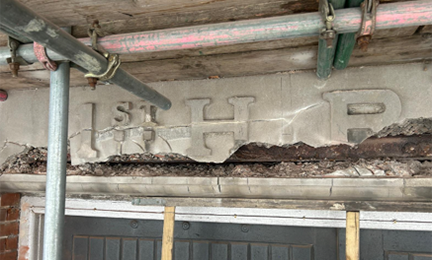
A rusted bar within the original lintel caused damage and deterioration
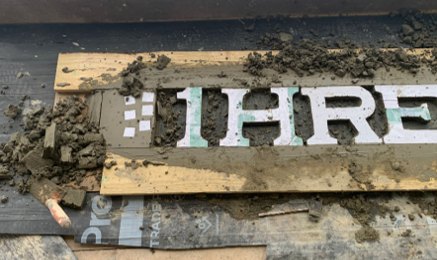
Casts of the lettering were made to recreate the 1st H.R.E.V lintel
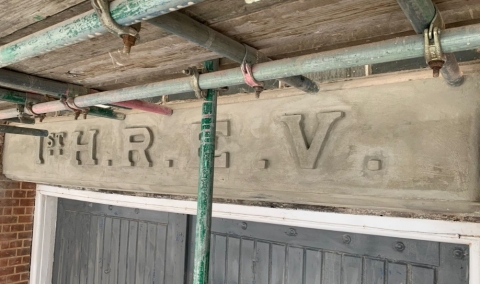
The recreation is not only structurally fit for purpose, but also celebrates and recognises the history of the building
As with most historic refurbishments, the project has come with a few unexpected surprises. One of the more unusual moments involved an unexpected call to ordnance disposal, following the discovery of historic ammunition boxes beneath the floorboards. The find prompted a precautionary evacuation while specialists inspected the packages. They were confirmed to be safe, and work was soon able to resume - albeit with a memorable story.
The site has also welcomed some unexpected visitors. A nesting pigeon chose part of the scaffolding as a place to settle. The site team quickly stepped in to cordon off the area, ensuring the safety of both the hen and her eggs until they were ready to move on.
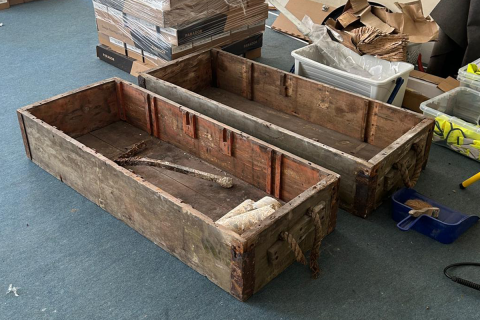
Old ammunition boxes were discovered under the floorboards
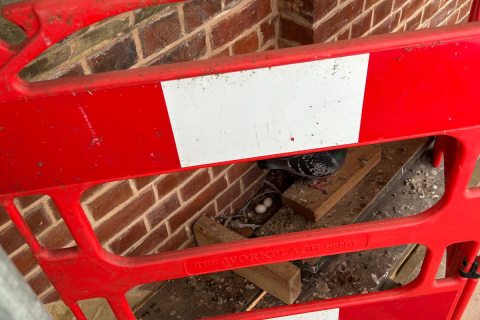
Precautions were put in place to protect a nesting pigeon and her eggs
Alongside these lighter moments, the refurbishment has also highlighted some areas of the building that needed more attention than first anticipated. Construction methods from the late 19th century differ significantly from those used today, and some elements have naturally deteriorated over time. In particular, the iconic columns supporting the roof structure required additional repair, which has needed careful planning and specialist input.
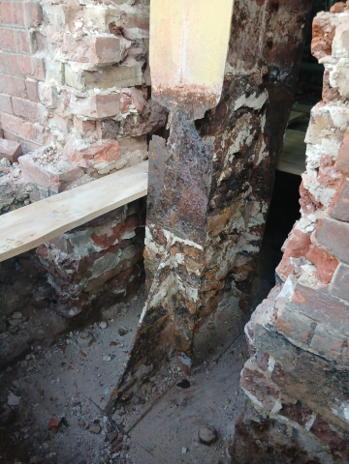
Over 100 years, the original iron columns encased in brick have corroded
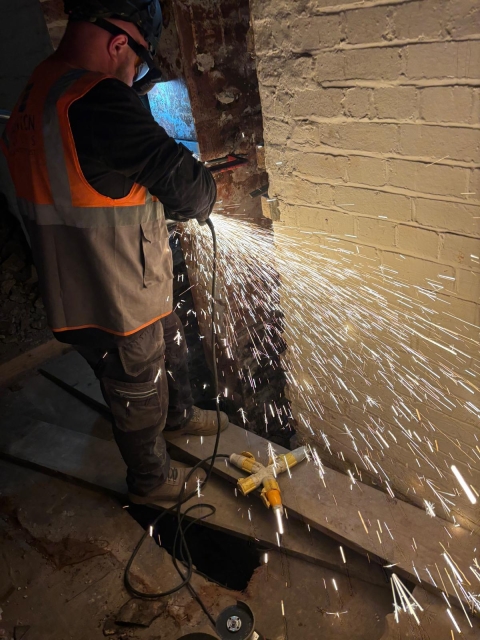
The areas of corrosion were carefully cut out from the column
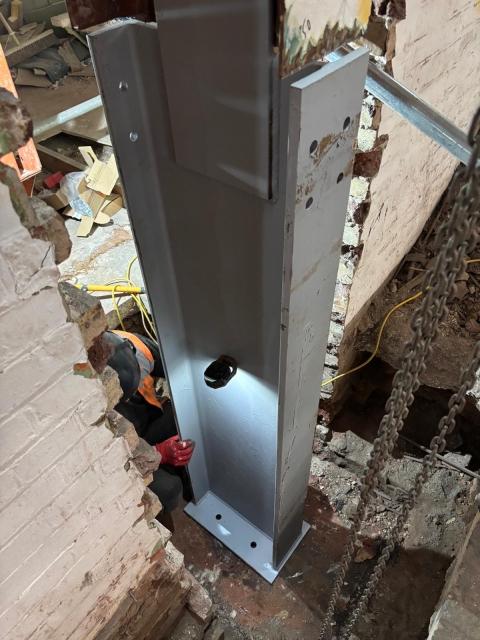
New sections have replaced the corroded areas and are attached to the original column
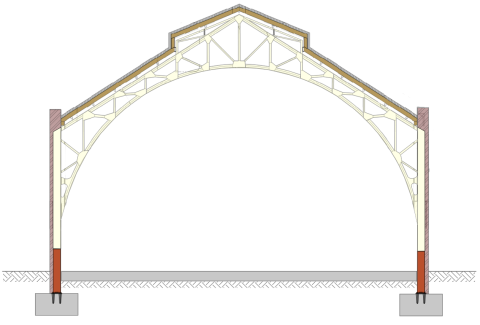
Repairs have been carried out at the base of the columns, as shown in this cross-section of Wiltshire Building
Further investigation also showed that the roof was in need of attention. With no insulation layer and signs of long-term water damage, a full replacement was identified as the most practical solution. While this work was not originally planned, it will significantly improve the building, helping to keep it warm, watertight, and more energy efficient over the winters to come.
These additional works mean the construction phase has taken longer than expected. Construction is expected to be completed by the end of the year, after which, front-of-house Student Services will move into the building and will be the first port of call for students looking for help.
Taking the time to address these issues properly ensures the Wiltshire Building is carefully restored and fit for purpose while retaining the character of a building that has served Portsmouth for more than a century. Designed around the student experience, it will provide students with a welcoming space to find essential support and advice, making it easier for students to access advice and connect with specialist services across the University.


