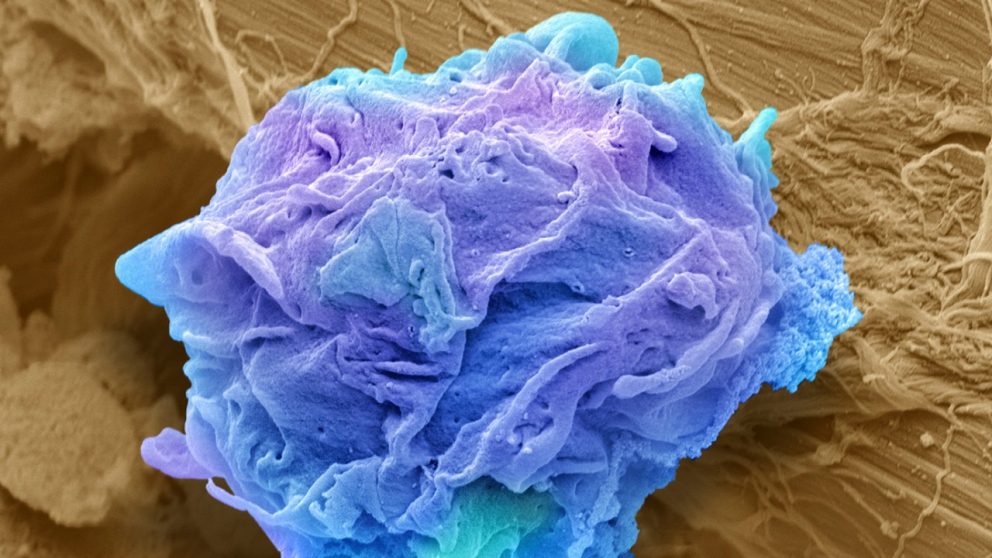
- The novel therapy targets CD94+ relapsed or refractory T/NK cell lymphomas
- UT MD Anderson received Investigational New Drug clearance from the Food and Drug Administration to begin Phase 1 clinical trial
The University of Texas MD Anderson Cancer Center and CTMC, a joint venture between UT MD Anderson and Resilience, today announced that the Food and Drug Administration (FDA) has issued a 'safe to proceed' for the Investigational New Drug (IND) application for a novel chimeric antigen receptor (CAR) T cell therapy.
The cell therapy, developed in the laboratory of Sattva Neelapu, M.D., professor of Lymphoma & Myeloma at UT MD Anderson, will enter a Phase 1 clinical trial for patients with relapsed or refractory CD94+ T/NK cell lymphomas. CTMC will manufacture the therapy for the trial, which Neelapu will lead.
"There is a major unmet need for patients with relapsed or refractory T/NK cell lymphomas," Neelapu said. "In our preclinical findings, these cells demonstrated potent and selective death of cancer cells while sparing important healthy cells. We look forward to evaluating if this therapy can benefit patients in our clinical studies."
The CAR T cell therapy targets CD94, an antigen found on the surface of cancer cells in certain subtypes of relapsed or refractory T/NK cell lymphomas. The therapy can be manufactured in approximately three days and delivered to a patient within 11 days. Researchers will evaluate three dose levels to help identify the maximum tolerated dose. A novel BCMA safety switch has been incorporated into the therapy, which can help eliminate the CAR T cells in the event of unexpected side effects.
"Programs like this demonstrate the translational model we have built using CTMC and UT MD Anderson to move breakthrough cell therapy discoveries rapidly from the research laboratory into clinical testing," said Jason Bock, Ph.D., co-founder and chief executive officer at CTMC. "CTMC combines industrial-grade cell therapy manufacturing with innovative platforms such as a rapid, three-day CAR T manufacturing process, enabling faster development while building processes designed to scale and support future commercialization."
Preclinical data on this cell therapy were presented at the 2025 American Society of Hematology Annual Meeting. Currently, there are seven FDA-approved CAR T cell therapies, but they all target B cell lymphomas, leukemias or myelomas. Expanding beyond these cancer types has been difficult because researchers have not been able to identify suitable targets.
In addition to these rare lymphomas, there may be potential applications for utilizing this therapy for treating autoimmune diseases such as Type 1 diabetes, multiple sclerosis, alopecia areata and vitiligo, Neelapu explained. However, additional studies will be needed in order to evaluate the therapy for these indications.
The trial is supported by institutional funds as well as grants from the U.S. Department of Defense and the Cancer Prevention and Research Institute of Texas.
Disclosure: UT MD Anderson has an institutional conflict of interest with National Resilience, Inc. and CTMC due to UT MD Anderson's ownership interest in CTMC. These relationships are managed according to a UT MD Anderson Institutional Conflict of Interest Management and Monitoring Plan.