
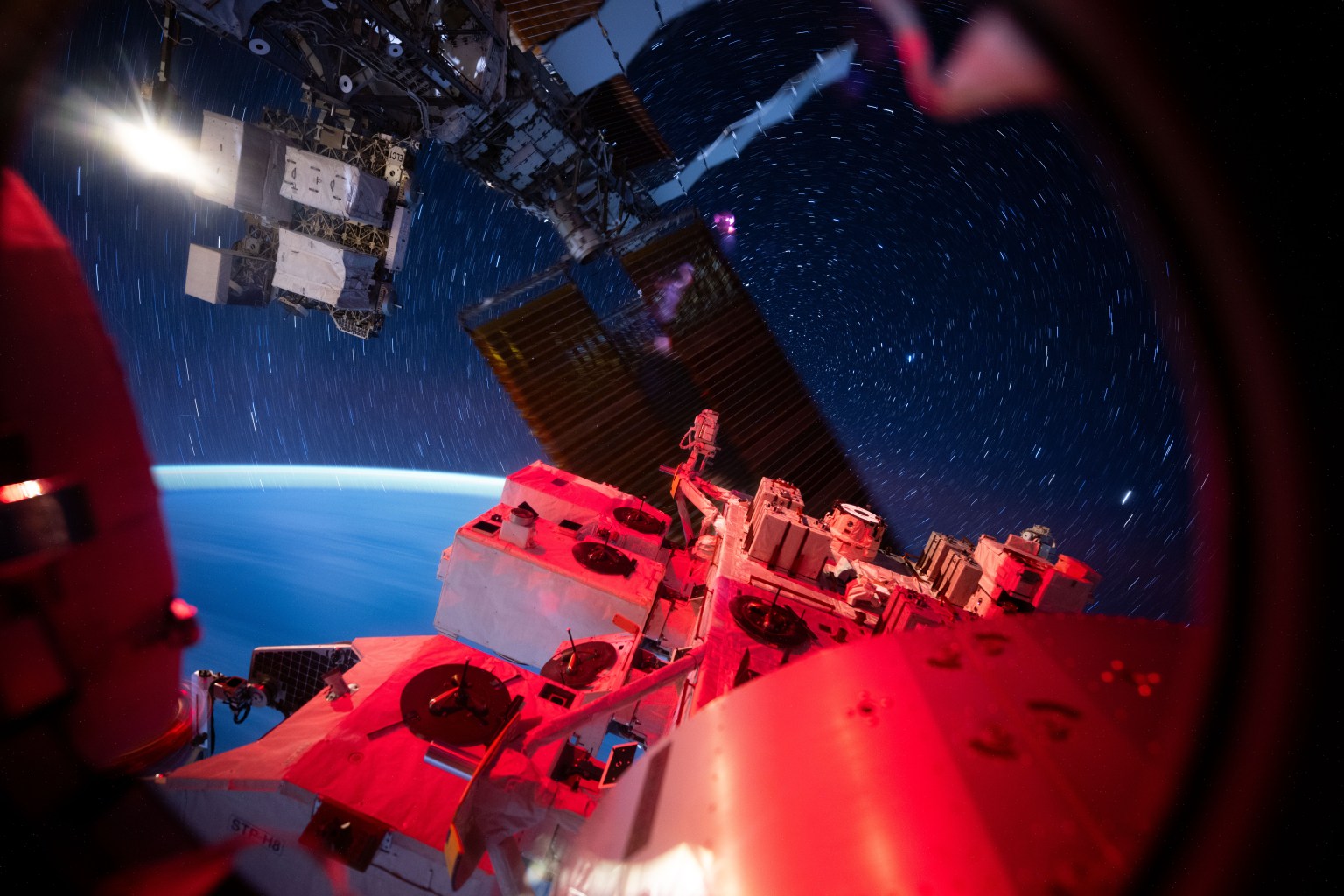
To dive deeper into the International Space Station research achievements from the past year, browse the 2025 Annual Highlights of Results, which NASA released in May 2026.
In 2025, researchers using the orbital laboratory conducted more than 750 investigations that advanced understanding of life in space, drove innovations to benefit people on Earth, and supported NASA's exploration of the Moon and Mars.
Results include a study that could protect astronaut performance on future long-duration missions and a biomaterials investigation aimed at advancing tissue engineering and regenerative medicine.
Miniaturizing surgery
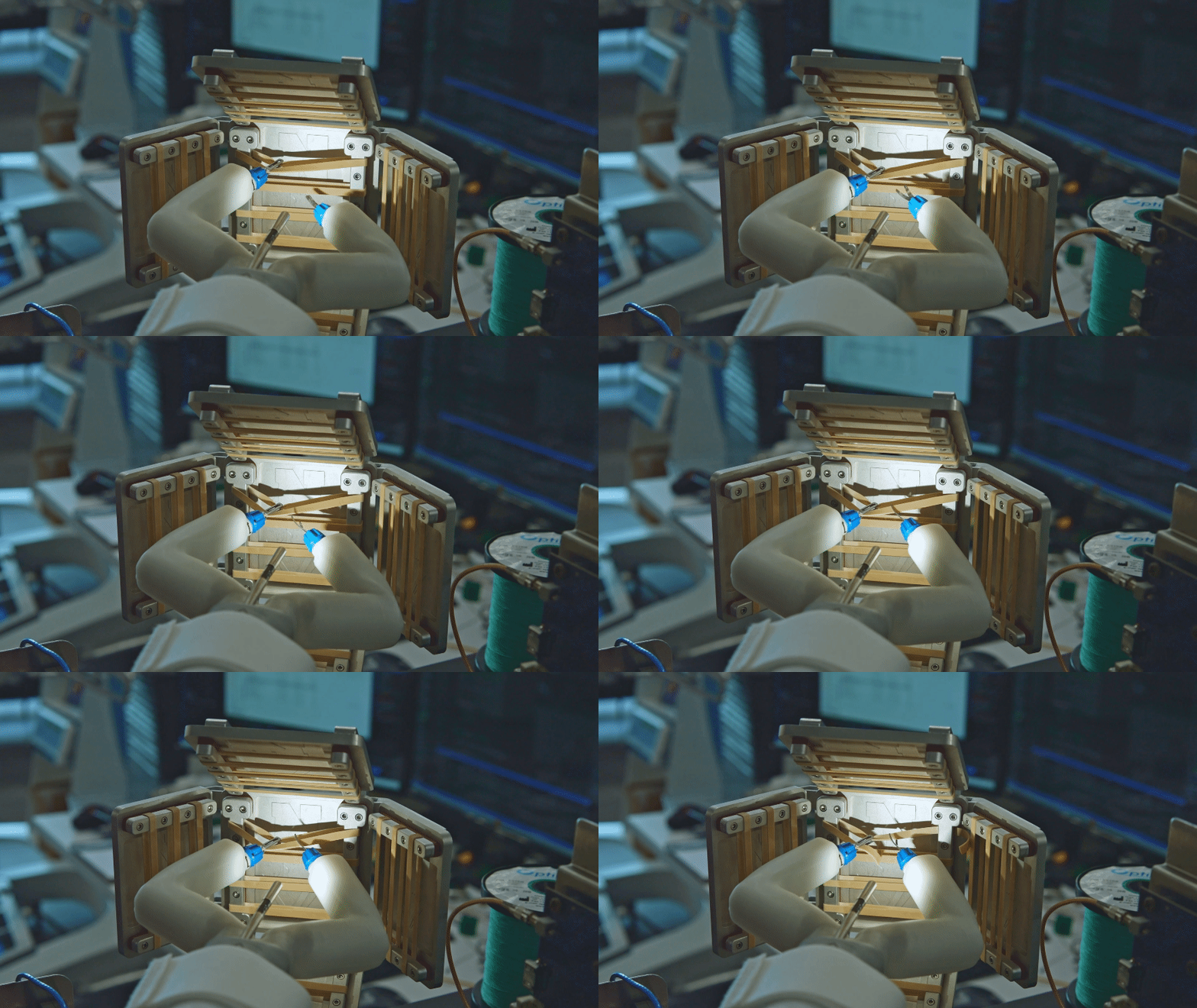
NASA evaluated whether a miniature robotic system could perform surgical tasks in microgravity. Researchers used rubber bands to simulate surgical tasks aboard the space station, allowing them to observe communication delays from Earth and test robotic precision in space during remote operations. Results showed that while timing delays increased the duration of procedures, they had minimal impact on robotic accuracy.
This research demonstrates that precise surgical procedures could one day be performed in space, including at a future lunar base or on Mars. Robotic surgery also offers a compact, reliable option for performing medical procedures in remote places on Earth.


