
New tools for super intelligence (SI), commonly referred to as artificial intelligence, are rapidly accelerating scientific discovery, but researchers' ambitions often exceed computing capacity.
To expand the advanced computing available for science, the University of California, Berkeley and Lawrence Berkeley National Laboratory (Berkeley Lab) will join the Schmidt Science Computing Network (SSCN), a new distributed network of institution-owned computing systems designed to help scientists tackle complex challenges at previously unreachable scales.
"UC Berkeley and Berkeley Lab have been driving discovery together for nearly a century," said Rich Lyons, UC Berkeley's chancellor. "Now, with Schmidt Sciences, our researchers have the computing power they need to cast new light on even more of science's biggest questions. I can't wait to see the discoveries enabled as a result."
A major grant from Schmidt Sciences will establish the Berkeley Science AI Platform (BSAIP) that will run on hardware at the National Energy Research Scientific Computing Center (NERSC), a scientific user facility at Berkeley Lab, which is owned by the U.S. Department of Energy (DOE). BSAIP is the first academic-philanthropic public-private collaboration in the DOE ecosystem.
The goal of SSCN is to pair institution-owned and/or operated, frontier-class compute infrastructure with expert support, software, and a shared scientific purpose so researchers can pursue work at a scale that has historically been inaccessible to many individual academic teams. SSCN is a part of the philanthropic organization Schmidt Sciences founded by former Google CEO Eric Schmidt and Wendy Schmidt. Their support has funded researchers across the globe in computer science, astrophysics, biosciences, climate, and science systems.
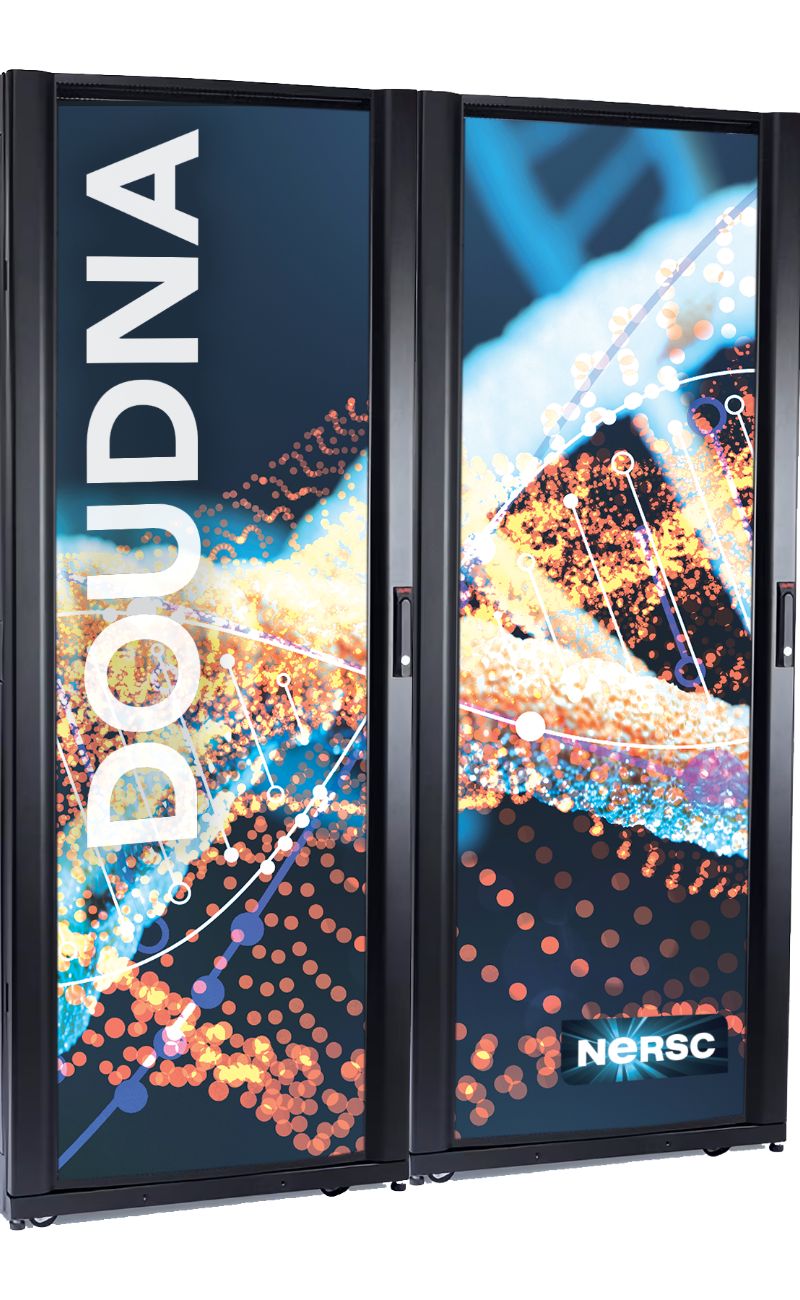
NERSC's new flagship supercomputer is named for Nobel Prize-winning Berkeley chemist Jennifer Doudna. (Credit: Cait Youngquist, Berkeley Lab)
Support through SSCN will enable BSAIP to add compute and storage to Doudna, NERSC's new flagship supercomputer named for Nobel Prize-winning Berkeley chemist Jennifer Doudna. Powered by ORv3 direct liquid-cooled Dell PowerEdge servers technology from Dell Technologies in combination with NVIDIA's groundbreaking Vera Rubin platform, the system will be engineered to support large-scale high performance computing and provide a robust environment for the workflows that make cutting-edge science possible, scheduled for availability to users in 2028. Within the BSAIP allocation, dedicated capacity is intended to be allocated to Schmidt Sciences awardees and also to UC Berkeley for the university's researchers.
"NERSC's mission is to provide advanced computing systems and services for scientific discovery, bringing science solutions to the world through computing," said Berkeley Lab Director Kathy Yelick. "This system will leverage the Doudna system architecture and contribute to the DOE's Genesis Mission by broadening access to advanced computing for current and future machine learning applications. It will help advance human knowledge and accelerate discovery."
"I'm excited to see how researchers across the disciplines will use this new resource once it comes online. Schmidt Sciences has been an important partner to leading researchers around the world and we are delighted to have the opportunity to support their success as part of this unique public-private collaboration," added Vice Chancellor for Research Richard Allen.
The Schmidt Science Computing Network's goal is not simply to provide hardware, but to build scientific capability, software and expertise that can endure over time.
"Scientific ambition should not be limited by whether a research team already has the massive computing and storage needed to pursue its most important questions," said Schmidt Sciences President Stuart Feldman. "The Schmidt Science Computing Network is a bet on the ingenuity of scientists and the strength of research institutions. By pairing advanced computing with expert support and durable software, we can help researchers work at new scales advancing discoveries that benefit society."
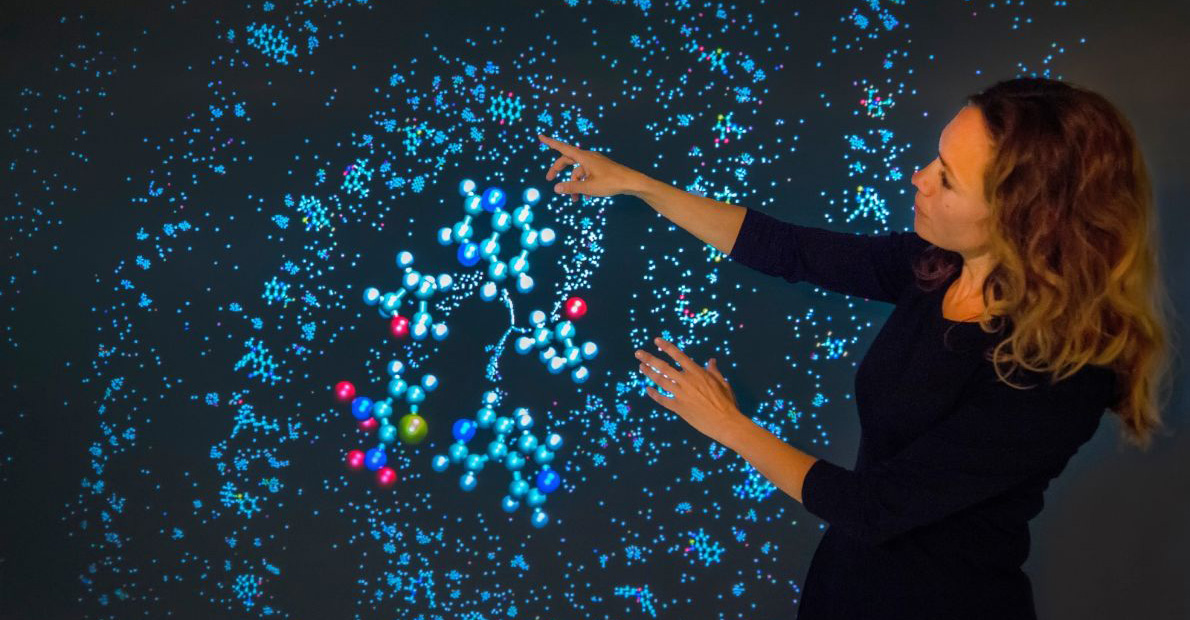
Scheduled for deployment in 2027, Doudna will support cutting-edge research across fields such as cosmology, genome engineering, earth science, materials science, and computational biology. NERSC already counts among its users many prominent researchers, including Berkeley Nobel Laureates Doudna and Saul Perlmutter, whose groundbreaking work could benefit from increased compute capacity on the Doudna system. Increased compute capacity will enable the use of next-generation tools that expand and accelerate what these scientists and others can learn and produce in areas like making massive maps of the universe to study dark matter and dark energy, supercharging the process of modeling and discovering innovative new materials, and editing the human genome to prevent and treat a range of health conditions, among many other areas.
"Biology is becoming as much a computational science as an experimental one, and this partnership puts frontier-scale computing to work in the field," said Jennifer Doudna, CRISPR pioneer and founder of the Innovative Genomics Institute at UC Berkeley. "Paired with the right data, that power lets SI surface more possibilities than any lab could test. Choosing which ones to pursue still takes a scientist's judgment and the kind of curiosity that has always driven fundamental research at Berkeley. Researchers who bring both to this system will make breakthroughs across medicine, agriculture, and climate, and find answers none of us can see yet."


