
On a dark, wet night, Australia's road markings do more than guide drivers – they help prevent crashes, support emerging vehicle technologies and maintaining the safety and efficiency of the transport network.
Those bright white and yellow lines may look simple, but behind their sparkle is decades of materials science, safety, research and independent laboratory and field testing. 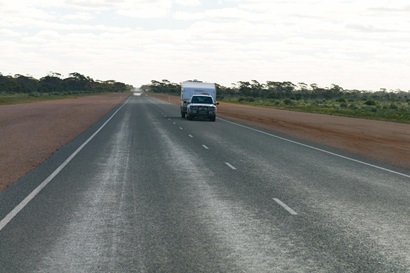
From fog prone valleys to tropical heat and intense ultraviolet radiation, coastal glare and busy urban motorways, Australian roads face some of the most challenging driving conditions in the world. That means road markings must be able to perform reliably across all of them.
Money Arora, Team Leader of Materials Performance, Infrastructure Technologies at CSIRO said road marking performance can vary significantly across climates – a road line that performs well in Katherine behaves very differently in Katoomba conditions.
When road markings fade too quickly or fail to perform, they cost more to maintain and can compromise safety, particularly on regional roads where lighting is limited.
Ensuring those lines can be trusted, night after night and year after year, is where science and rigorous testing come in.
Why road markings matter more than you think
Clear, durable road markings are essential for human drivers. They help people stay in lane, read the road ahead, and react safely in changing conditions.
Increasingly, they are also relied upon by vehicle technology already on Australian roads.
"Many people don't realise that lane‑keeping assistance and other driver‑support systems depend on well defined, consistent line markings," said Ms Arora. "If markings can't be clearly detected, especially in rain, glare or at night, it can reduce the effectiveness of these safety systems."
As vehicles become more advanced, the quality and consistency of road markings is no longer just about what drivers see, but also about how reliably they can be detected by vehicle sensors in real-world conditions.
The sparkle behind the science
That familiar glow of road lines at night isn't accidental, it's carefully engineered. The 'glitter' drivers see under headlights comes from tiny glass beads embedded in road marking paint. These beads act like tiny lenses: when light hits them, it's bent and reflected straight back toward the driver. This is a concept known as retroreflection.
"This retroreflection is what makes road lines 'light up' at night. But for that to work properly, a lot of things have to go right," explained Ms Arora. 
Beads need to be the right size, shape and clarity, and they need to stay embedded at just the right depth in the paint. The paint itself must dry quickly, hold the beads in place, resist wear from traffic and withstand sun, heat and rain.
From a driver's perspective, what matters is simple: lines that stay bright, visible and predictable over time. "Our role is to make sure those materials do exactly what road users expect them to do, in the real world, not just in the lab," she said.
Day and night visibility
At night, retroreflective beads do the heavy lifting. During the day, visibility relies more on painted contrast and colour stability , and how well the markings have held up over time.
In bright sunlight, glare from wet roads, pale concrete surfaces or low sun angles can make markings harder to see. Over time, UV exposure, dirt and wear can also reduce contrast.
"That's why we assess both daytime and night-time performance. Drivers don't experience roads under controlled conditions – they experience them in rain, heat, glare and traffic. Testing needs to reflect that," explained Ms Arora.
Independent testing drivers can trust
For something so critical to safety, trust and consistency matters. That's why road authorities, suppliers and contractors rely on independent, evidence‑based testing.
CSIRO evaluates road-marking materials using standardised methods that measure durability, visibility, and performance under both simulated and real-world conditions.
"Independent testing provides confidence that materials will last, perform and deliver value for money," Ms Arora said. "It helps road authorities make informed decisions and helps motorists and cyclists trust that the lines guiding them will be there when they need them."
In addition to the testing, CSIRO also provides certification of road‑marking products through the Australian Paint Approval Scheme , active since the 1940s. This gives road authorities confidence that approved products meet performance expectations before they are widely deployed.
Certification is also extended to Painting Contractor Certification Program, which verifies that contractors applying line markings have the systems, skills and quality processes needed to deliver consistent results on Australian roads.
Supporting Australian innovation
Australia's road‑marking industry includes both major suppliers and smaller businesses developing new paints, glass beads and application systems. Bringing an innovative product to market can be challenging without credible performance data.
"Independent testing can be the difference between a promising idea and a product ready for procurement," added Ms Arora. "It helps Australian manufacturers move faster, demonstrate performance and compete globally." 
By supporting local innovation, testing also strengthens Australia's national capability and helps showcase Australian infrastructure expertise to international markets.
Designing for sustainability and longevity
Sustainability is becoming an increasingly important consideration for transport infrastructure. Longer‑lasting road markings don't just reduce maintenance costs, they also mean fewer re-paints, less traffic disruption and lower environmental impact.
The industry is exploring recycled materials, lower‑energy manufacturing processes and improved formulations that increase durability and bead retention.
"Our testing looks at whole‑of‑life performance. If markings last longer, that's good for safety, budgets and the environment," she explained.
Even the best markings eventually wear down with use and time. Performance data helps road authorities plan maintenance more effectively, ensuring safety is maintained without unnecessary repainting or public spending.
A small detail with a big impact
Road markings are one of the most important elements of Australia's transport network, relied upon every day by millions of travellers.
They guide millions of journeys every day. They support emerging vehicle technologies and they quietly underpin safer travel across an enormous range of environments.
"The science behind those white lines is rarely noticed, but its impact is everywhere. By getting the details right, we help make Australia's roads safer today, and ready for the future," concluded Ms Arora.


