
A hydrologist at The University of Texas at Arlington is leading a federally funded project that combines artificial intelligence, advanced satellite technology and field monitoring to improve water security and drought resilience on Tribal lands.
Funded by the U.S. Department of the Interior's Bureau of Reclamation, the project aims to map millions of small bodies of water, including ponds, wetlands and natural depressions.
"As of October 2026, more than 50% of the contiguous U.S. was experiencing drought," said Adnan Rajib, assistant professor of civil engineering at UT Arlington and director of the the H2I Lab. "Collectively, these small waterbodies can make a tremendous improvement to our nation's drought resilience."
From Montana to Texas, prolonged droughts are putting increasing pressure on water supplies, Dr. Rajib said.
"Earlier in 2026, Corpus Christi, a major city in south Texas, came dangerously close to a shutdown of its water supply," Rajib said. "Yet we know surprisingly little about how millions of small waterbodies, if properly mapped, could help communities survive mega droughts."
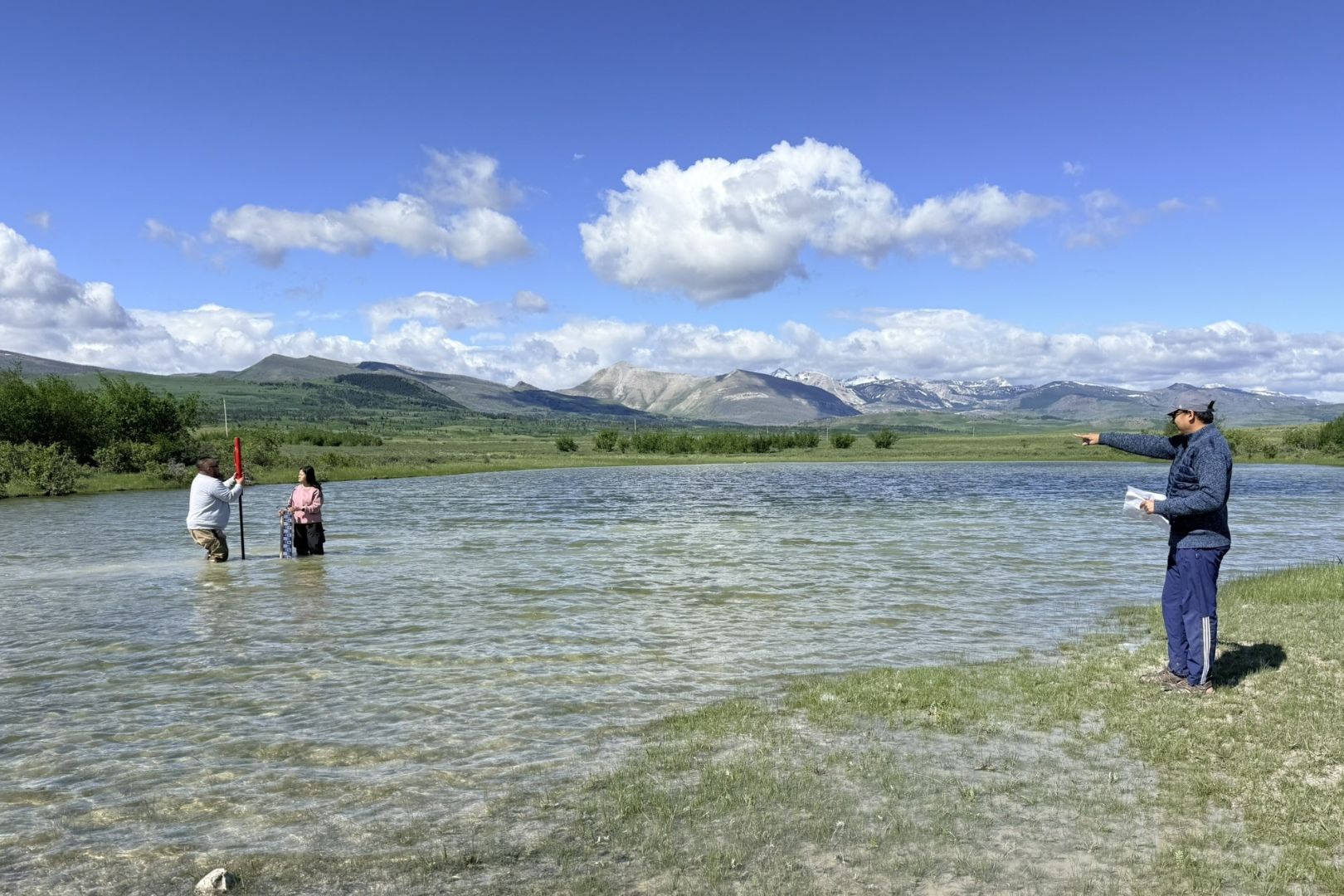
In summer 2026, Rajib and doctoral students Qianjin Zheng and Erica Shrestha launched this project with an extensive field monitoring campaign in northern Montana. Working closely with Tribal partners, the team installed smart sensors and collected on-the-ground measurements to track water availability and better understand how small bodies of water respond to drought and a declining winter snowpack. The field monitoring network marks a major milestone, providing critical data to develop accurate AI models.
A key innovation of the project is its use of next-generation Earth observation satellites, including the NASA-ISRO Synthetic Aperture Radar (NISAR), a joint mission of NASA and the Indian Space Research Organisation.
"Satellites provide an extraordinary view of Earth's water resources," said Charles Lane, a former senior scientist at the U.S. Environmental Protection Agency who is advising the project through Lane Ecological Advisory. "The new monitoring network that Rajib's team has established will allow us to calibrate and validate observations from space, helping develop more reliable tools for drought-affected watersheds."
Sara Owen, a former field and regional operations group lead for the U.S. Fish and Wildlife Service's National Wetlands Inventory and now a senior ecologist at Naturion, a nationwide wetland and stream restoration organization, is coordinating the project's local efforts in Montana.
"What inspires us most is that the work we are doing in Montana could pave the way for protecting small waterbodies in other drought-prone regions like Texas, where every drop of water matters," Owen said. "The potential for national impact is truly remarkable."
Related: Why California turned to UTA after devastating wildfires
Beyond developing new technology, the project aims to help Tribal governments better manage their water resources. The UT Arlington team will develop accessible tools and provide training on using satellite data for drought management and planning.
"This is about putting advanced technology in the hands of the people who need it most," said Emerald Grant, wetlands program manager for the Blackfeet Environmental Office in Montana. "It's not enough to do the science. We have to make sure it's useful, usable and used."
For doctoral students Zheng and Shrestha, the fieldwork also provides valuable hands-on experience in environmental monitoring, satellite validation, AI and community-engaged research.
"Being able to connect what we observe on the ground with what satellites see from space is an exciting experience," said Zheng.
"It is incredibly rewarding to see how our cutting-edge science can provide meaningful solutions for Tribal lands," Shrestha said.
About The University of Texas at Arlington (UTA)
The University of Texas at Arlington is a growing public research university in the heart of Dallas-Fort Worth. With a student body of over 42,700, UTA is the second-largest institution in the University of Texas System, offering more than 190 undergraduate and graduate degree programs. Recognized as a Carnegie R-1 university, UTA stands among the nation's top 5% of institutions for research activity. UTA and its 300,000 alumni generate an annual economic impact of $28.8 billion for the state. The University has received the Innovation and Economic Prosperity designation from the Association of Public and Land Grant Universities and has earned recognition for its focus on student access and success, considered key drivers to economic growth and social progress for North Texas and beyond.


