• 75.8% of Arab citizens of Israel support voluntary non-military civic service for Arab high school graduates.
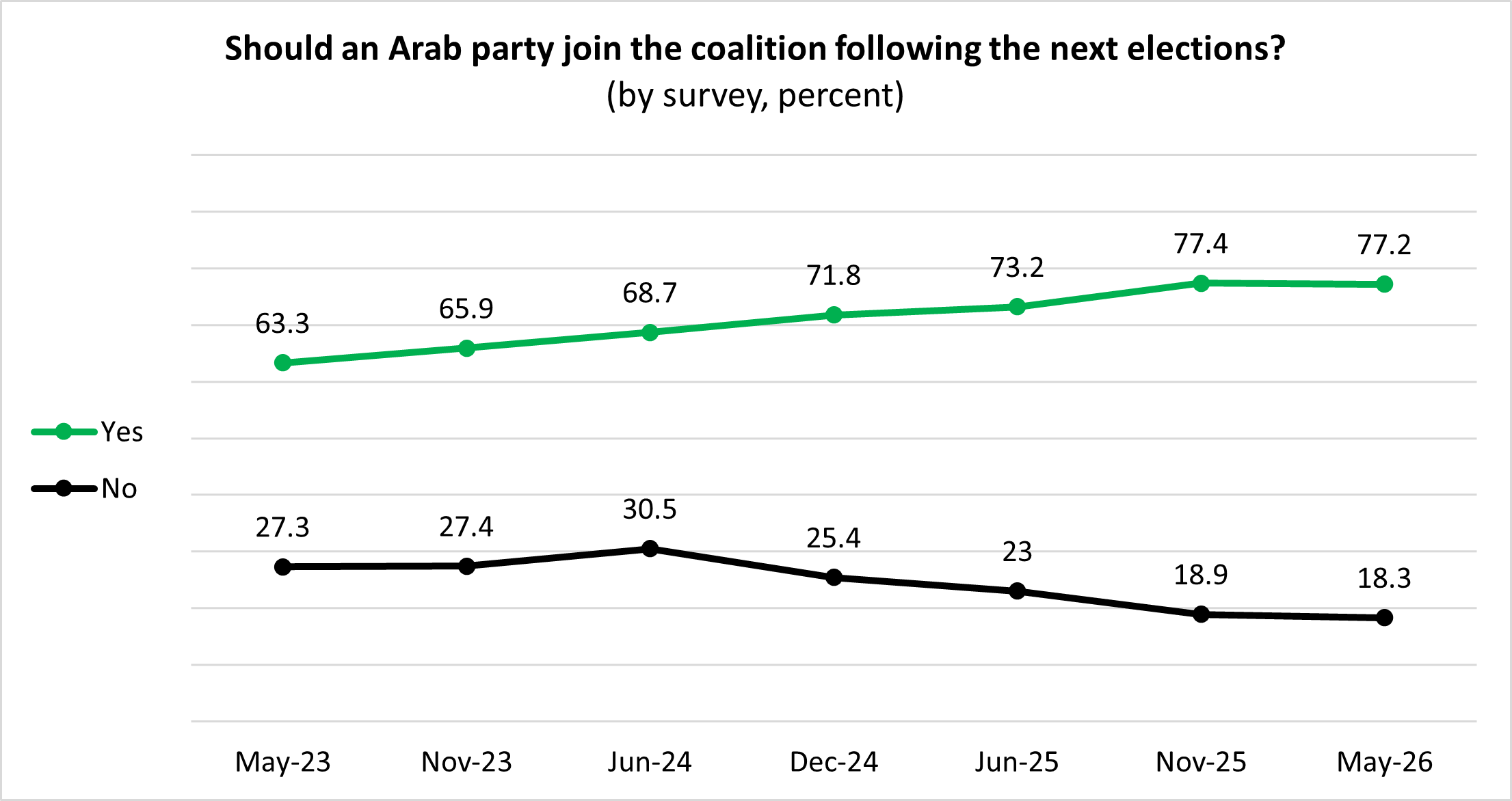
• 77.2% believe an Arab party should join the next government.
• A united Joint List could raise Arab voter turnout to a record 67% and win up to 16 Knesset seats.
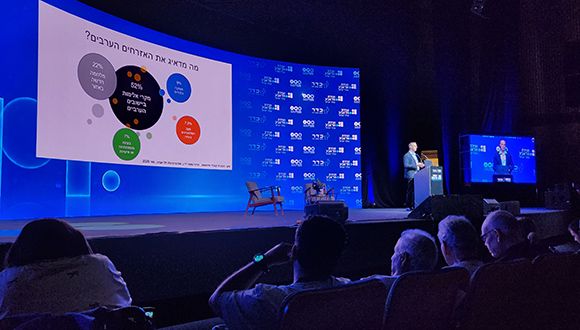
• 71.3% identified violence and crime in Arab communities as the most urgent issue facing Arab society in Israel today.
A comprehensive trend study conducted by the Dayan Center and presented at the Tel Aviv Conference held at TAU in collaboration with the Kadar Foundation, reveals for the first time that 3 out of every 4 Arab Israelis (75.8%) support voluntary non-military civic service for Arab high school graduates, both boys and girls.
46.9% of the respondents even expressed strong support, while only 23.2% opposed the idea.
The researchers note that even though support rises with age, a solid majority (69.1%) of young 18-34-year-olds favor the concept.
In addition, no gender differences were found: 75.3% of the men and 77.2% of the women were in favor of civic service.
The study was led by Dr. Arik Rudnitzky, Director of the Konrad Adenauer Program for Jewish-Arab Cooperation at the Moshe Dayan Center.
A Potential Political Shift Ahead of the Elections
Additional key findings:
- If elections for the Knesset were held today, the turnout of Arab Israeli voters would have been 53%, similar to the turnout in the November 2022 elections for the 25th Knesset. In this scenario, of the running Arab parties, Hadash-Ta'al (5.3 seats) and Ra'am (4.6 seats) would pass the electoral threshold, while Balad (1.8 seats) would not. However, the reestablishment of the Joint List, once again uniting the four Arab parties - Hadash, Ta'al, Ra'am, and Balad - would bring voter turnout to a record 67%, the highest measured so far by the survey series of the Konrad Adenauer Program. If this happens, the Joint List could win as many as 16.3 seats (out of 120) in the next Knesset.
- A large majority (77.2%) believe that an Arab party should join the government formed after the next elections: 43.3% support joining any government formed, while 33.9% support joining a center-left government. These figures are similar to findings of previous surveys conducted over the past two years by the Konrad Adenauer Program.
- A majority of Arab Israelis (59.4%) believe that current relations between Arabs and Jews in Israel are not good. Nevertheless, most survey participants (63.7%) said they favored Arab-Jewish political partnership, though only 39.7% thought that the Jews also support such political cooperation.
Identity, Belonging, and Public Priorities
- The Arab identity is the most prominent component of the personal identity of Arab Israelis (33.3%). Other noted factors include Israeli citizenship (27.7%), religious affiliation (24.5%), and Palestinian identity (13.5%).
- Half of the respondents (53.3%) reported a strong sense of belonging to the state of Israel, while 44.5% indicated a weak sense of belonging. Differences on this issue were associated with both political and socio-demographic variables (religion, age, education level). For example, considerably more Druze citizens reported a strong sense of belonging (81.7%) than either Muslims (50.5%) or Christians (53.3%). No major differences were found between age groups, though the sense of belonging is slightly higher in older age groups, and in general, the sense of belonging weakens as the education level rises.
- A large majority of survey participants (71.3%) stated that the most important issue for Israeli Arabs today is resolving the problem of violence and crime in their communities. The Palestinian issue received only 8%, followed by problems of education, employment, and poverty (7.4%), and regulation of planning and construction in Arab localities (6.1%).
- Many Arab Israelis (76.9% of survey participants) report a low sense of personal security. The main factor negatively affecting their mood is the high incidence of violence in Arab communities (51.8%). This is followed by fear of a new war in the region (21.8%), economic hardships (8.6%), and the condition of Palestinians in Gaza (7.4%). Nevertheless, most respondents (68.3%) reported that, overall, their economic situation is good.
"A Roadmap for Rebuilding Israeli Society Through Integration and Influence"
Dr. Arik Rudnitzky, Director of the Konrad Adenauer Program for Jewish-Arab Cooperation at the Moshe Dayan Center:
"In the shadow of a prolonged multi-front war, many in the broader Israeli population are unaware of changes in the attitudes of the Arab public. The significance of our findings cannot be overstated: Israel's Arab citizens present a roadmap for rebuilding Israeli society through integration and influence - not only politically, but also on the social level. Their widely held belief that an Arab party should join the government is not a new finding, but it is interesting to note that the war has in no way lessened support for this notion, and it has even grown to some extent. At the same time, a new finding indicates support for integration of Arab high school graduates into the state's non-military civic service programs. For young Israeli Arabs, this is not only a path to deeper inclusion in broader Israeli society, but also an opportunity to build their lives in ways similar to the mainstream of young Israelis. The survey also points to acute problems requiring an immediate response from the government, with a focus on crime and violence, as well as improving wartime protection infrastructures for Arab populations. In the absence of adequate protection, Israeli Arabs experience rising anxiety about the possible renewal of war. The survey's findings are especially important this year, as Israel's citizens, Jews and Arabs alike, await the upcoming elections and engage in political introspection."