
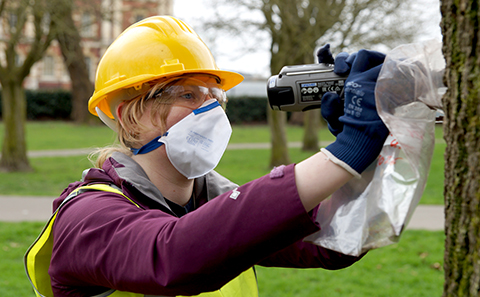
Tree bark is being tested by researchers at the University of Southampton as a new way to trace harmful air pollution in local communities.
Particulate matter - tiny particles of dust too small for the eye to see - is considered to be one of the most harmful types of air pollution for our health.
However, it can be difficult to measure what people are exposed to and where it has come from.
A new approach being trialled at the University and the National Institute for Health and Care Research (NIHR) Southampton Biomedical Research Centre (BRC) is testing if tree bark could hold the answer.
The study is being led by Dr Natasha Easton through an Early Career Colleague Fellowship with the University's Sustainability and Resilience Institute, and supported by University and BRC Professors Matt Loxham and Mark Jones .
Particulate matter can be breathed deep into the lungs, and the very smallest particles can even enter the bloodstream. Long-term exposure is associated with increased risk of a wide range of health conditions, including asthma, interstitial lung disease, lung cancer, cardiovascular disease, stroke, and dementia.
This dust comes from both man-made and natural sources. Man-made sources include burning fuels, for example in vehicle engines, industrial emissions, as well as tyre and brake wear.
These sources leave behind a chemical fingerprint which can be used to work out where the pollution came from.
Dr Easton said: "Air pollution doesn't affect every area in the same way, so it's really important that we build a clearer picture of what's happening in our local environments.
"By looking at what's captured in tree bark, we hope to uncover these hidden fingerprints to pinpoint sources of pollution and guide strategies to ultimately support healthier communities."
The research team aims to measure the levels of this type of air pollution using the bark from local trees.
The project, which is being conducted in partnership with Southampton and Winchester City Councils, will collect bark samples from trees across both cities.
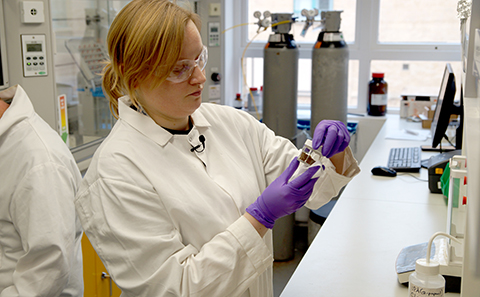
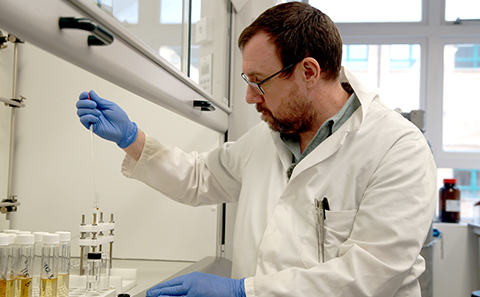
The researchers will then analyse these samples to determine how the composition and sources of particulate matter vary across the region.
This innovative approach to monitoring air quality will give a detailed picture of real-world particulate matter distribution and allow research to identify who is most likely to be exposed to different sources.
This knowledge could steer strategies to improve air quality and inform future studies to relate individual sources to impacts on health.


