
Flower-rich road verges may attract hungry bumblebees, but at the same time they risk being dangerous for the buzzing insects - if the traffic is too heavy. This is shown in a new research study from Lund University in Sweden.
The new research examined the role that roadsides play for bumblebees. The results show that road verges can be a dangerous environment for insects searching for food. The team used specially trained dogs that had learned to sniff out bumblebee nests to assist them. The survey covered 60 road verges in southern Sweden and compared the number of dead and living bumblebees along roads with varying traffic intensities.
"Along the least trafficked roads, we found hardly any dead bumblebees at all, but already at around 4,000 vehicles per day we found more dead than living bumblebees," says Sofia Blomqvist, a doctoral student at Lund University who led the study.
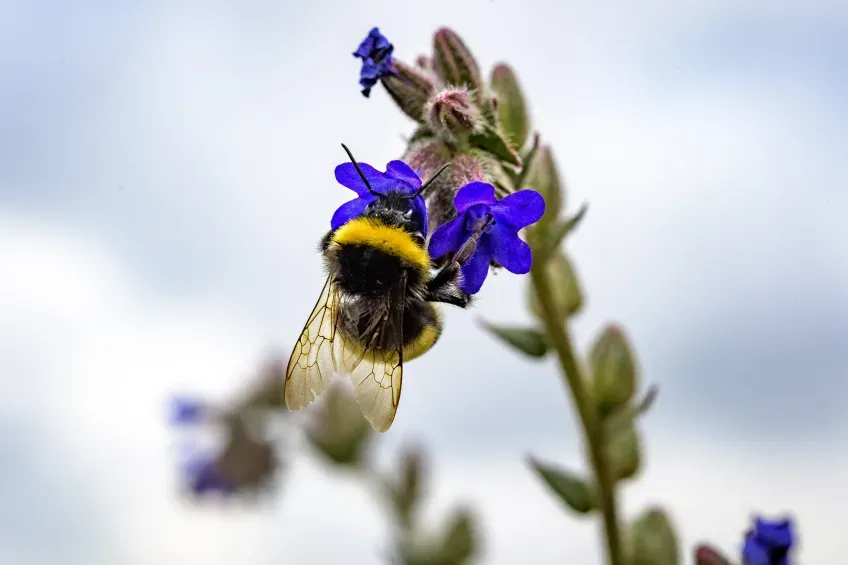
The bumblebee nests that were found were located almost exclusively in private road verges without traffic or along public roads with up to a few hundred vehicles per day. The researchers conclude that it is along this type of roads that measures to benefit bumblebees have the greatest chance of success. There, the flowers were well visited by bumblebees, and mortality was low.
At the same time, the researchers emphasise that investments in species-rich road verges must not come at the expense of conservation efforts in more important habitats.
"Although measures to support bumblebees along low-traffic roads may be valuable, this type of environment should not be seen as a replacement for traditional conservation habitats such as semi-natural pastures and hay meadows," says Sofia Blomqvist.

The study was funded by the Swedish Transport Administration with the aim of understanding how nature and traffic interact. Johan Rydlöv, national coordinator for biodiversity at the Swedish Transport Administration, notes that the road network constitutes a significant proportion of potential habitats for wild organisms in large parts of Europe.
"To be able to use these environments in a way that benefits biodiversity, we need to understand both the opportunities and the limitations they entail," says Johan Rydlöv. "In this way, the results are useful in the efforts to create more sustainable infrastructure," he concludes.
Publication:
Link to the article in Biological Conservation:


