What the research is about
The cell membrane that surrounds our cells may look smooth and simple, but it is actually made of many oil-like molecules called lipids. These molecules are highly dynamic-they can move around freely. Within the membrane, groups of different types of molecules gather to form small "island-like" clusters. The formation and disappearance of these clusters help cells control important functions.
Previous studies have shown that these clusters can change when temperature shifts or when mechanical force is applied. Scientists have also used light to chemically modify lipids. However, using chemical reactions themselves to actively control membrane structure had not been achieved.
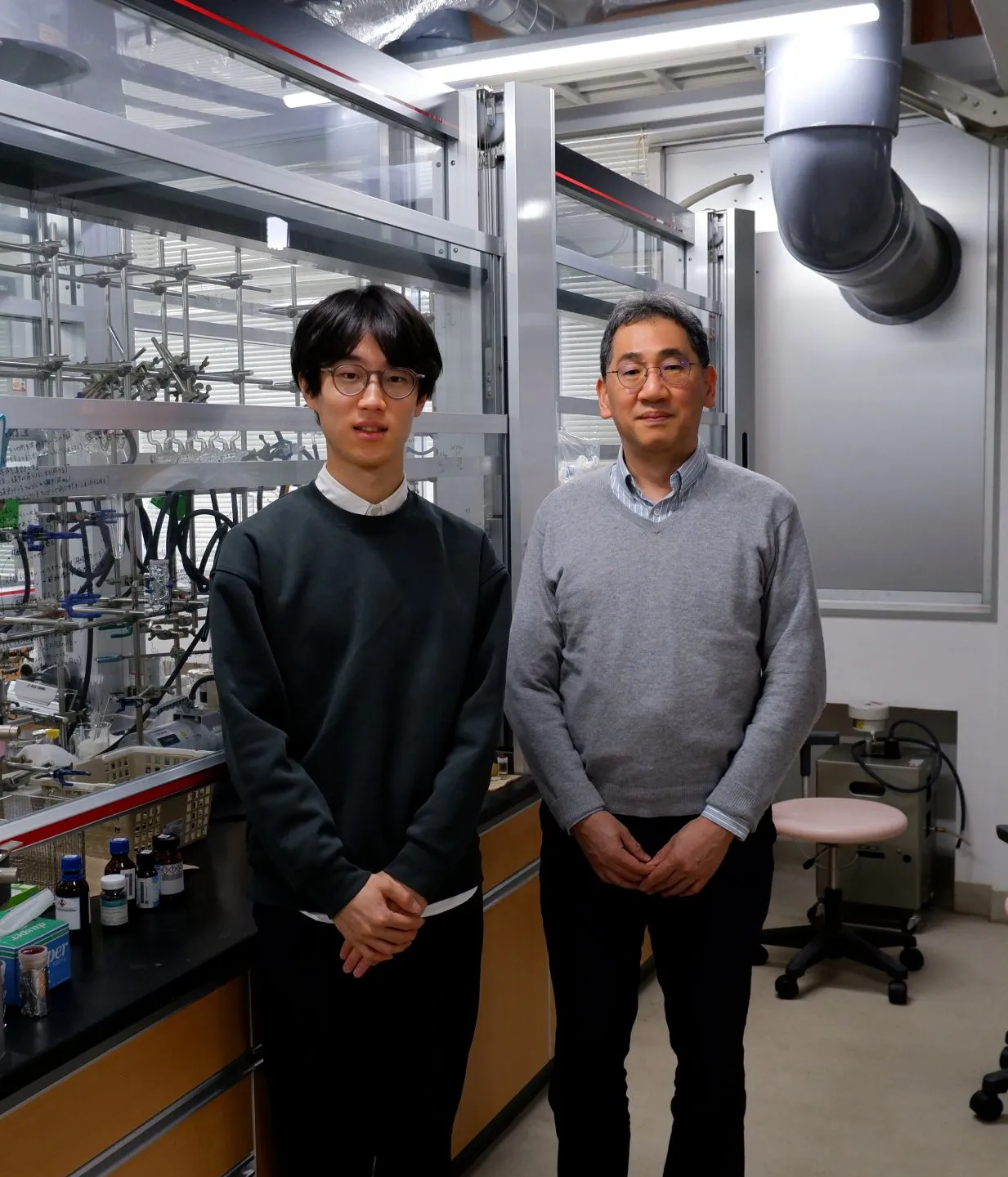
To explore this idea, Professor Kazushi Kinbara and second-year doctoral student Rei Hamaguchi at Institute of Science Tokyo (Science Tokyo) began with a simple question: What would happen if a chemical reaction could be triggered right next to a membrane?
Why this matters
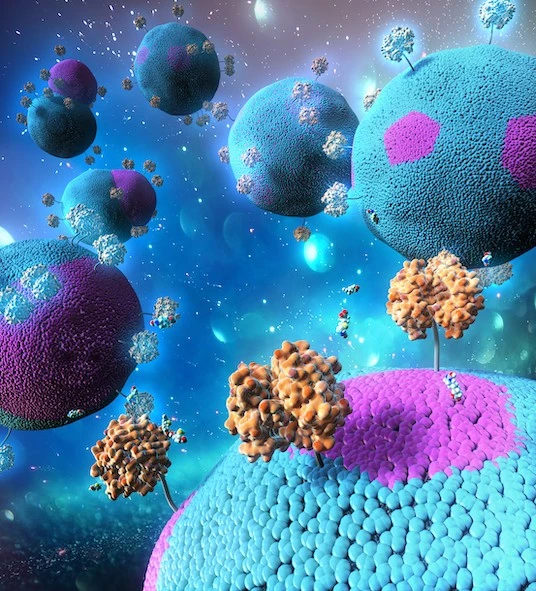
The research team demonstrated for the first time that catalytic reactions can act as a "switch" to change membrane structure when needed. They designed a system in which an artificial enzyme was anchored to the surface of an artificial cell membrane, allowing a specific chemical reaction to occur very close to it.
As a result, fatty acids produced by the reaction entered the membrane, causing the previously stable lipid clusters to disappear. When the catalytic activity was further enhanced, the membrane even underwent a large-scale shape change known as "budding," where part of the membrane bulges outward.
Molecular simulations helped explain why this happens. The newly incorporated molecules softened the membrane and changed the spacing between individual lipids. In other words, tiny molecular movements at the nanoscale led to visible changes in membrane shape.
What's next
These findings could contribute to the design of "smart nanomaterials" that can change their shape or properties on their own. For example, materials that use specific chemicals as a kind of fuel and transform only when needed may become possible.
This work also provides new guidance for artificial cell research, where scientists aim to mimic the basic units of life. Controlling membranes is one of the biggest challenges in this field. More broadly, this technology may open new possibilities in bionanotechnology, bridging chemistry and biology.
Comment from the researcher
When I saw the moment when a chemical reaction itself caused the membrane to change, I was deeply impressed. It showed me that chemical reactions do not just create molecules-they can also drive visible changes in membrane structure. In the future, we hope to combine such reactions to explore even more complex membrane behaviors.
(Kazushi Kinbara, Professor, School of Life Science and Technology, Institute of Science Tokyo)
Dive deeper
Explore more research in Science for All
Science for All showcases cutting-edge research at Science Tokyo and highlights the ideas, people, and possibilities shaping the future.