
For decades, Gross Domestic Product (GDP) has been used as a benchmark of society's progress. Yet, as the GDP figures keep ticking up, so too does a profound disenchantment with the political and economic systems tasked with serving the public. Is it time to find a new way to measure what really matters?
Even people with no grounding or interest in business news will probably have heard of GDP which is frequently cited in mass media as the indicator of progress.
In simple terms, GDP is the sum of everything a country produces and sells, but economists have known for years that it is fails to paint a complete picture.
For example, unpaid work such as caring for children or disabled family workers is not counted as a positive. Measures of inequality are not factored in, nor is the cost of pollution or exploitation of resources.
This is problematic as it creates the wrong incentives and goal posts for policy making. By chasing GDP growth alone, policy makers might not be going after what matters most for people and planet.
Counting what counts
The lack of more nuanced metrics for capturing progress has long been on the radar of the international community, and was taken up a year ago, when Secretary-General António Guterres launched his High-Level Expert Group on Beyond GDP .
Following a year of consultations, the group has released its findings through a report titled, Counting what Counts, described as "a compass for people and the planet."
It offers a first global blueprint from the UN for moving beyond the limited metric of GDP and makes a compelling case for using a broader set of measures to guide policy and decision-making.
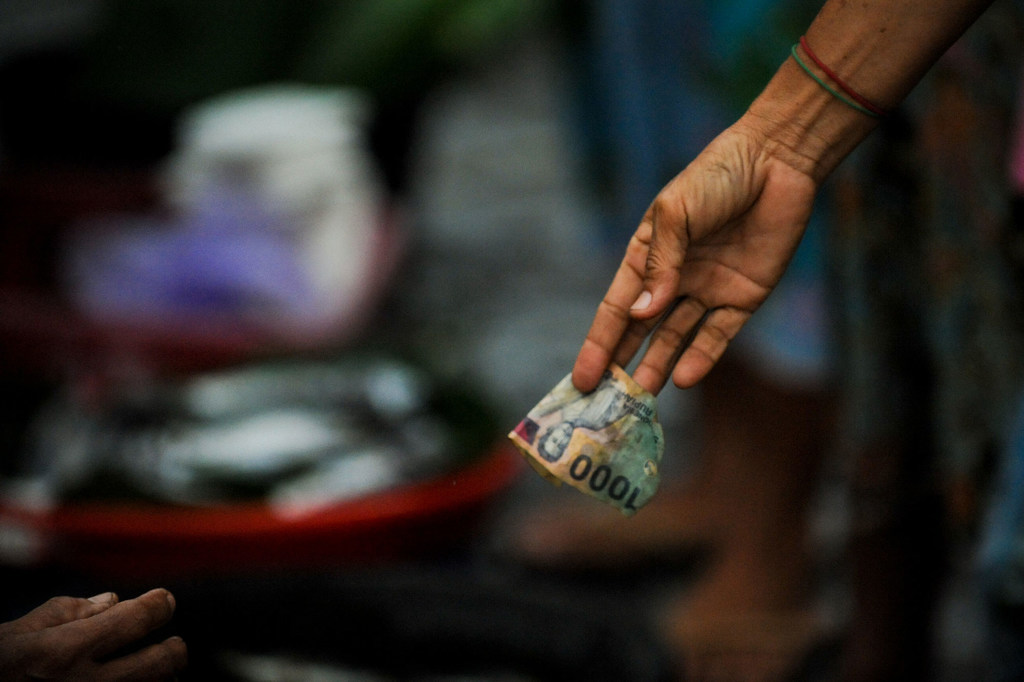
It does not argue against the use of GDP in measuring economic output but quotes a warning from the economist who pioneered the metric - Nobel laureate Simon Kuznets - that alone, it is insufficient for gauging the welfare of a nation.
Speaking at the launch of the report on Thursday, UN Secretary-Genera António Guterres argued that GDP is being used in ways its architects never intended: "we use GDP to judge the long-term success of countries," he said, "yet we see a huge gap between what GDP measures and what people value. GDP has become our go-to tool for international policy rules. But it does not effectively distinguish the vulnerabilities, challenges or potential faced by different countries."
Mr. Guterres also pointed to the rising prevalence of AI as a demonstration of the need for more nuanced metrics. "AI holds the potential to dramatically boost global growth and productivity. But it can equally eliminate millions of jobs and unleash the creation and use of increasingly sophisticated deadly weapons. Surely, we should not judge the merit of this technology by its effect on GDP alone.
Drawing on decades of research, as well as numerous national and international attempts to find better ways to measure progress, the group offers a practical agenda that will enable governments and the international system to reduce the overreliance on GDP where it is not the right measure.
The centrepiece of the group's report is a dashboard of indicators based on four pillars: foundational principles (including peace, human rights and respect for the planet), current well-being, equity and inclusion, and sustainability and resilience.
Next steps
While the expert group doesn't propose an alternative to GDP that ranks countries in order, they recommend the development of a limited set of headline indicators to communicate progress more clearly to policymakers and the public.
Practical steps to advance the Beyond GDP agenda are included in the report, such as the rapid adoption of national "progress dashboards," tailored to national priorities and embedded in policy-making processes.
A United Nations global reporting mechanism, including an annual progress report aligned with monitoring of the Sustainable Development Goals (SDGs) is also proposed, whilst academia, civil society, the private sector and media are encouraged to contribute through research, reporting, and substantive engagement to change the discourse and hold leaders to account on measures of progress that go Beyond GDP.
"Let's embrace these new metrics that complement GDP," concluded Mr. Guterres, "and reveal the full picture of the challenges and opportunities our world faces at this extraordinary moment in history."


