
New NSF award aims to build understanding of evolution and adaptation
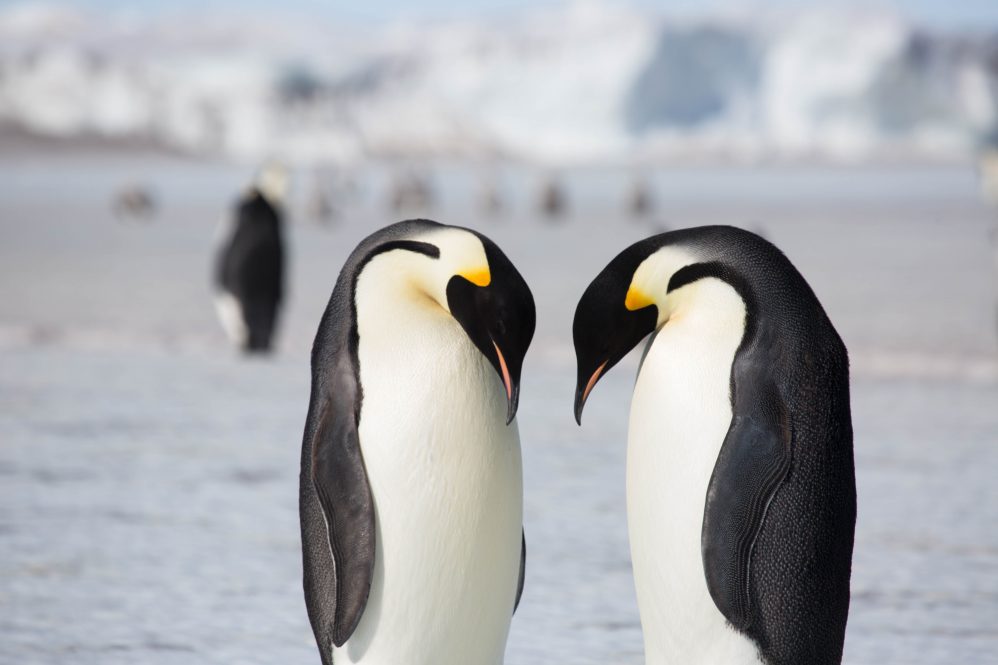
Emperor penguins are among the most iconic Antarctic species. GIGA DATA will help scientists across the globe understand how these majestic creatures - along with over 800 other organisms - adapted to polar life. (Arvind Varsani, Arizona State University)
Months without light. Bitter, biting winds. Glacial waters. The harsh environment of the Antarctic should be utterly uninhabitable - and yet, countless species have flourished in its icy seas and on its rocky shores.
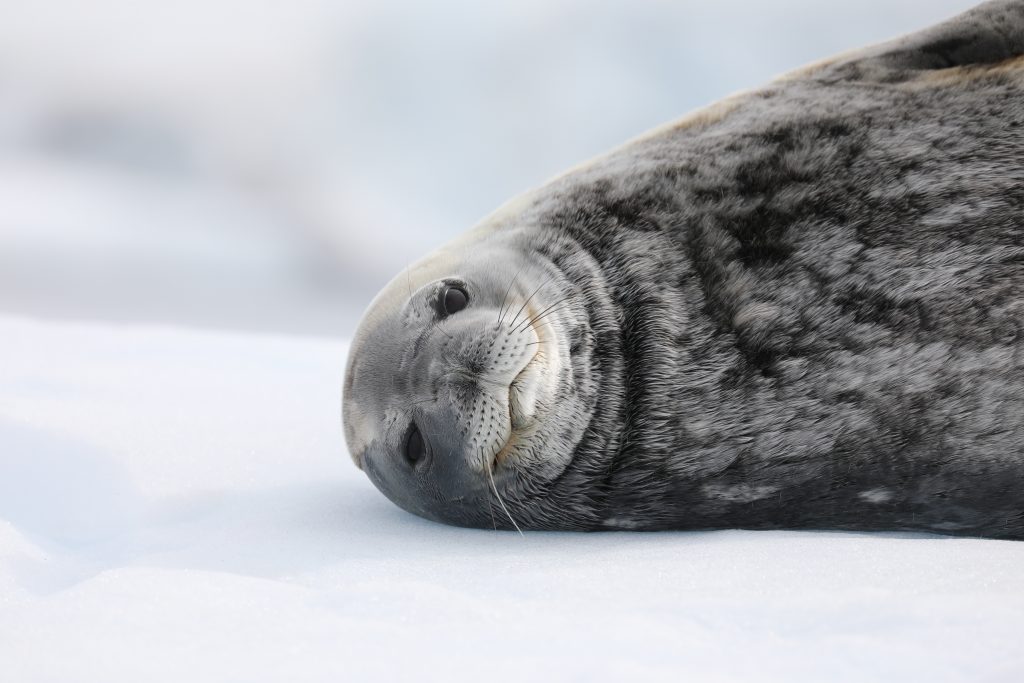
How have organisms as diverse as elephant seals and Antarctic hair grass adapted to these extreme conditions? And how will they continue to adapt — or not — in environmental change over seasons, decades, and evolutionary timescales?
A new $18.4 million award from the National Science Foundation (NSF) Mid-scale Research Infrastructure-1 (MSRI) program aims to build the infrastructure to answer these questions.
The project, "Genome Infrastructure catalyzing next Generation Antarctic Data, Access, Tools, and Analytics" (GIGA DATA), is led by Alison Murray at the Desert Research Institute. $6.6 million of the award is coming to UConn, where co-PIs Rachel O'Neill and Jill Wegrzyn will contribute their genome sequencing and assembly expertise.
"The Antarctic is the largest desert on the planet - it's a really unique environment," says O'Neill, a Board of Trustees Distinguished Professor in the Department of Molecular and Cell Biology (MCB) and director of UConn's Institute for Systems Genomics (ISG). "It's also an extreme environment where most life on Earth would not survive. This project offers a way to assess species adaptations to extreme environments and dramatic environmental change, and potentially what their resilience might be."
In addition to exploring resilience, the project may also unlock the genetic secrets of some little-understood biological mechanisms.
"There are novel discoveries to be made in diverse species," O'Neill says. "For example, the Antarctic ice fish have proteins that keep their cells from freezing, and these antifreeze compounds could be really useful in biomedical sciences."
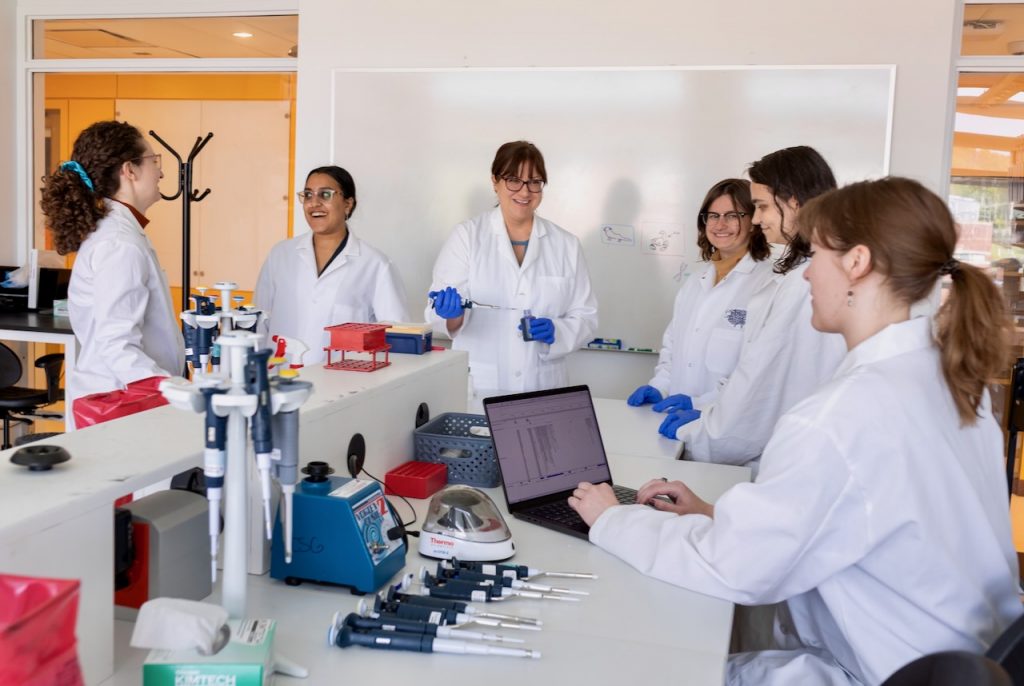
O'Neill has built her career on understanding how genomes are structured and evolve over time. Her research group at UConn uses a comparative genomics approach across the tree of life, having sequenced hundreds of eukaryotic genomes. She was a principal investigator on the international Telomere-to-Telomere project, which completed sequencing the human genome in 2022 and the human Y chromosome in 2023, and the Primate T2T Consortium, which sequenced the genomes of our great ape relatives.
O'Neill's lab brings special expertise in genome assembly and repeat analysis - detangling and decoding many thousands of repeated, short sequences of DNA to reveal their impact and exaptation as regulatory elements.
"The challenge on my end is the diversity of samples that we're going to get - as well as the quality of the samples," she says. "Some of those are going to be really challenging to get enough data to actually generate genome assemblies. That's where our technical expertise comes in — because we've done so many diverse species, we can bring a lot of those tools to the project."
Genomes as a Community Resource
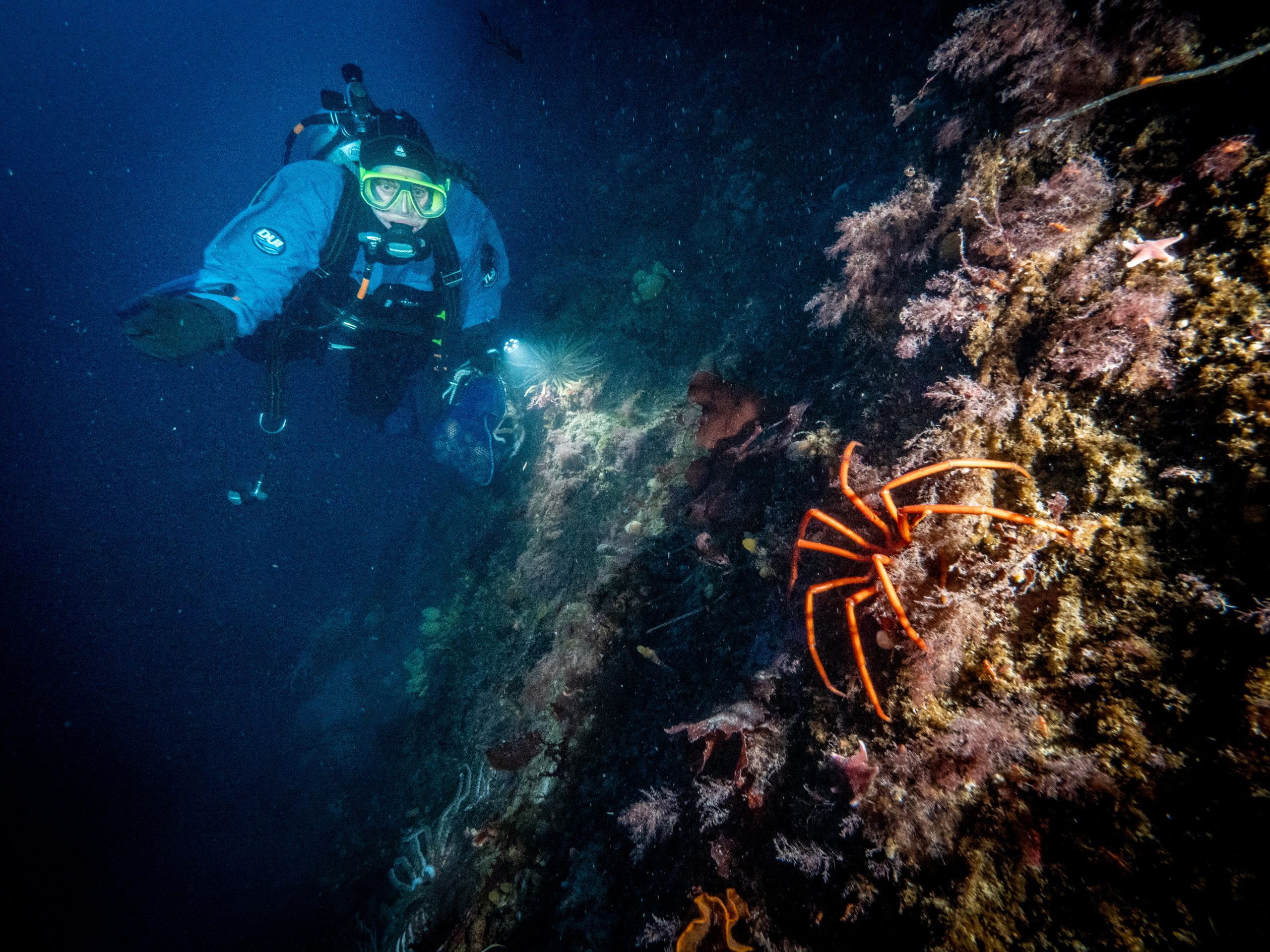
In all, GIGA DATA will sequence over 250 eukaryotic genomes (including algae and mosses, terrestrial and marine invertebrates, birds, fish, and marine mammals) and 600 bacterial and viral metagenomes.
Most importantly, it will contribute these new genomes to a database for other scientists to access — uniting new data together with existing Antarctic sequencing efforts under a new, artificial intelligence-enabled cyberinfrastructure.
The resulting digital platform will serve as an open, accessible data science gateway to Antarctic life.
NSF MSRI grants support the development of infrastructure which can propel science forward. Typically, they are awarded to teams developing mechanical equipment, like a high-powered telescope. In this case, the genomic data itself — as well as the sophisticated database in which it is stored — is the infrastructure.
"We are putting it all into a framework where people in the community can use these resources effectively," says Wegrzyn, an associate professor in the Department of Ecology & Evolutionary Biology (EEB), who also directs the Computational Biology Core within the ISG. "This is a unique proposal in that it's thinking about genomes as a resource that science is built on."
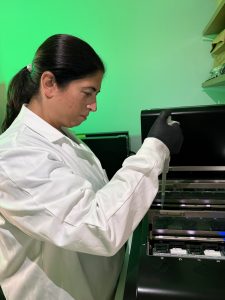
Wegrzyn has previously been awarded the Presidential Early Career Award for Scientists and Researchers (PECASE) for her contributions to computational and plant biology. Her research combines computer programming and genetics, and she has developed cutting-edge software to analyze challenging genomes.
"We can't sequence a genome end to end," she explains. "Sequencing involves extracting the DNA, breaking it into smaller pieces, and then putting it back together again. And in doing so, we have to think about which algorithms are most appropriate for that process - as well as how to balance both accuracy and efficiency."
As part of GIGA DATA, Wegrzyn is looking forward to applying her expertise in sequencing difficult genomes. Fortunately for her, the Antarctic environment is replete with these kinds of organisms - like the Antarctic krill, whose recently sequenced genome was revealed to contain almost 50 gigabases (for reference, the human genome contains only three).
"That is one of the largest animal genomes that's been assembled and sequenced to date," says Wegrzyn. "Sometimes, the smallest things are the most complicated - and the largest things are easier."
GIGA DATA will also benefit from Antarctica's unique geopolitical situation, notes Wegrzyn.
"It's a really unusual continent, in the sense that nobody really owns that region of the world," she says. "And as a result of that, we are working with the global scientific community."
The genomes sequenced by the researchers will pave the way for future exploration of biodiversity in the Antarctic and beyond.
"This database will build a resource for people to do other work, such as population genetic studies over seasons and years," says O'Neill. "Right now, without genomes, [scientists are] looking at something like 5% of the actual genomic sequence. They're not necessarily assessing everything that could be linked to adaptation. Being able to look at that kind of population-level data requires a good genome - and that's something that this data is providing."
Pole to Pole
O'Neill and Wegrzyn are also both collaborators on the Evolving Meta-Ecosystems (EVOME) initiative, charting biodiversity at the other end of the earth - the Arctic.
While the species present in both regions are quite different, the challenges are similar.
"We're looking at the same types of things in both projects," says Wegrzyn. "We're looking at these regions of the world that are very rapidly warming, and these species are having to adapt to this new environment. Do they have the capacity to do that? By understanding their genomes, we'll get a better idea of what's going on."
In addition to Murray, O'Neill, and Wegrzyn, the GIGA DATA research team includes:
- Patrick Chain and Bin Hu at Los Alamos National Laboratory
- Allyson Hindle at the University of Nevada, Las Vegas
- Rauri Bowie at the University of California, Berkeley
- Arvind Varsani at Arizona State University
- Emily McDonald-Williams, Director of STEM Education at DRI
Funding Acknowledgement: This material is based upon work supported by the National Science Foundation under Award No. 2535692.

Disclaimer: Any opinions, findings and conclusions or recommendations expressed in this material are those of the author(s) and do not necessarily reflect the views of the National Science Foundation.


