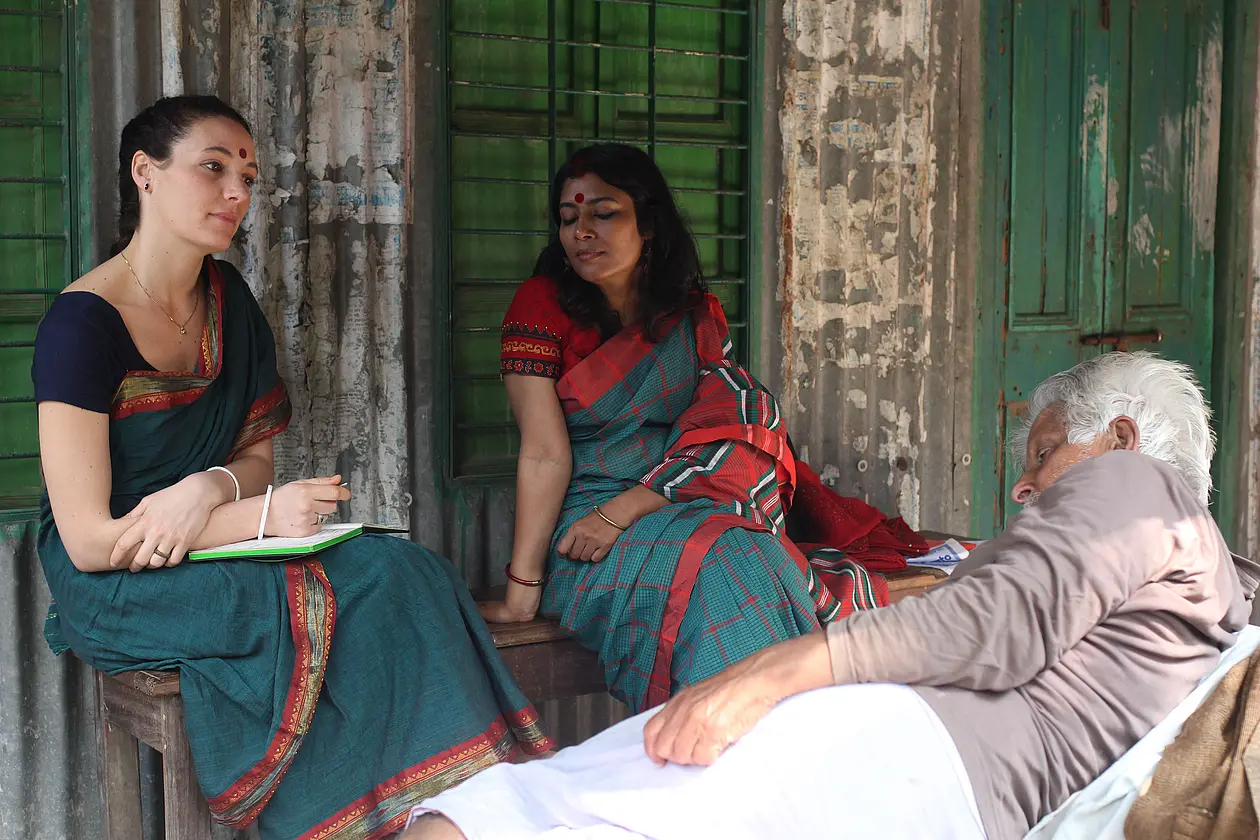
Professor Carola Lorea of the University of Tübingen's Department of Social and Cultural Anthropology has published a comprehensive academic study on the Matua, a community of 50 million people scattered across India, Bangladesh, and 32 other nations in the wake of evictions and forced migration. Despite national borders and natural barriers such as the Bay of Bengal Delta, swamps, and the sea, the community's cohesion has only grown over the decades. Lorea's work represents more than ten years of field studies into Matua life; and she describes how religious songs, drum rhythms, and shared stories play a vital role in Matua society and have even made a protest movement possible.
"The Matua are severely disadvantaged in society and have been pushed into remote areas throughout their history," says Lorea. For a long time, the Matua were overlooked by policymakers and researchers alike. "But they are now very well organized and their vote can influence election results," Lorea says. For this reason, politicians are beginning to court the Matua. "If you want to understand them, you have to understand their music and religion," Lorea explains. "Through the Matua, we can also learn something about a sense of belonging in general, in the age of Spotify and other streaming services: We are what we listen to!" Lorea says her book is the first English-language monograph about the Matua.
Matua religion and culture
The Matua faith emerged as a reform movement within Hinduism in the second half of the 19th century in the region that is now Bangladesh. The Matua revere Harichand Thakur (1812-1878) as the founder. In his teachings, he emphasized the equality of all people and opposed discrimination under the caste system. Most Matua followers come from the Namashudra community, a once-marginalized "low" caste. Under the caste system, people belong to a particular caste from birth; this determines their social status and the occupations they may pursue. Marriages are permitted only within one's own caste. The Namashudra community mostly lived as landless peasants and fisherfolk, forced to live in generally inhospitable regions, in the river delta on the Bay of Bengal, in swamps, and in areas subject to frequent flooding.
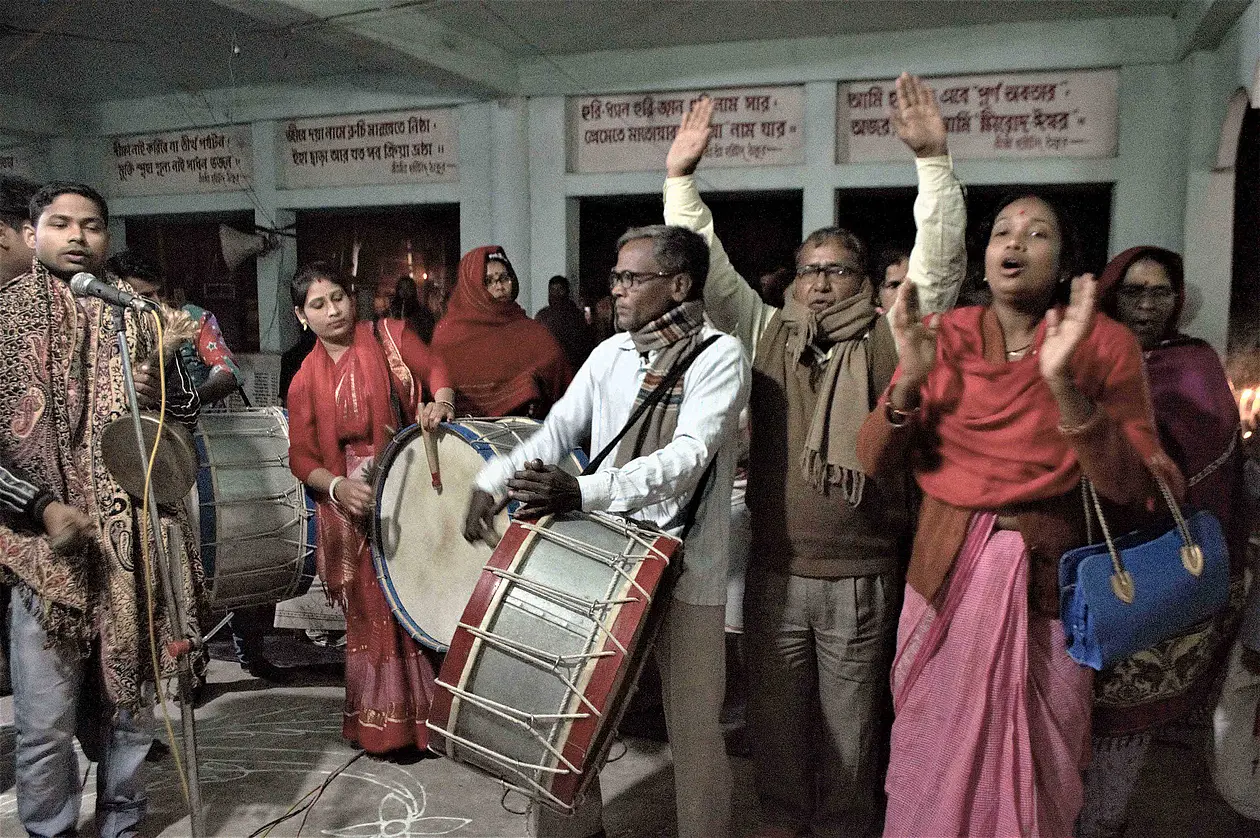
At the heart of Matua religious practice are chants accompanied by drums, cymbals, and simple stringed instruments; they also perform a holy dance which they say takes them into a raised state of consciousness. Their songs are sung for hours, in which time they are repeated and varied. This creates a noisy, euphoric atmosphere and a shared identity narrative. Some people travel hundreds of kilometers to attend these gatherings. Preachers-singers play a central role in boosting cohesion; they travel long distances and serve as gurus, healers, performers, and social leaders.
The social movement
In 1947, Pakistan and East Bengal - later Bangladesh - were separated from India. The newly-drawn borders and politically-driven hostilities between Hindus and Muslims led to one of the largest mass migrations in human history. In 1971, Pakistan and Bangladesh split apart. Many Matua moved from predominantly Muslim Bangladesh to West Bengal in India, while many remained in Bangladesh, where about 10 million Matua followers live at present. Another important settlement area is the Andaman and Nicobar Islands, an archipelago in the Indian Ocean consisting of 200 islands located more than 1,400 kilometers east of the Indian mainland. As a result, many national borders and natural barriers now separate the parts of the Matua community.
In West Bengal, one of India's most populous states, the Matua are classified among the "scheduled castes," or disadvantaged groups. For a long time, the citizenship status of many Matua was unclear, and it remains so to this day. Yet they have organized effectively against social and political discrimination, and they protest and lobby for their rights. The movement's leaders are often the traveling priest-singers, and political gatherings take place at religious meeting places.
Their activism has attracted the attention of even Indian Prime Minister Narendra Modi, who traveled to the two central Matua shrines in West Bengal and Bangladesh in early 2019, 2021 and 2026.
The research project
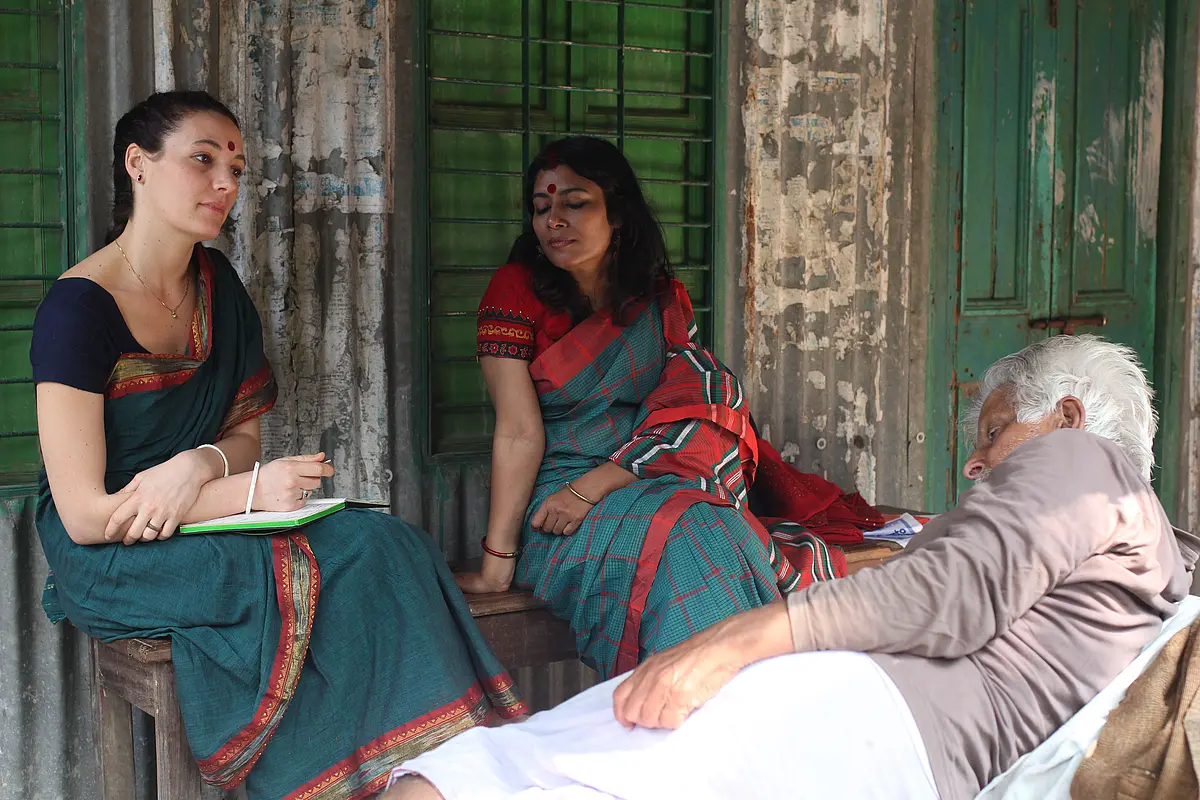
Carola Lorea lived in West Bengal for a total of ten years, conducting her field research in India, Bangladesh and on the Andaman Islands under modest conditions, for instance without running water or electricity. During this time, she recorded many of the songs and stories and observed the religious gatherings as well as the protests. She describes her method as "sonic ethnography."
Carola Lorea studied South Asian Studies at La Sapienza University in Rome, where she earned her doctorate in Asian and African Cultures and Civilizations through a joint review process with Jadavpur University in Kolkata. In 2018, she served as a visiting professor at Jawaharlal Nehru University in New Delhi. From 2018 to 2022, she served as an ARI Research Fellow at the National University of Singapore. From February 2023 until her current appointment, Carola Lorea was an assistant professor of Religious Studies / Rethinking Global Religion at the University of Tübingen.
Literature:
Communities of Sound: Religion, Displacement, and Caste in the Bay of Bengal. Carola Lorea. Middletown: Wesleyan University Press.