
Aeron Tynes Hammack, a physicist by training and currently Interim Facility Director of the Nanofabrication Facility at the Molecular Foundry, likes to work with nano-scale objects to better understand the world and solve problems - but he doesn't restrict himself to one category of tiny stuff. He helps develop qubits for quantum computers and viral therapies to combat infectious diseases. These seemingly disparate interests are united by the need for automated experimental tools that can test thousands of potential candidates of small samples and determine which is most suited to a task: be it a new type of semiconductor wafer with promising quantum properties, or a strain of bacteriophage (a class of viruses that infect bacteria) that can wipe out an antibiotic-resistant pathogen.
Hammack is currently using the quantum information science (QIS) cluster tool at the Molecular Foundry, a DOE Office of Science user facility, to investigate which materials and structural arrangements produce the best Josephson junction (a sandwich of two superconductors separated by an ultrathin insulating layer), which is a key component of a qubit. The cluster tool combines advanced robotics and AI tools to rapidly design, manufacture, and test Josephson junction candidates, massively speeding up the trial-and-error pipeline of traditional materials R&D.
Meanwhile, biotech company Locus Biosciences is conducting clinical trials to evaluate a bacteriophage-based treatment that was developed with the high-throughput screening process Hammack helped invent. A recent paper published in Nature Communications describes the automated process that he built at EpiBiome - the biotech company he co-founded with Nick Conley - that was brought to full production scale by researchers at Locus Biosciences. Hammack credits his postdoctoral work at the Molecular Foundry, where he has since returned, for laying the foundation for his foray into medical R&D.
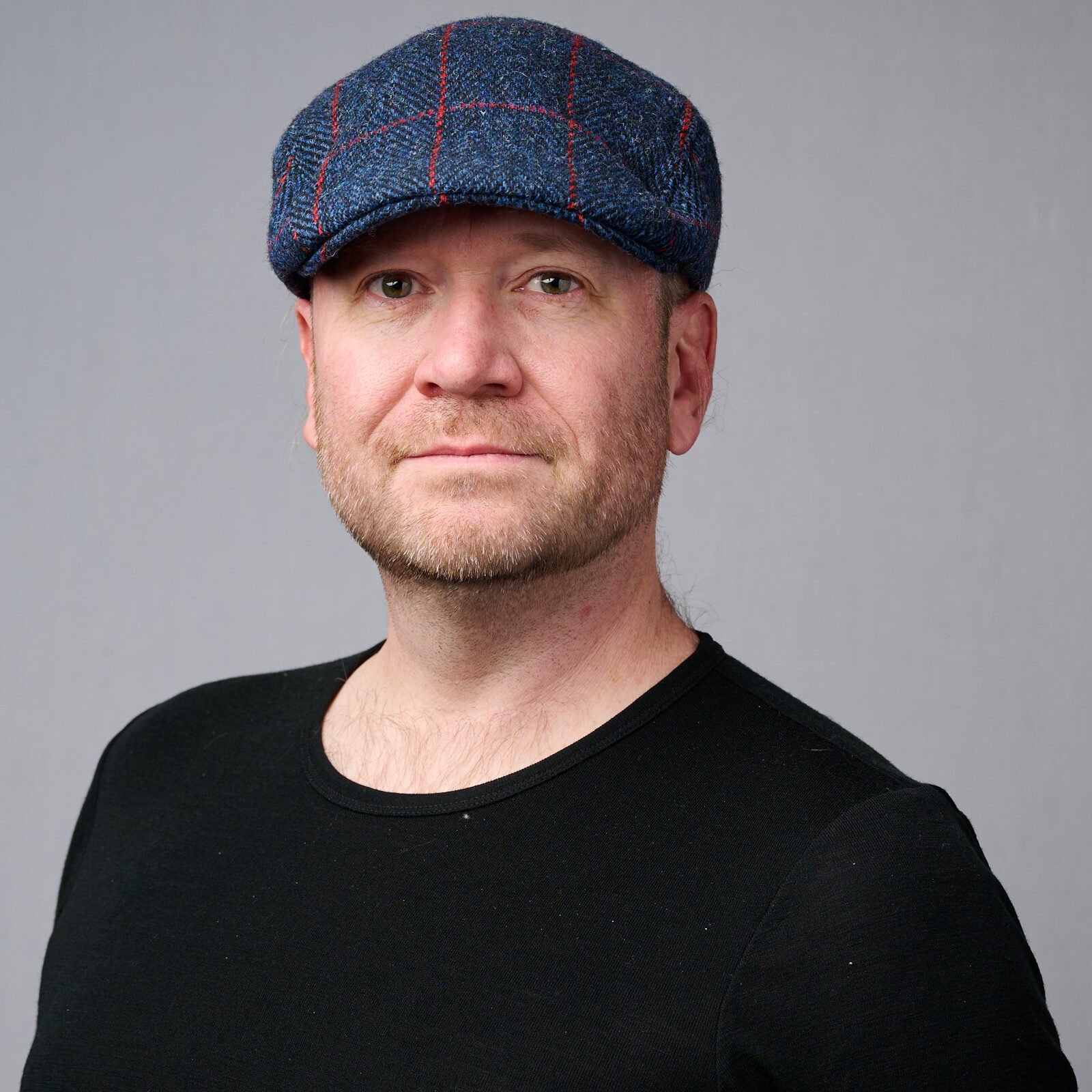
Aeron Tynes Hammack
We spoke to Hammack to learn how quantum physics, biology, and the world of nanofabrication are coming together in awesomely unexpected ways at Berkeley Lab.
Q: First, tell us about your phage research. What about this field of medicine spoke to you?
Phage therapy actually predates small-molecule antibiotics. Bacteriophage were discovered between 1915-17, more than a decade before penicillin. Soviet scientists worked for several decades to develop phage therapies for infections, but they found that phages have a very narrow spectrum of target bacteria - one phage will kill not even a whole species of bacteria, it will kill a subset of certain strains of the bacteria. So, you'd have to take four to six different phages to cover the breadth of activity from a single, uncomplicated E. coli infection. Of course, the antibiotics that were developed in Western Europe, the ones we use now, have broad-spectrum activity, and that's a crucial part of medicine. If someone comes into the ER and they're in bad shape with a suspected a bacterial infection, doctors know they can use this one drug on the shelf that will kill E. coli, Klebsiella, Staph aureus… a bunch of the different things that we know cause health problems in humans and we can help the patient before the diagnostic cultures come back, hours to days later.
The narrowness of the spectrum of phage therapy has always been the challenge, but the huge benefit is that a phage intervention for E. coli won't induce antimicrobial resistance in Staph aureus. To use military metaphors, it's snipers instead of grenades. And so, this is a hundred-year-old technology, why are we bringing it back now? Well, we have precision in our diagnostics now. We have modern sequencing technology and rapid turnaround to identify pathogens.
The full dream, our hope for the future, is that you show up at the ER, and the diagnostics are so sensitive and precise that they essentially wave a tricorder at you to tell what pathogens are causing your problems, and then you can be treated with the exact cocktail of phages needed, dispensed by microfluidics-powered phage dispensary - basically an inkjet printer of phages. We can even still have broad-spectrum treatments by mixing many different phages. And this could be possible thanks to advances in diagnostics and projects like the Phage Foundry [a multi-institutional effort led by Berkeley Lab] that are cataloging relevant phages for the scientific community.
It could enable precision medicine and provide a tool to greatly decelerate the pace of antibiotic resistance, which is an enormous mounting danger to mankind.
Q: How did you land there from a Ph.D. in condensed matter physics?
I was inspired to pursue this research by the exposure I had at the Foundry to the combinatorial chemistry systems there, where at the time, they were pioneering the use of liquid handling robotics to make nanoparticles at a high-throughput scale then analyzing them with spectroscopy to study their properties. That was one of the original breakout capabilities of the Foundry - beforehand, nanoparticle synthesis used to be a fairly bespoke, laborious process done with hands and pipettes and vials.
Nick and I were working in the hard drive industry, but we decided that antibiotic resistance was a bigger problem than information storage density - than making hard drives smaller. And I thought, why not apply the same techniques for an infectious disease problem? At the end of the day, a phage is just a biologically derived nanoparticle. I wanted to do biology at scale the way the Foundry was doing nanoscience at scale.
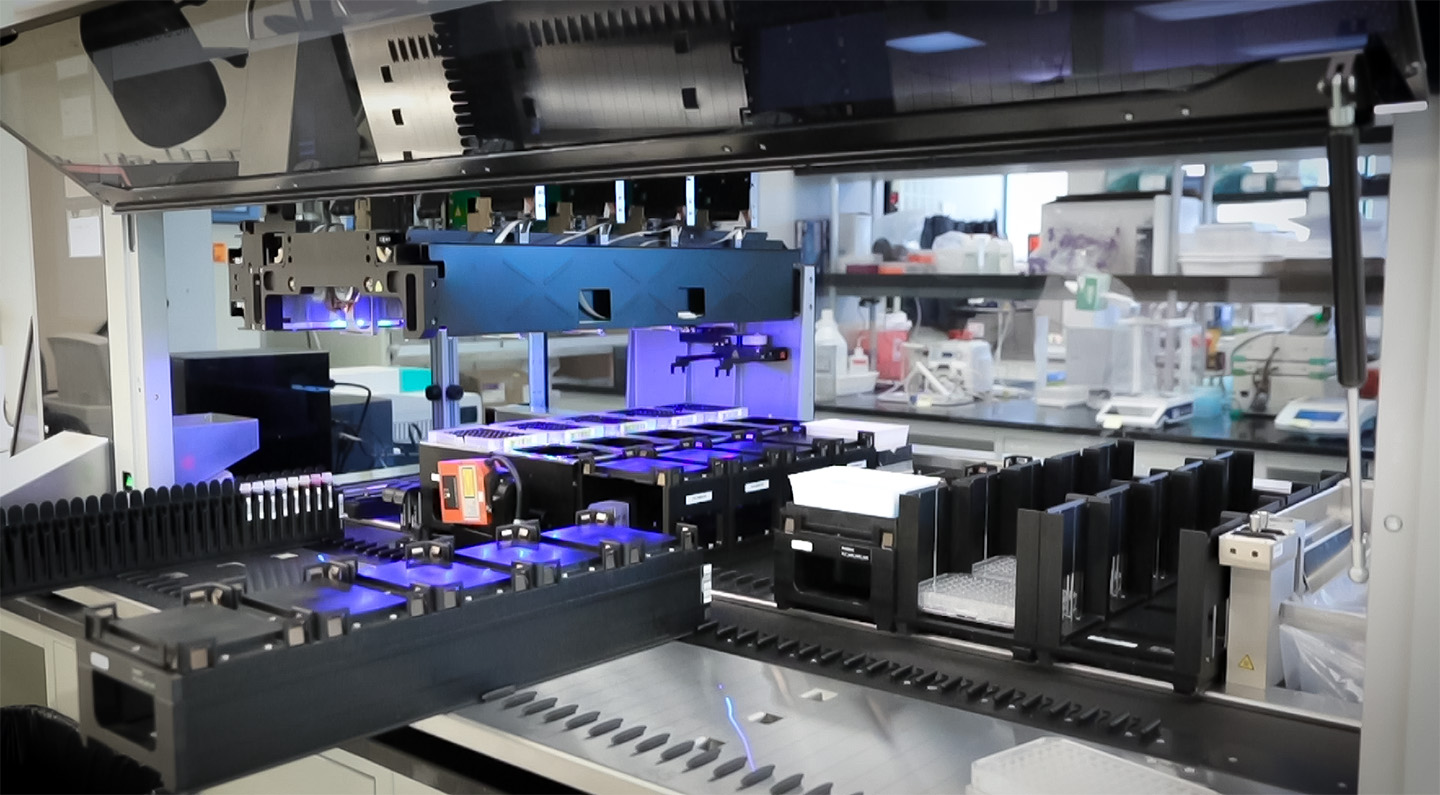
So, for ten years we worked on developing an entire pipeline capable of screening thousands of bacteriophages against target bacteria using robotics and machine learning. Our automated machinery takes samples of microbes and phages and introduces them in a tiny liquid environment, then introduces microscopy for colony counting and optical density assays to determine whether the phage killed the microbes. If you have a bacterial culture, it'll grow until its blocking light, and if you introduce a phage that can kill it, the bacteria cells will lyse - break open - and the sample becomes transparent. So, microscopy and spectroscopy to measure the optical density provide very telling clues about phage-host interactions and colony counting is the gold standard to assess microbial viability. I also created a computer vision program (a type of AI) to rapidly process these results, which back in the day, used to be done by hand and by eye! Once you know which sample contains effective phages, you simply sequence the contents and identify the strains.
Then our company, EpiBiome, was acquired by Locus. Taylor Penke and other scientists at Locus helped us refine and scale the pipeline. Now, Locus has a product in clinical trials that was developed using the process and based on discoveries from our years of phage vs. microbe research. I think we've officially made it further than any other company in phage therapy in clinically validated trials. And, I can't say strongly enough that any of the private industrial successes I've had have been on the foundation of DOE-scale research efforts. Industry rarely wants to fund the kind of 10- or 20-year research initiatives you need to understand the basic science principles needed before you can engineer anything. The U.S. funding of basic science research is what drives our economy and leads to applied science success stories like pharmaceutical companies launching effective new products.
Q: What will this first product treat?
We focused on urinary tract infections because they're a common indication for antibiotic use, so introducing an alternative treatment is a great way to immediately reduce antibiotic prescriptions and help slow down antibiotic resistance. We partnered with wastewater facilities to collect a huge range of phages and acquired samples of more than 1,700 uropathogenic E. coli (UPEC) strains, which is a subtype of E. coli found in digestive tracts that are responsible for most UTIs. Out of these, we chose 356 for our testing panel; all these strains were isolated from actual patients across the U.S. and 29% were multi-drug resistant. Our fully automated processes allowed us to test 2.5 million different phage-host combinations to find the best cocktail. The resulting drug candidate is a mixture of six phages. Some are still wild-type and some of the ones we identified have been engineered to be even more potent against the E. coli. In lab trials done by Locus Biosciences, the cocktail was 96.4% effective against the 356 strains, and demonstrated a strong safety signal with suggestive efficacy indicators in the phase 1 clinical trial.
Q: Now you're back at Berkeley Lab working to automate discovery for quantum materials, but also still working on biology?
Yes, what I'm trying to do now is develop what are called "single particle assays," so tests that are sensitive enough that you only need the tiniest sample - as little as one particle of what you're interested in. Because you don't actually have to do an entire 100 microliter reaction volume to know if a phage kills the bacteria. All you need to do is be able to have a phase contrast micrograph or a fluorescent tagging micrograph to show that there's a lysis event with high statistical probability or have a single-cell sensing modality to detect lysis events. So that's what my research is focusing on here. I run a microfluidics and nano fluidics fab at the Molecular Foundry trying to figure out how to use nano-scale magnetic sensors and nano-scale plasmonic antennas, like those used in the hard drive industry, to make miniaturized biosensors that could offer an alternative to the biology-based methods that use antibodies or fluorescent tag molecules and lots of pipettes and little well plates.
I'm trying to work on sensors that would be able to detect a single molecule, like a single nucleotide or amino acid or sugar, as well as its position, so we can do atomic resolution biology. And it's very hard! It's probably going to take ten years, but it would have a lot of applications, for example, early detection of cancer. The current assays [on the market] are very sensitive for even a small number of molecules in a sample, but what you've lost along the way is knowing exactly where the molecule is coming from. These biological techniques [like PCR] are like using a magnet to pull a needle out of a haystack. You found it, but where had it been? Our process uses plasmonic sensors - which are already used in validated technologies like pregnancy tests - and tunnel junction sensors, which use the wavefunction character of electrons, to show you the source of a particular molecule in a single cell or virus particle. That missing information will tell us a lot more about the disease and how it develops. For example, this technology could be used to study a newly discovered protein that is made by pancreatic cancer cells, potentially allowing for earlier detection and a better understanding of early-stage disease.
The other advantage is that by creating these highly sensitive antennas to broadcast information from single molecules we hope to enable what's called label-free diagnostics, where you don't need any tagging molecules or stains or other products that potentially interfere with how the cell you're studying behaves. You're looking at the cell or virus in its natural state, while it is in close proximity to electronics or optical antennas that broadcast information about the biological status.
Q: Are you continuing to work on phages alongside the other researchers at the Lab?
Yes, the Phage Foundry is amazing. Vivek [Mutalik] and the team are working on really interesting basic science problems in phages without a commercialization agenda. They're building a biobank of well characterized phages, phage datasheets consisting of information on receptor usage [which receptors phages use to enter bacterial cells], gene essentiality, and AI/ML workflows predicting phage effectiveness on different strains and how phages affect microbiomes. It's an incredible resource to have to continue my research on phages and for other groups, because thankfully there are other people developing phage therapies. If I, or someone else, want to study phages relevant to antibiotic therapy, we can go to this public repository of phages, and it's a huge boon because it's very, very expensive and challenging to set up phage growth and screening efforts to study phages like we did at EpiBiome and Locus.


