

(Photo. B. Jones/Ocean Image Bank)
Across the globe, the IAEA supports countries in using nuclear science to better understand marine threats and protect aquatic resources. This World Ocean Day , we look at how nuclear techniques are protecting marine ecosystems and the people and communities that depend on them.
1. Tackling Marine Plastic Pollution
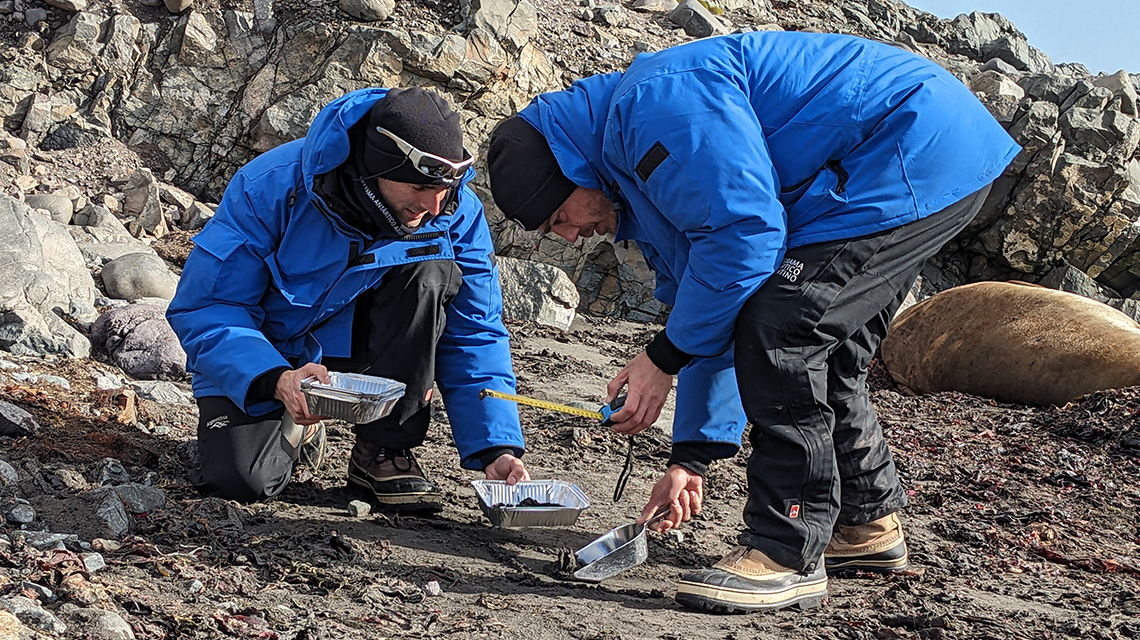
An IAEA study has uncovered evidence that plastic pollution can be found even in the pristine environments of Antarctica. (Photo:IAEA)
Plastic pollution is one of the most persistent threats facing marine ecosystems. Microplastics - tiny plastic particles - are now found across the globe, even in remote regions such as Antarctica.
With the support of the IAEA initiative NUclear TEChnology for Controlling Plastic Pollution (NUTEC Plastics), countries are using nuclear science to track, understand and reduce plastic pollution.
New IAEA-supported projects launched in 2026 are helping countries in Latin America apply nuclear technologies to identify the sources and pathways of microplastics in Antarctic ecosystems by strengthening regional capacities for microplastic monitoring using harmonized methods .
IAEA scientists and Latin American Researchers from the Chilean Antarctic Institute are studying pollution in the Antarctic Peninsula, a region important for global biodiversity and climate regulation.
The data generated through these projects, provides the scientific evidence needed to inform policies, strengthen environmental management and protect fragile marine ecosystems.
2. Monitoring Ocean Acidification

Coral reefs are threatened by ocean warming and acidification. Researchers at the IAEA Environment Laboratories in Monaco study the effects of ocean acidification and other environmental stressors on marine organisms. (Photo: D. Calma/IAEA)
As oceans absorb increasing amounts of carbon dioxide from the atmosphere, seawater becomes more acidic. This process, known as ocean acidification , can affect coral reefs, shellfish and marine ecosystems that support fisheries and tourism.
Small island developing States in the Caribbean and the Pacific are particularly vulnerable to the impacts of ocean acidification because many communities rely on coastal ecosystems for food and livelihoods.
The IAEA is supporting countries in the region to monitor and strengthen ocean acidification monitoring through scientific cooperation and training in the use of nuclear and isotopic techniques. Scientists can use these techniques to examine how marine ecosystems respond to changing ocean chemistry under the pressure of other environmental stressors. The IAEA also trains early-career scientists to assess the impacts of ocean acidification and marine pollution, helping countries improve their long-term environmental monitoring and response capacities to these interlinked threats.
With access to better scientific data, countries can make more informed decisions to protect marine biodiversity, fisheries and coastal economies.
3. Protecting Blue Carbon Ecosystems

Sediment cores (pictured) are collected in a seagrass meadow in Zanzibar, Tanzania for assessment. Using nuclear tools, IAEA scientists collaborate with a wide range of scientific institutions to determine carbon accumulation rates in vegetated coastal ecosystems. (Photo: G. Gispert/Perth, Australia)
Blue Carbon refers to organic carbon captured and stored by the ocean in vegetated coastal ecosystems such as mangrove forests, saltmarshes or seagrass meadows.
Mitigating the effects of ocean acidification requires an understanding of how marine environments have changed over time. Scientists use nuclear and isotopic techniques to study sediment collected from coastal ecosystems such as mangroves, seagrass meadows and salt marshes. By analysing naturally occurring isotopes such as lead-210 and other radionuclides, researchers can determine how sediments and organic carbon have accumulated over decades and even centuries.
For example, a recent ARCAL training course in Panama helped scientists use nuclear techniques to measure blue carbon stored in coastal ecosystems, providing data to support climate action and coastal conservation.
Through its Marine Environment Laboratories and technical cooperation programme, the IAEA helps countries to assess the potential of blue carbon ecosystems as a nature-based solution, generating scientific evidence to guide sustainable coastal management, climate adaptation and biodiversity protection.
4. Protecting Aquaculture from Disease

Aquaculture is an important source of food, income and jobs across Latin America. But diseases such as Infectious Pancreatic Necrosis can devastate fish stocks and threaten livelihoods. Using techniques derived from nuclear science, scientists can detect the genetic material of viruses, allowing for identification of infections even before symptoms appear. Early diagnosis enables farmers and authorities to respond quickly, limiting outbreaks and reducing losses.
The technology has also helped identify genetic markers linked to IPN resistance, allowing producers to breed more resilient fish. At the same time, enhanced laboratory capacity and harmonised diagnostic approaches support earlier detection and improved disease management in both freshwater and marine systems.
Infectious Pancreatic Necrosis affects rainbow trout farming, an important source of protein and economic activity in several countries in Latin America. Working with the IAEA, countries across the region are strengthening their capacity to detect, prevent and control the disease.
5. Detecting Harmful Algal Blooms

François Oberhänsli demonstrates radioligand receptor binding assays for detecting paralytic shellfish toxins at the IAEA Marine Environment Laboratories in Monaco. (Photo: E. McDonald/IAEA)
Harmful algal blooms - blooms of microscopic algae that grow excessively under certain environmental conditions and can sometimes produce harmful toxins - disrupt fisheries, contaminate fish and shellfish feeding on these microalgae containing toxins, and threaten public health. In marine coastal waters but also lakes and rivers, these blooms spread rapidly. Their toxicity is often difficult to evaluate using conventional methods.
The IAEA is training scientists to use nuclear and isotopic techniques to monitor harmful algal blooms toxin with greater precision. These techniques help researchers understand how blooms develop, where they are likely to spread and how toxins move through aquatic ecosystems.
IAEA scientists have helped researchers in Cuba find dangerous biotoxins in marine microalgae that can contaminate seafood and threaten human health. Early detection of toxic blooms allows authorities to take targeted action, such as temporarily closing affected fishing areas and restricting the sale of contaminated products, helping protect consumers while reducing economic losses by limiting wider disruptions and maintaining confidence in seafood products.
6. Strengthening Regional Cooperation and Solutions
Threats to oceans know no borders. Pollution, disease and climate pressures affect entire regions, making cooperation essential.
Through the Regional Cooperation Agreement for the Promotion of Nuclear Science and Technology in Latin America (ARCAL) framework, countries across Latin America and the Caribbean are working together, with the support of the IAEA, to share expertise, standardized methods and build laboratory capacity. More than twenty countries are collaborating on aquaculture health, pollution monitoring and environmental protection.
Through the Research Network of Marine‑Coastal Stressors in Latin America and the Caribbean (REMARCO), established in 2018 with IAEA support, countries are working together to share expertise, harmonise methodologies and strengthen scientific capacities.
The network links institutions from 18 countries to generate evidence on key marine stressors - including pollution, ocean acidification and harmful algal blooms - to support informed decision‑making and environmental protection.
This coordinated approach helps ensure that scientific knowledge is shared across borders and that solutions are adapted to regional needs.
Through its Nuclear Science and Applications and its technical cooperation programme , the IAEA is helping countries build the capacities they need to understand and monitor marine environments, protect aquatic resources and respond to global environmental threats.


