
A possible "missing link" in the drivers of annual Southern Ocean sea-ice melt has been identified by an international team, led by Australian Antarctic Program* scientists.
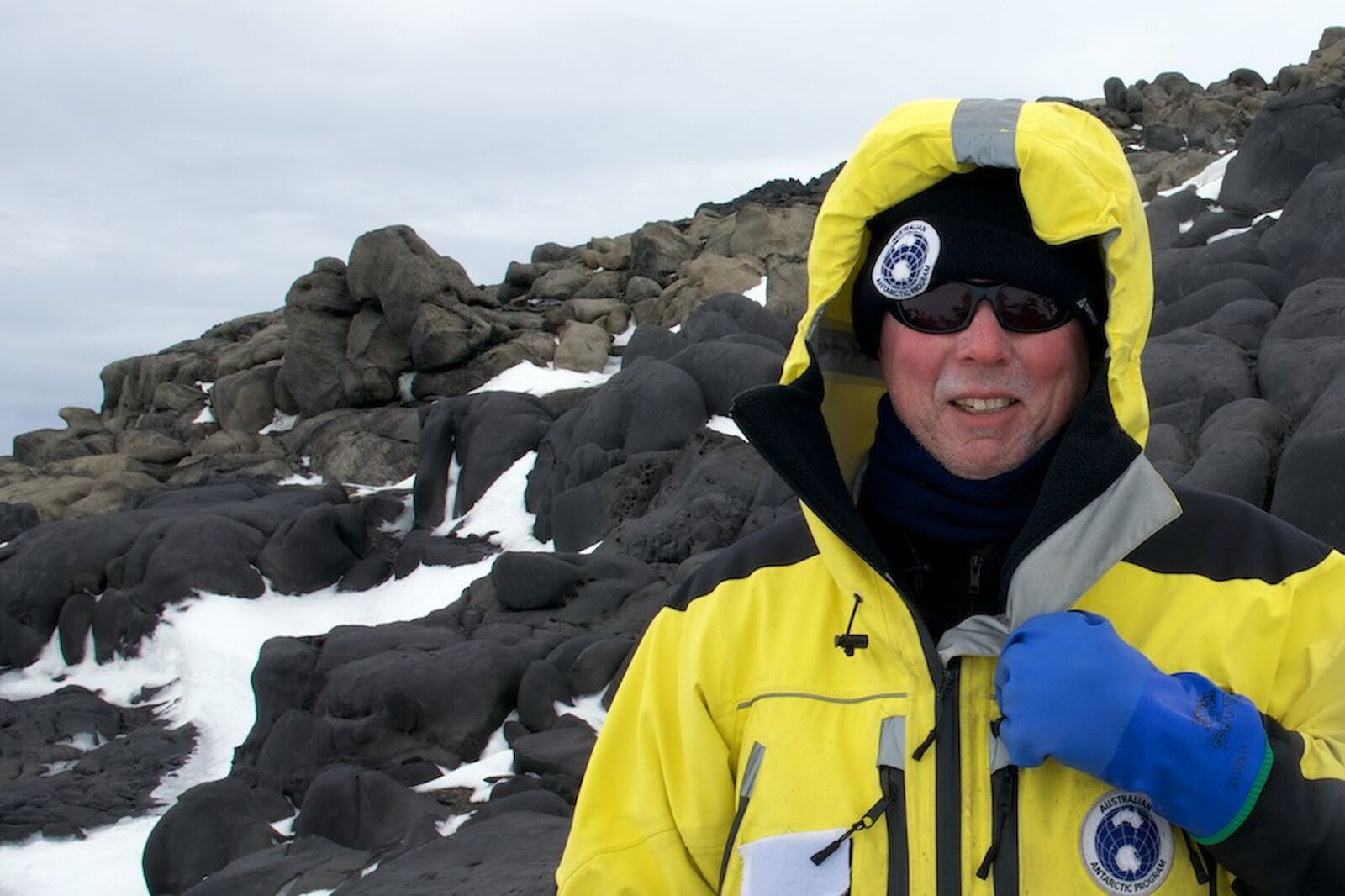
Study leader Dr Rob Massom said ocean waves likely contribute to the surface melting of Antarctic sea ice in ways that have been overlooked, until now.
"Ocean waves promote melting at the base and sides of sea-ice floes, by breaking them up and exposing more of their edges to the warming ocean each summer. But this is not the full story," he said.
"Our new study puts forward the idea that waves also cause surface melting of sea-ice floes, by washing over and flooding them, and by grinding them into a slush.
"This creates conditions that trigger the rapid growth of algae within the ice, and leads to further feedbacks that amplify melting."
Diagnosing change in planet's icy pulse
Each year, the annual cycle of sea-ice growth and retreat around Antarctica fluctuates from 2-3 million square kilometres in summer, to 18-19 million square kilometres in winter.
This "heart beat" of the planet's climate system moderates global temperatures and drives ocean circulation.
"Antarctic sea ice and the snow that accumulates on its surface help keep our planet cool by reflecting sunlight back into space," Dr Massom said.
"Snow-covered sea ice reflects more than 80 per cent of the sunlight hitting it, while the darker ocean around it absorbs about 93 per cent of the sunlight, causing the water to warm."
Dr Massom said the new theory could help account for the large differences in summer sea-ice retreat observed by satellites, compared to that simulated by climate models.
"Sophisticated climate models largely underestimate the average rate of sea-ice retreat observed by satellites each summer, suggesting incomplete knowledge and replication of important processes," he said.
"This study addresses a gap in our ability to accurately model the annual sea-ice cycle, as we strive to understand the causes of recent dramatic sea-ice loss, and reduce uncertainty in future sea-ice and climate projections."
A perfect storm of 'wave melting'
Using observations, modeling and theoretical insights, the study shows that ocean waves wash the snow off the sea ice, and cause seawater to pool on its surface.
This substantially reduces the sea-ice 'albedo' - or its ability to reflect sunlight - causing it to absorb more sunlight and melt.
Wave action also acts like a blender, grinding the ice floes together and creating a 'wave slush' that exposes more of the ice to sunlight and warming ocean.
This flooding and grinding creates the perfect conditions for sea-ice algae to grow, turning the ice green, reducing its albedo further, and amplifying melting.
The research team found that these three linked processes - called 'wave flooding', 'wave pulverisation' and 'wave greening' - could enhance the speed of summer melting by between 5.2 cm and 6.1 cm per day in summer.
"Our calculations suggest that 'wave melting' alone could melt a one metre-thick slab of flooded sea ice in just 20 days, and in about 16 days if amplified by greening ," Dr Massom said.
"These increased melt rates are likely to be underestimates, due to positive feedbacks that potentially accelerate surface melting in a self-perpetuating cycle of melt amplification."
Zoning in on sea-ice melt
These wave melting processes and feedbacks occur in the marginal ice zone - the outer part of the sea-ice zone, adjacent to the open ocean, that is affected by incoming waves.
Wave melting may also occur deeper within the sea-ice zone, due to periodic ocean swells and locally-generated waves in areas of open water within the sea ice - although more observations are needed to confirm this.
Dr Massom said the research is also relevant to the changing Arctic, where declining sea-ice coverage is opening up larger areas of the ocean to wind-generated waves.
"Our aim is that this new line of research stimulates a cross-disciplinary community effort to measure and quantify wave melting and feedbacks around Antarctica," he said.
"These data will inform models and determine the overall contribution of wave melting to the rapid summer meltback of Antarctica's sea-ice zone, as well as Arctic sea-ice seasonality."
Research is also needed to determine how wave processes affect sea-ice algae - which remove carbon dioxide from the atmosphere and help slow atmospheric warming - and how wave greening affects ecosystems and other biogeochemical processes that influence climate.
The study is published today in The Cryosphere [LINK to paper].
*Australian Antarctic Program researchers involved in this study are affiliated with the Australian Antarctic Division, Australian Antarctic Program Patrnership, and the Australian Centre for Excellence in Antarctic Science.
Learn more about sea ice in our feature Antarctic sea ice in crisis.


